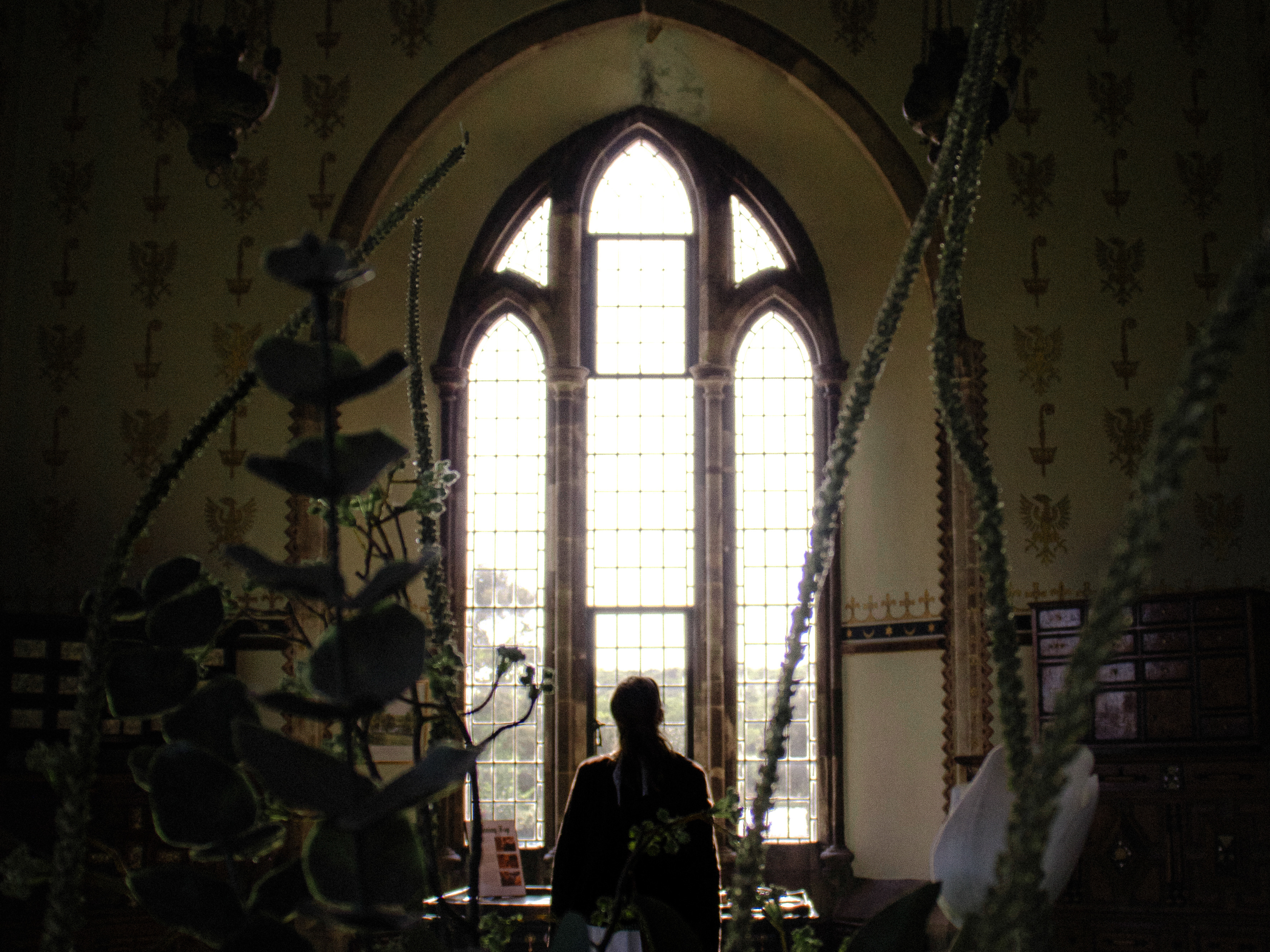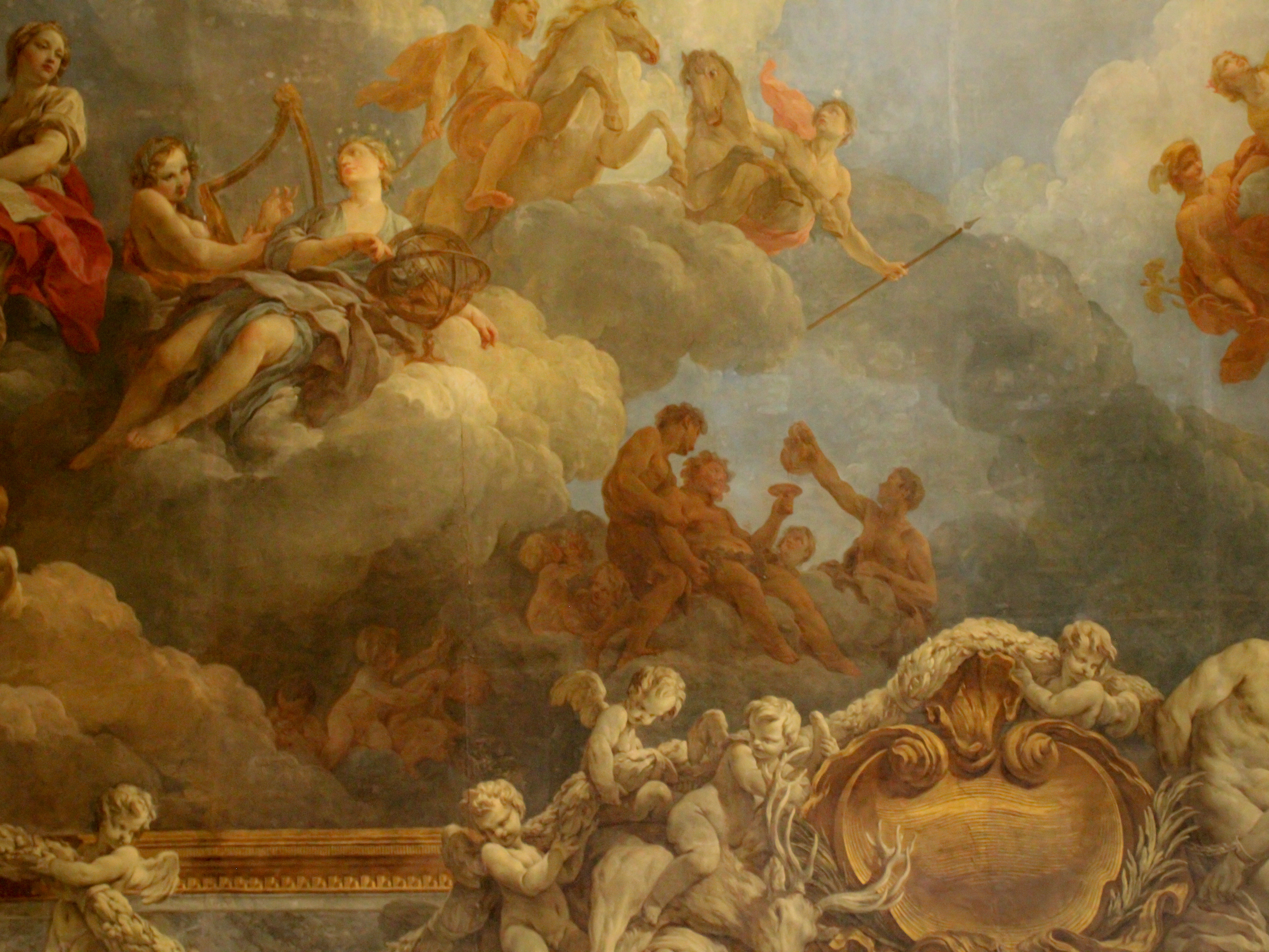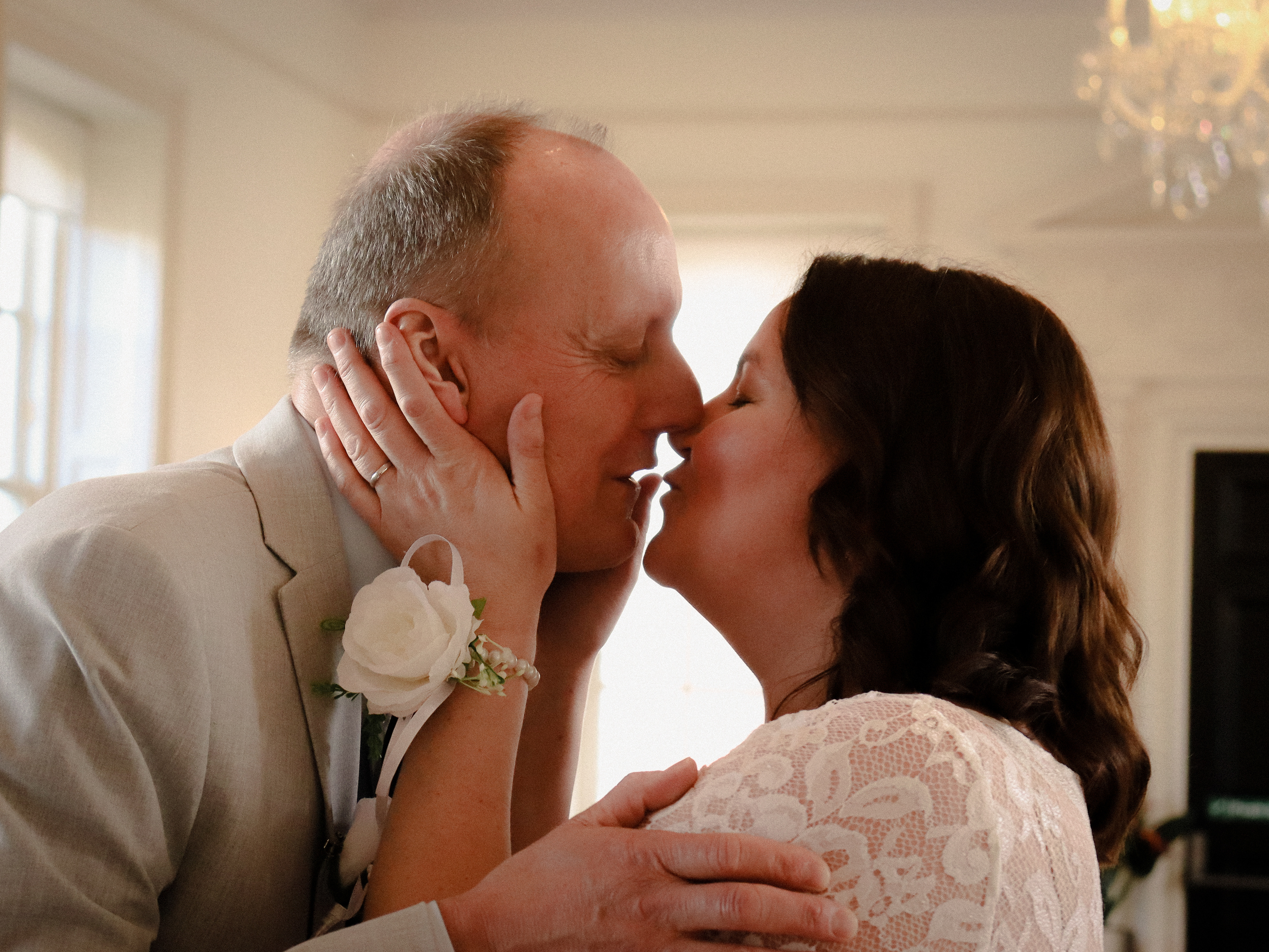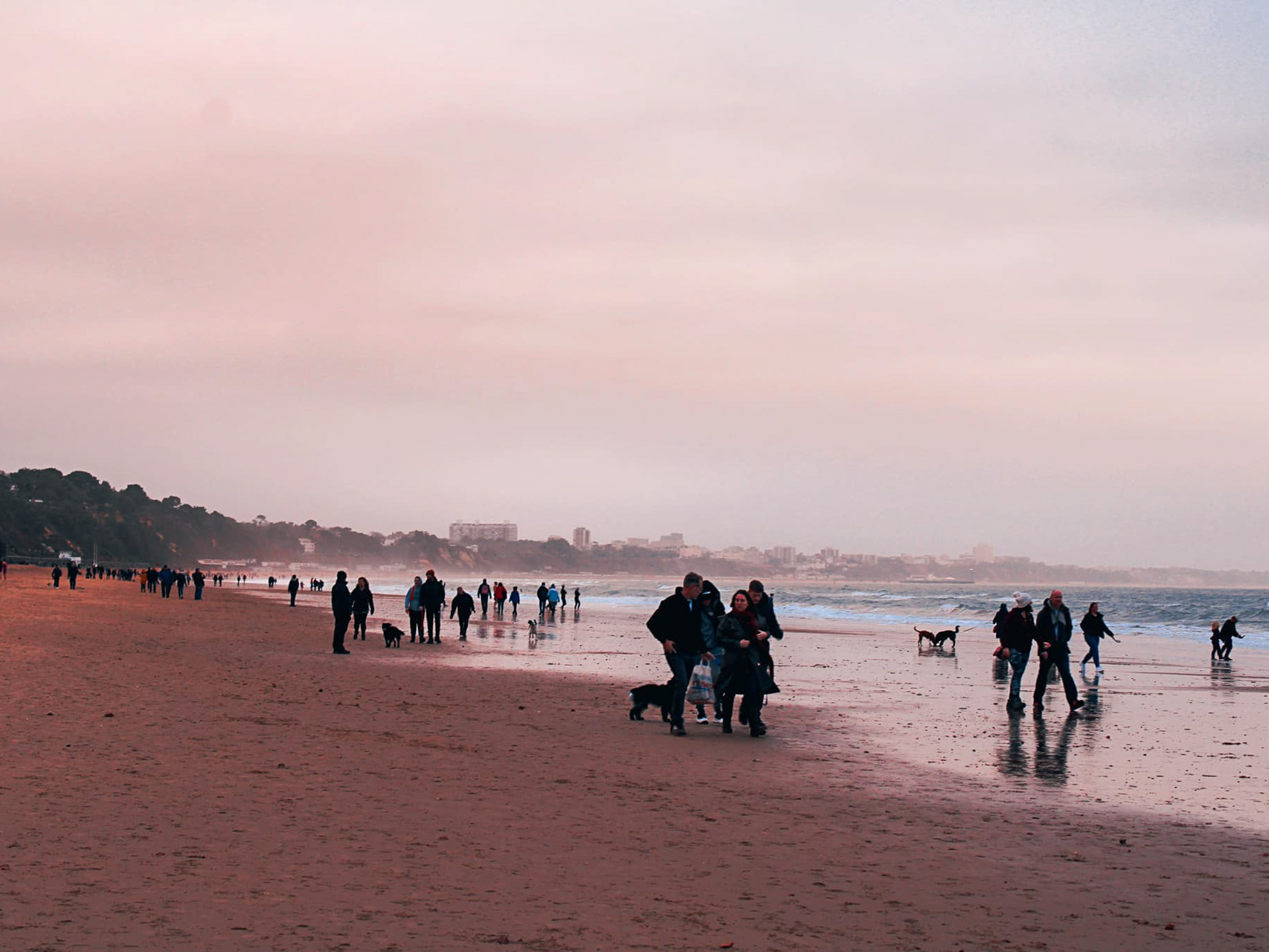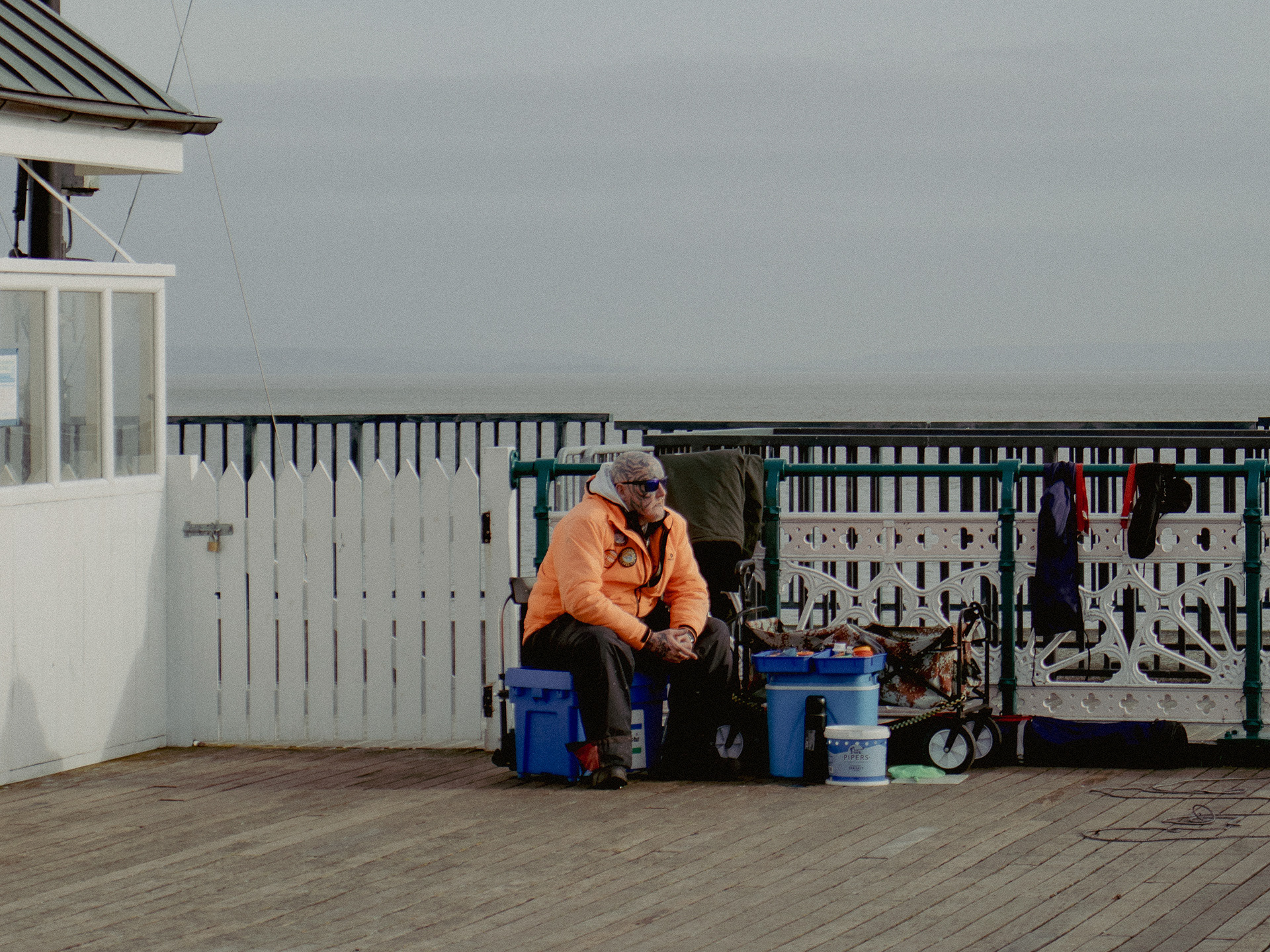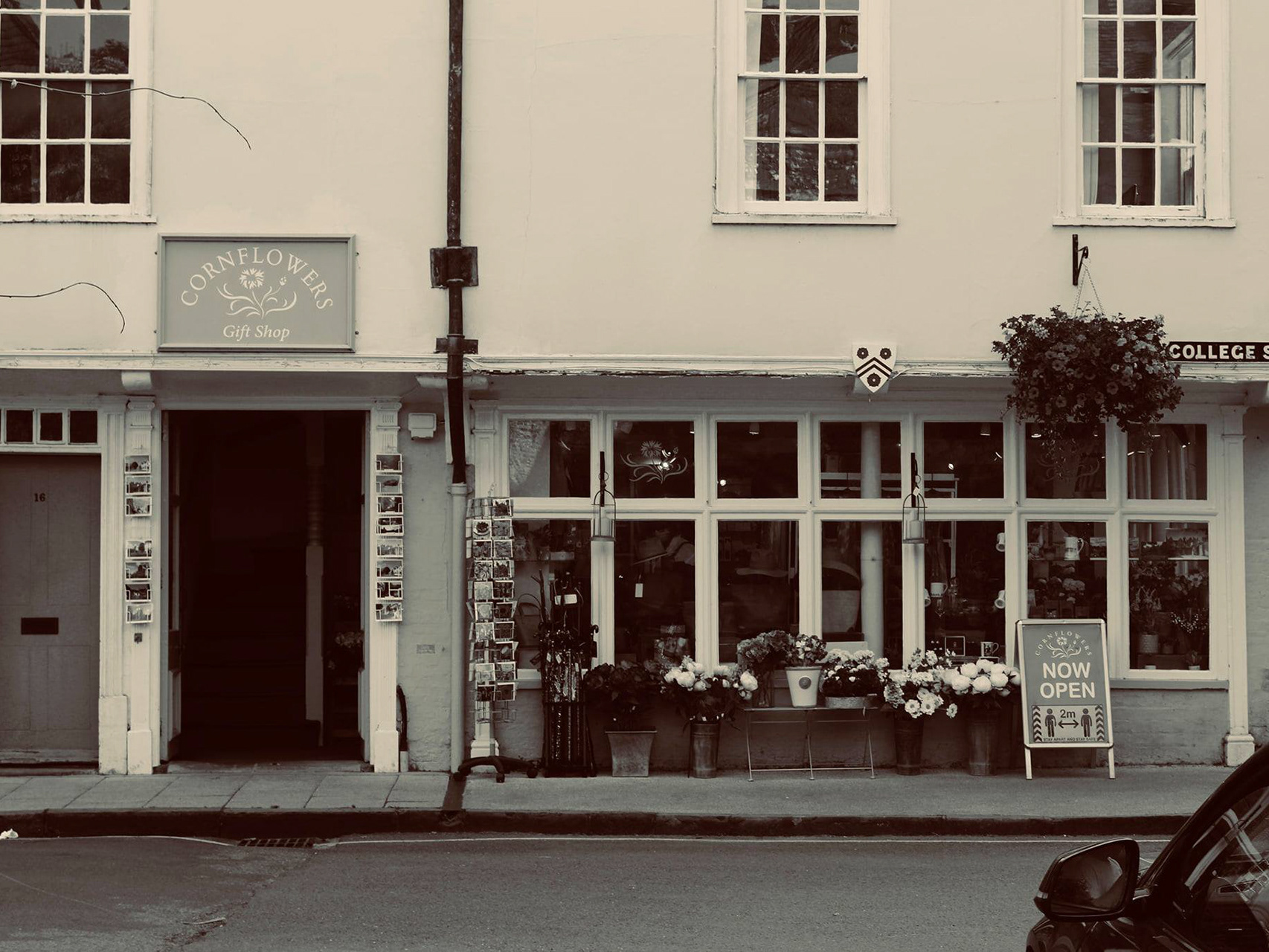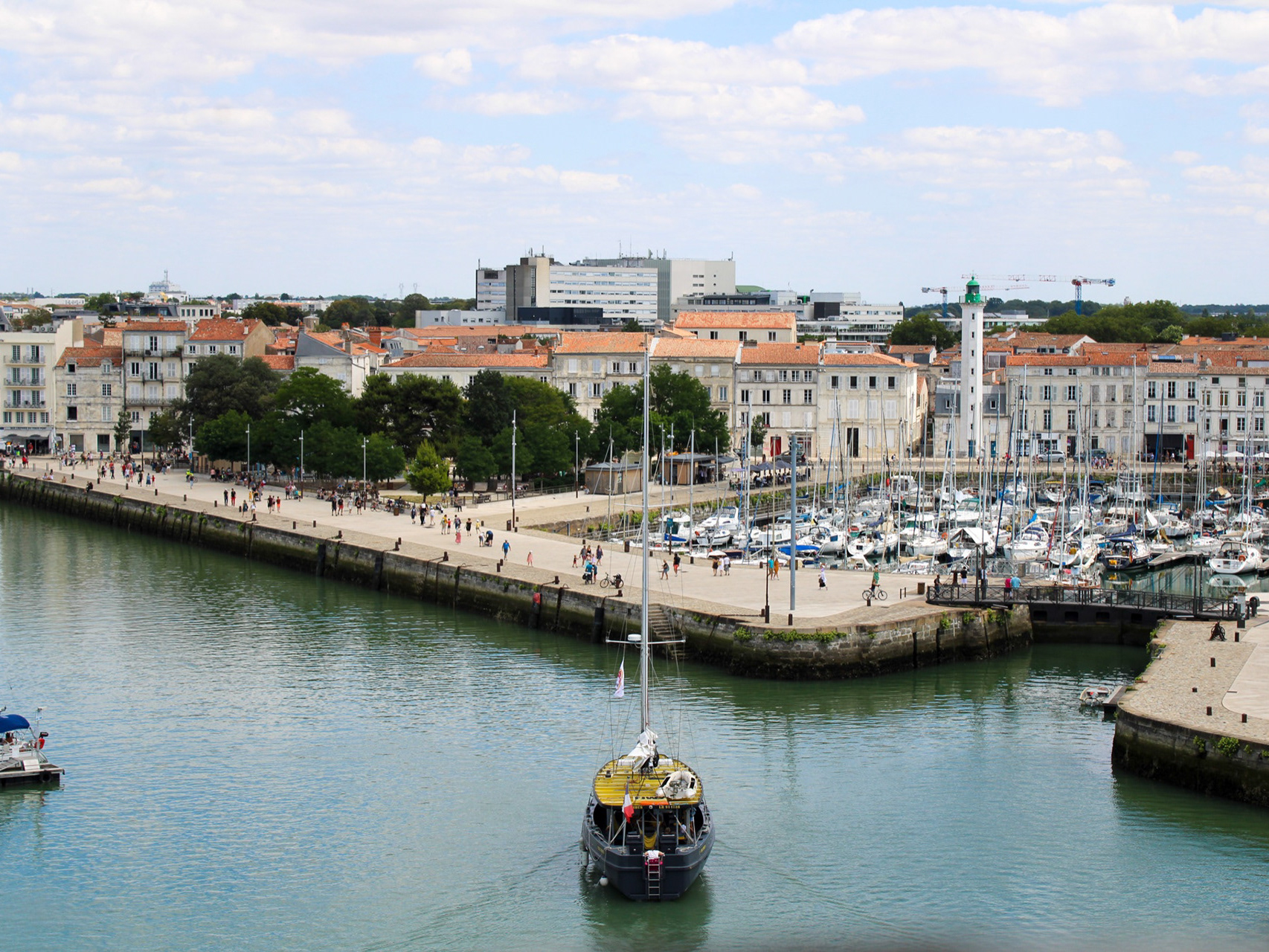
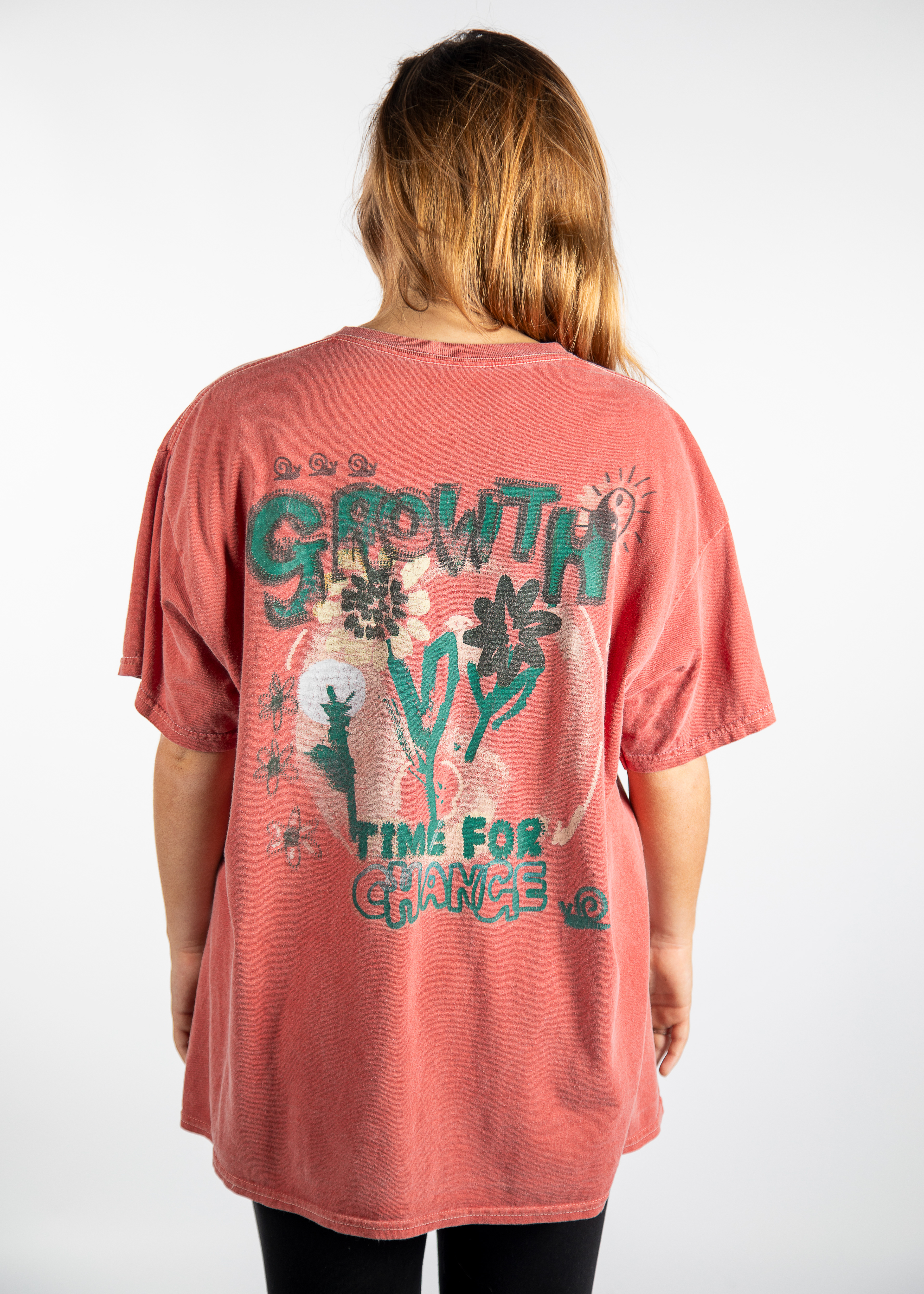
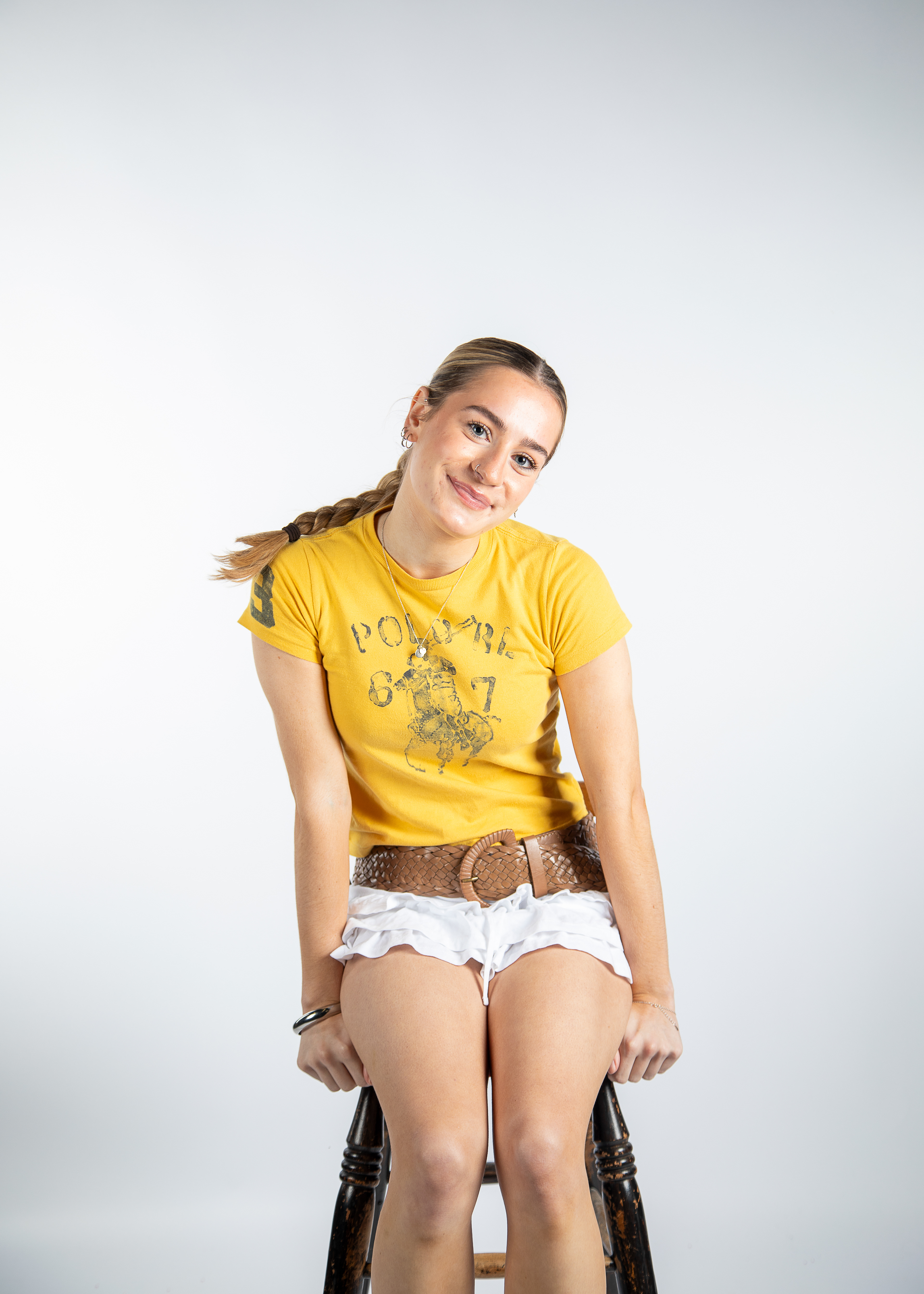
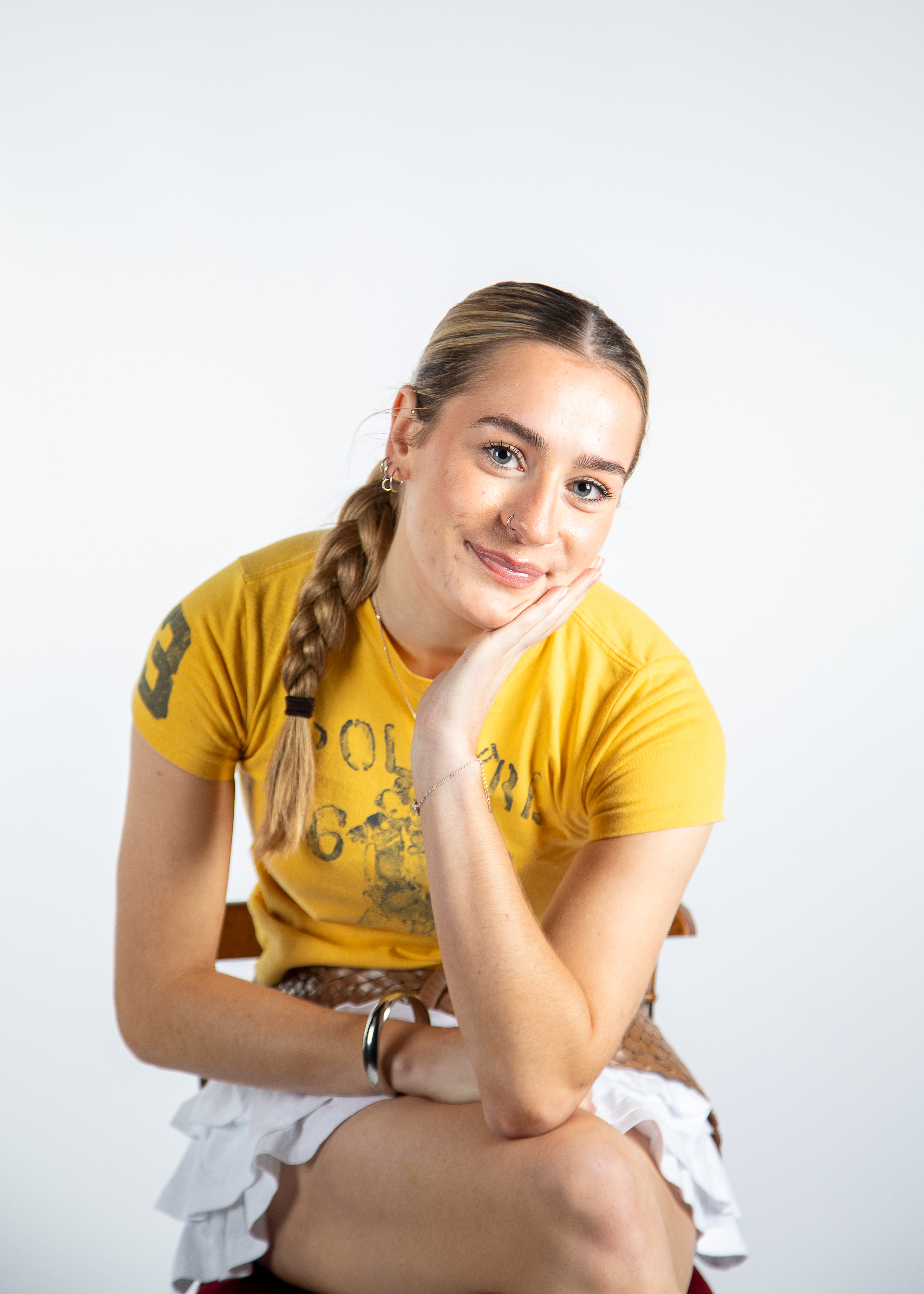
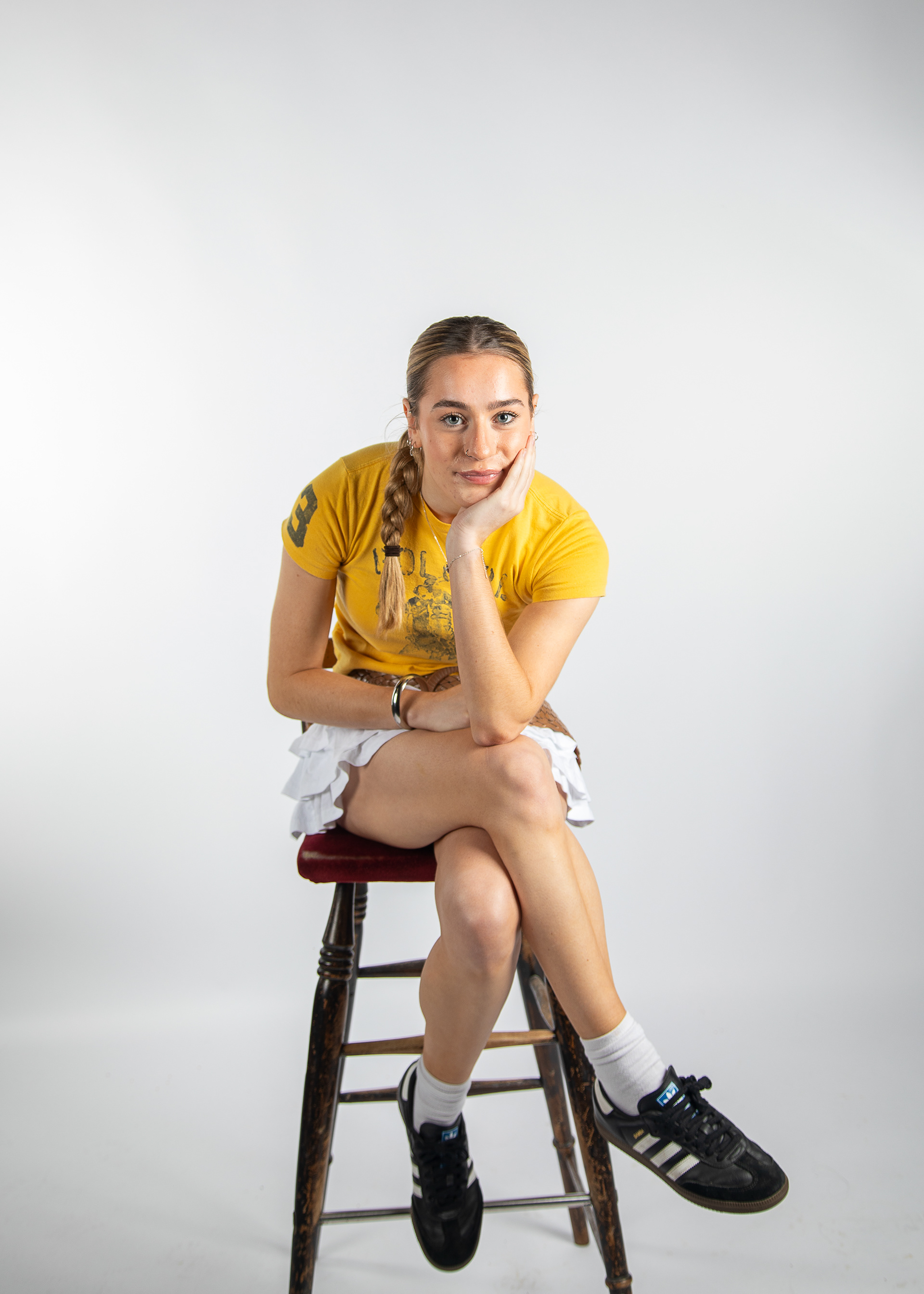
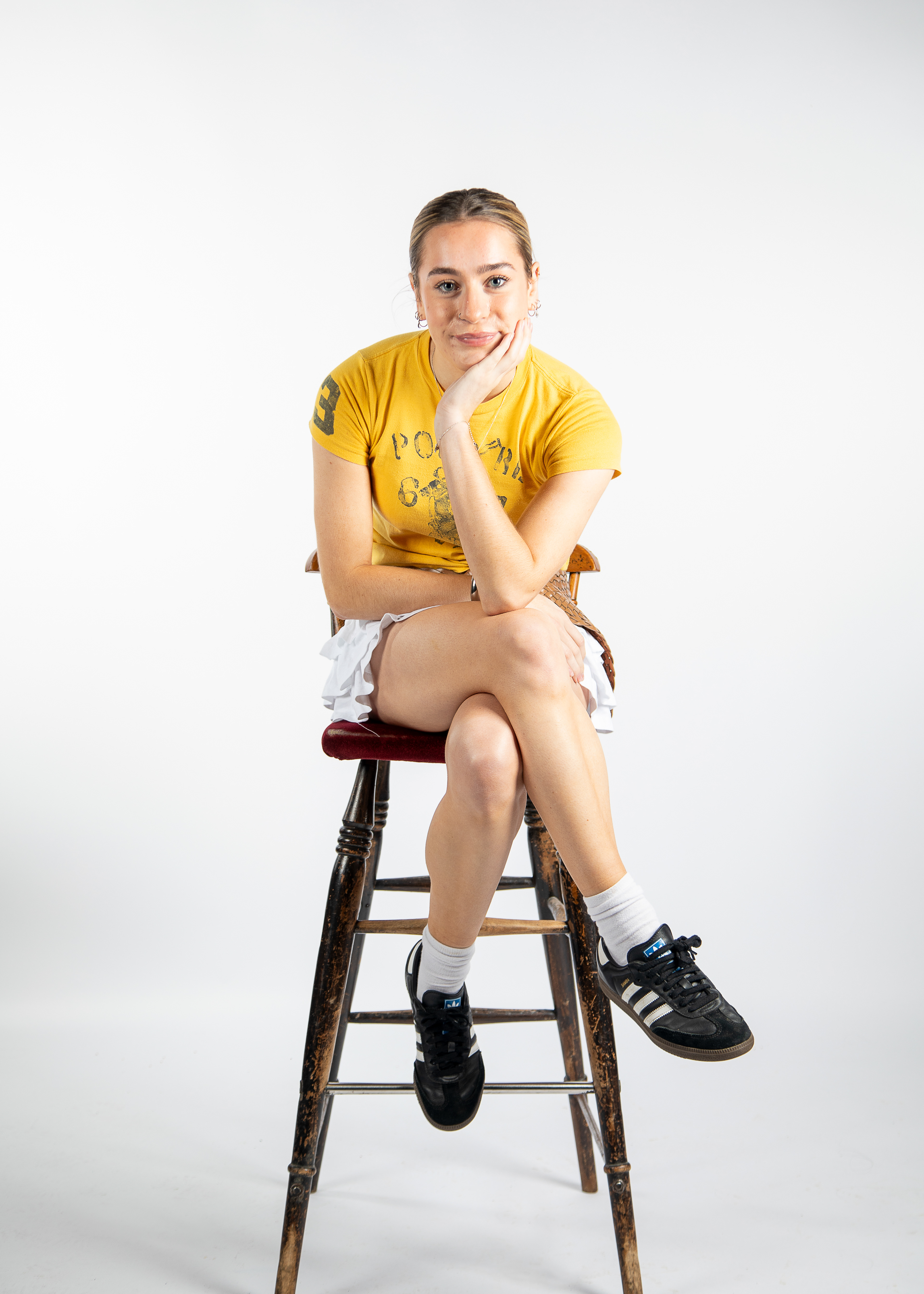
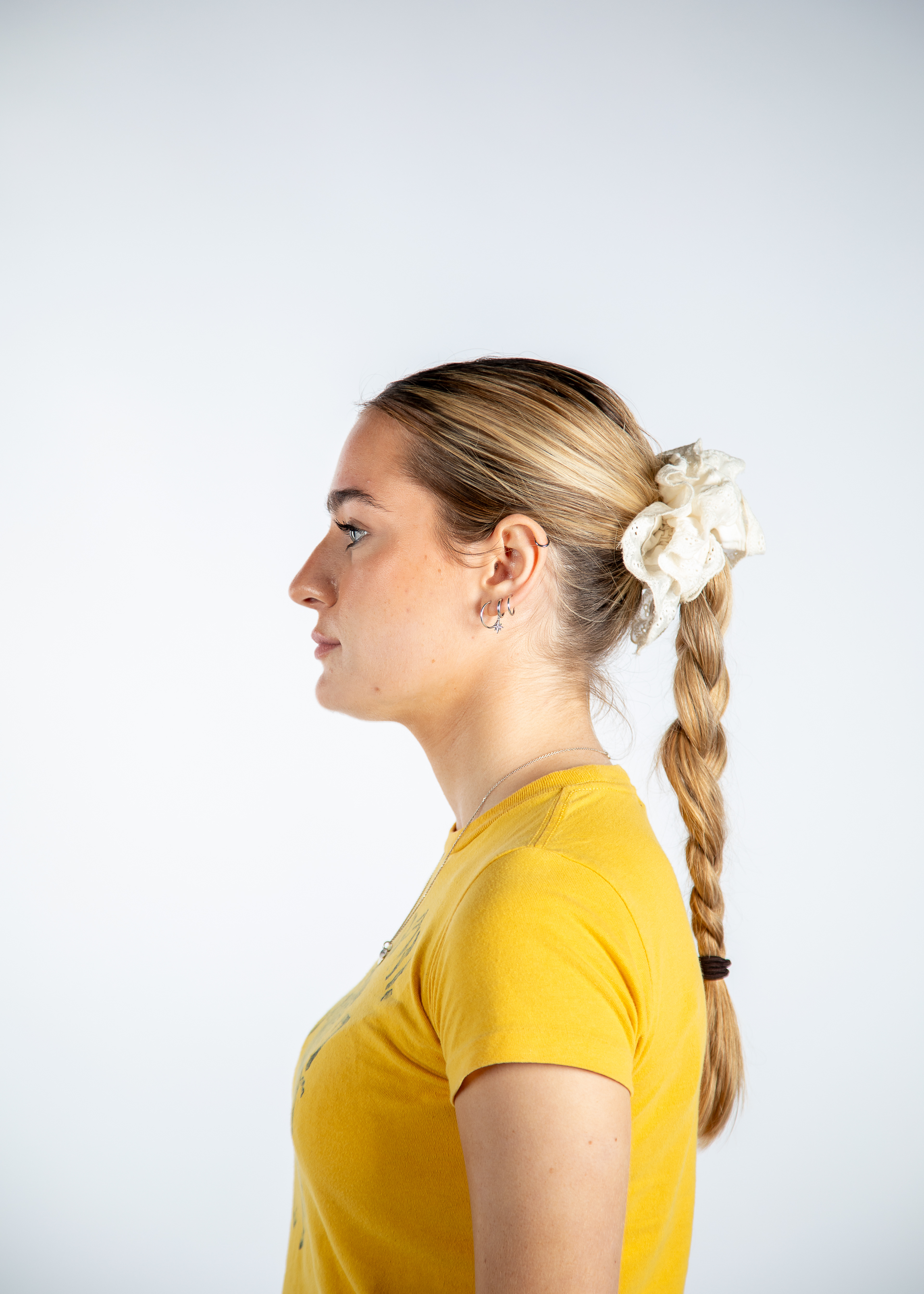
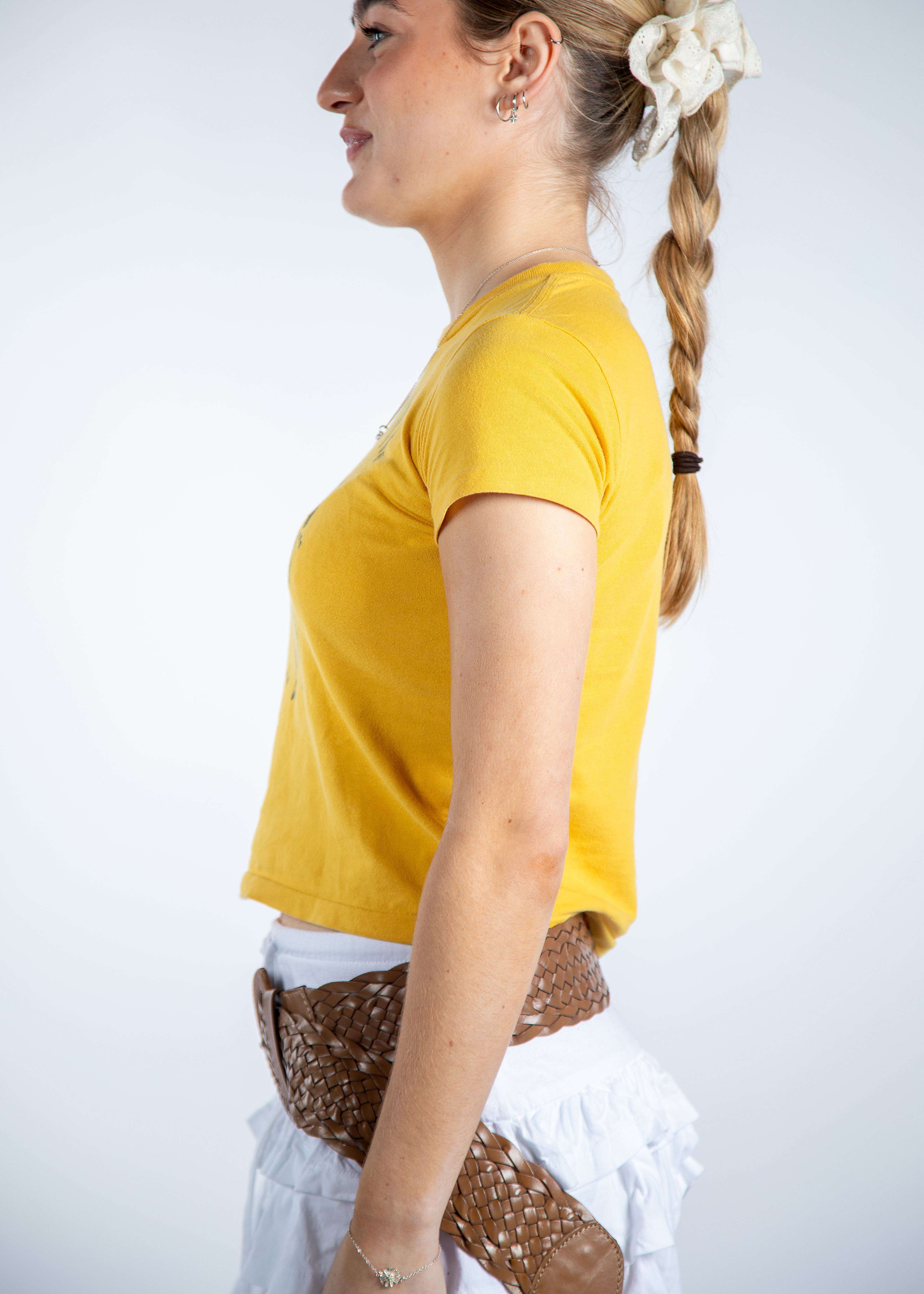
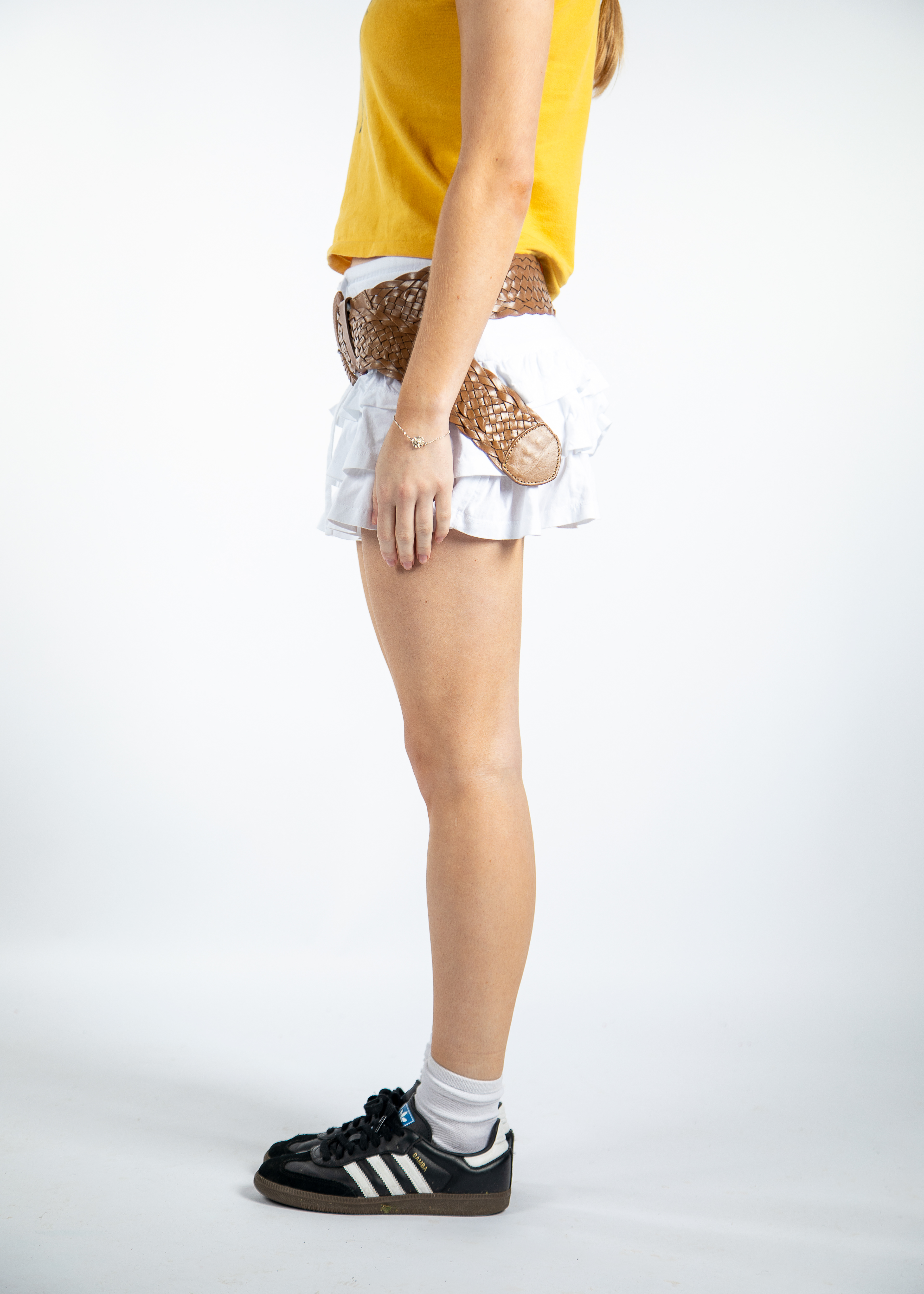
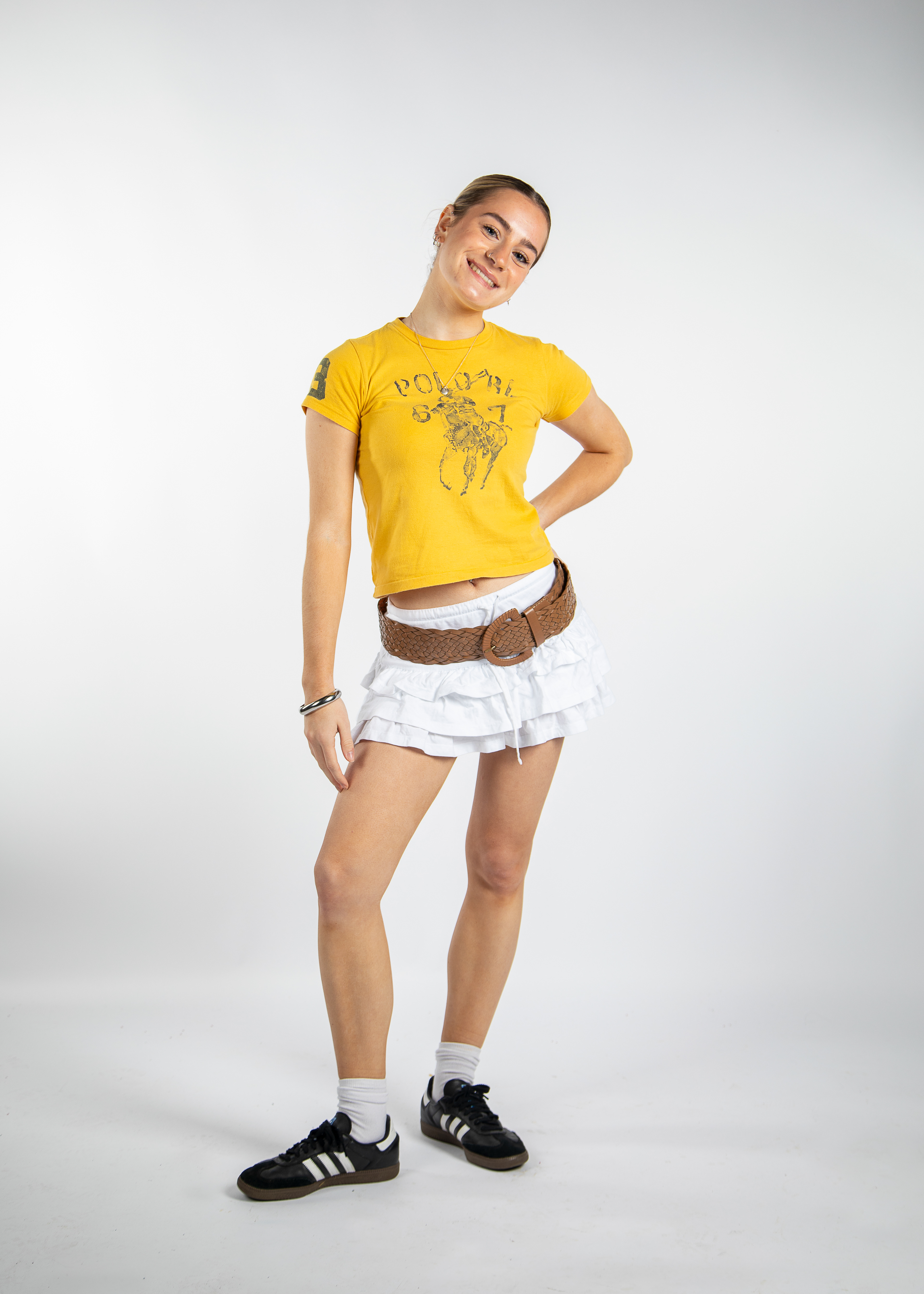
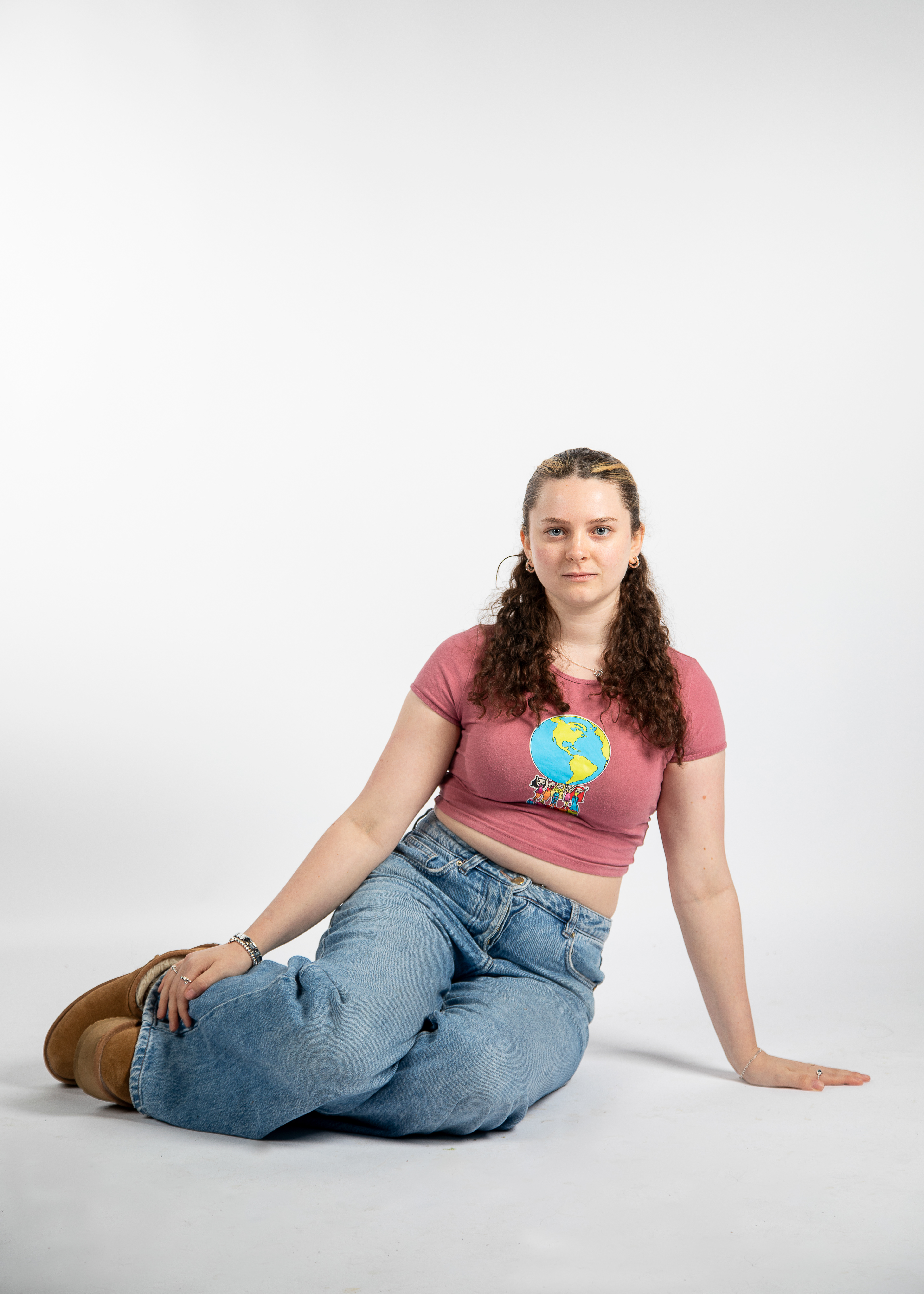
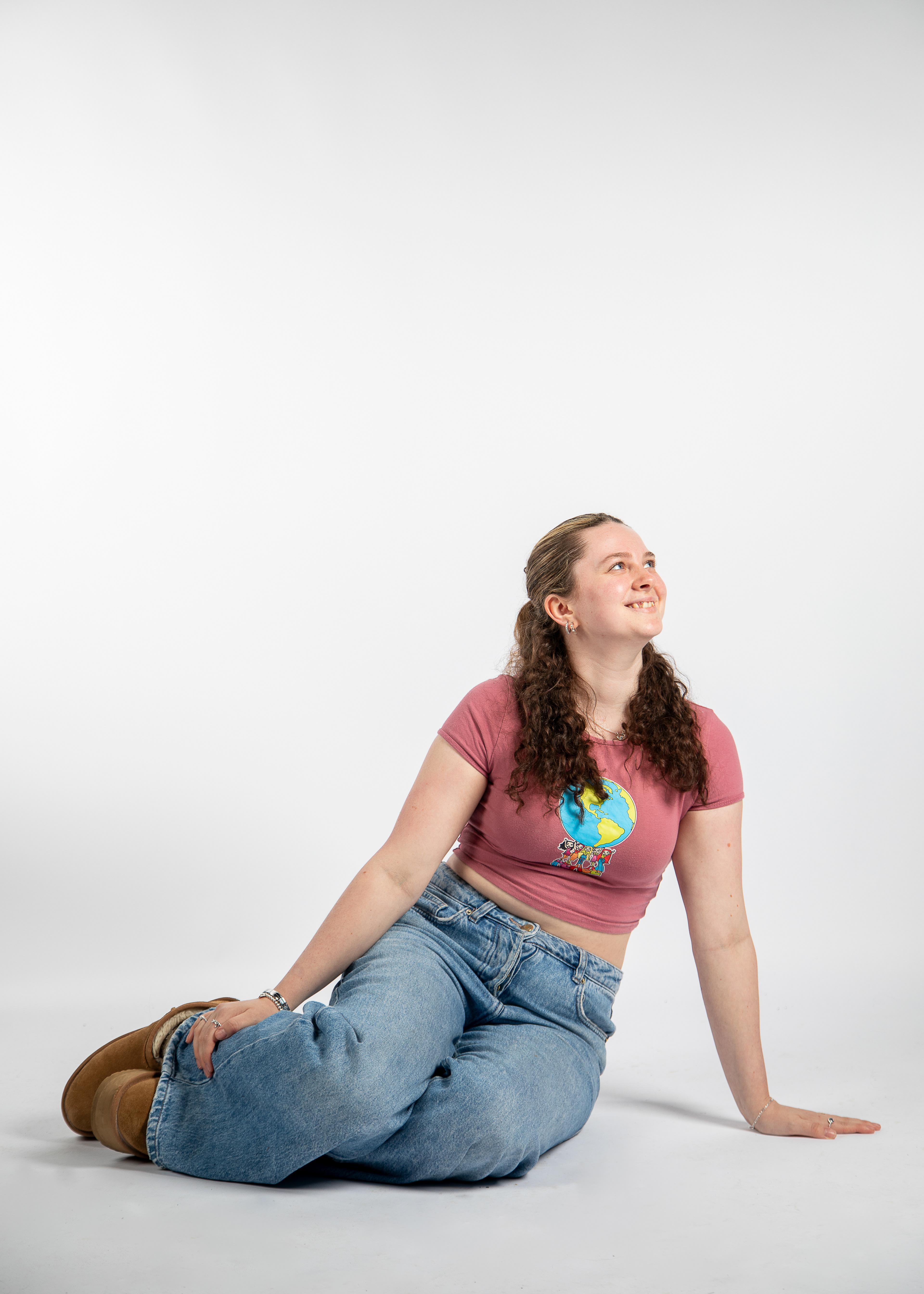
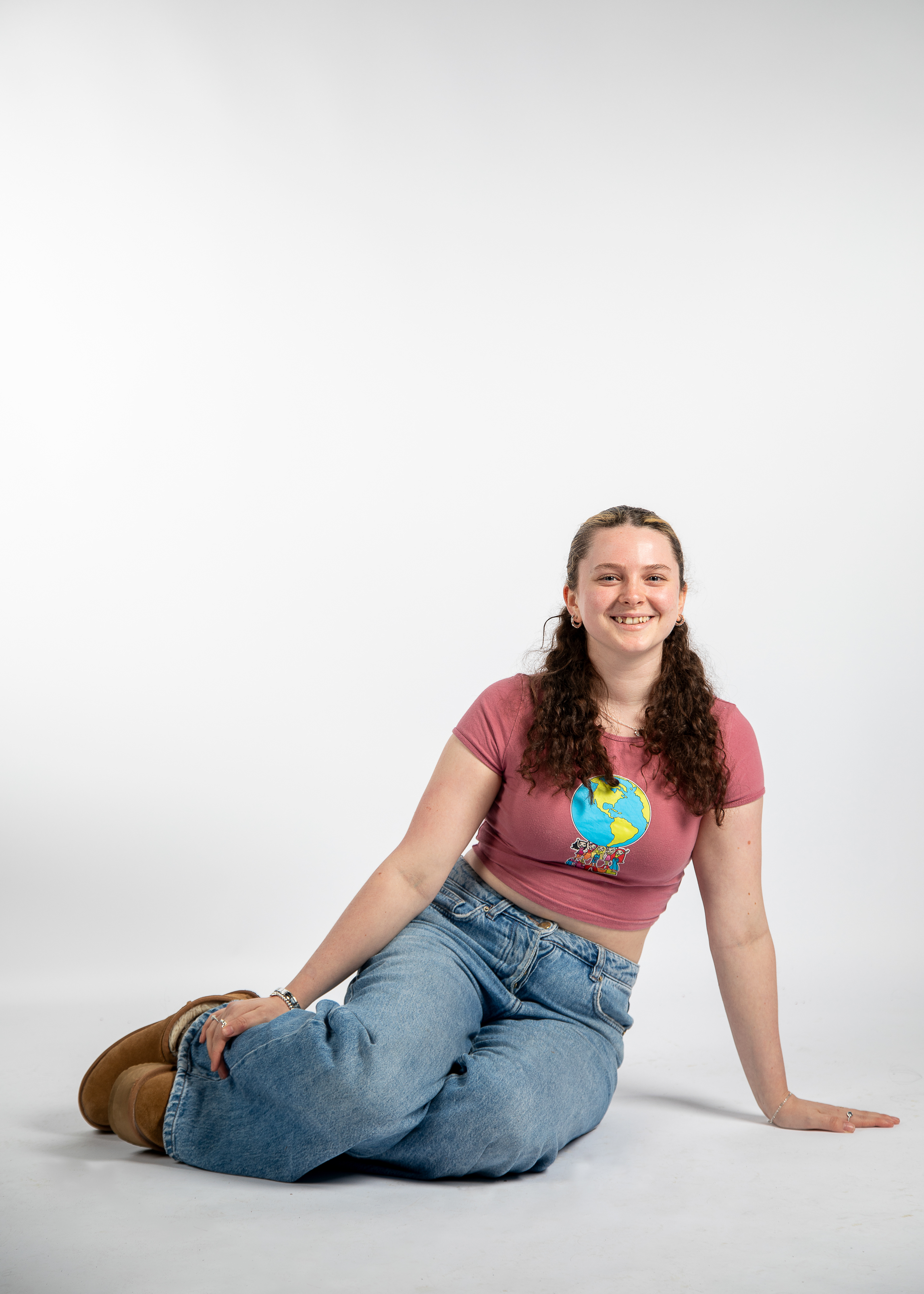
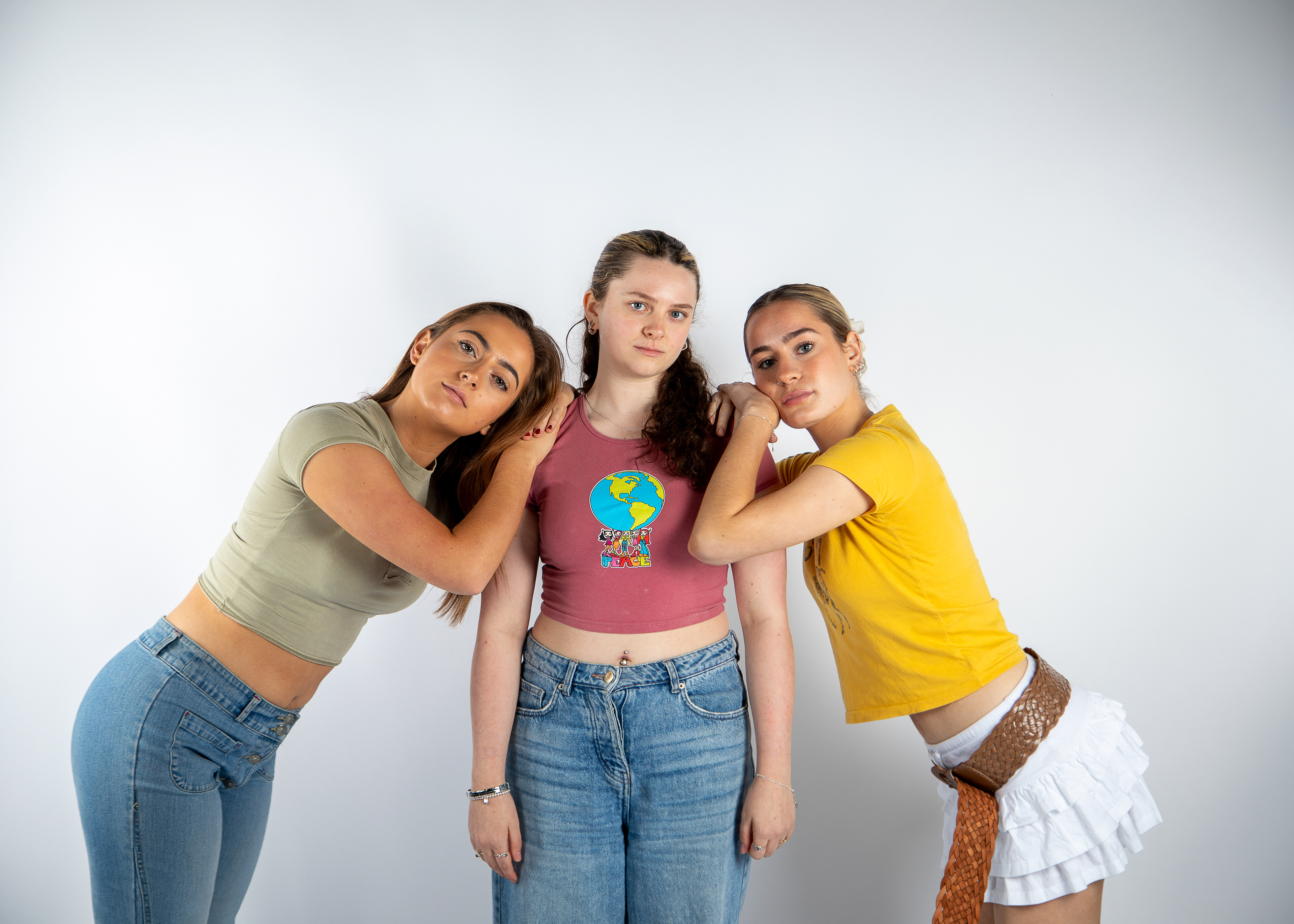
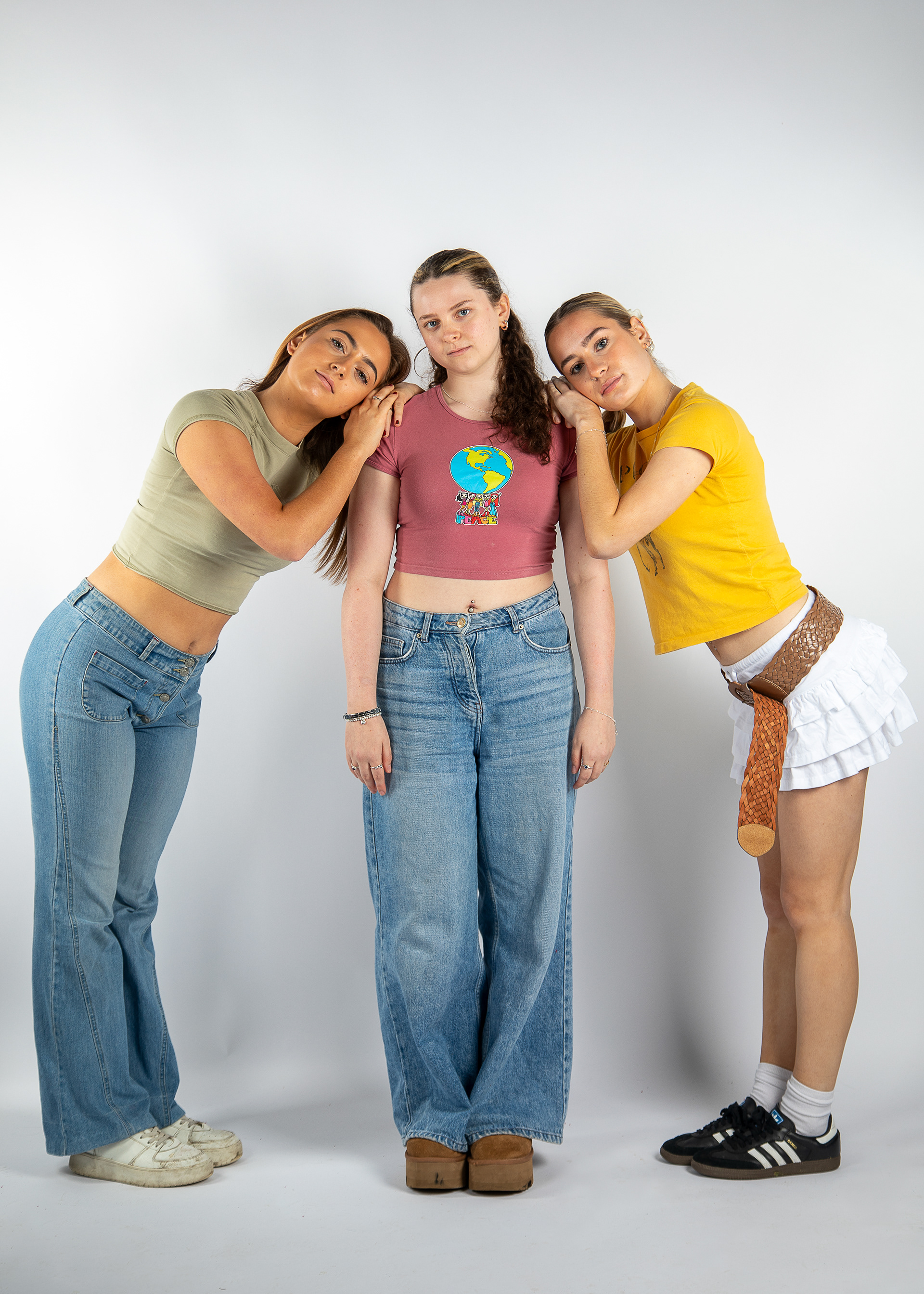
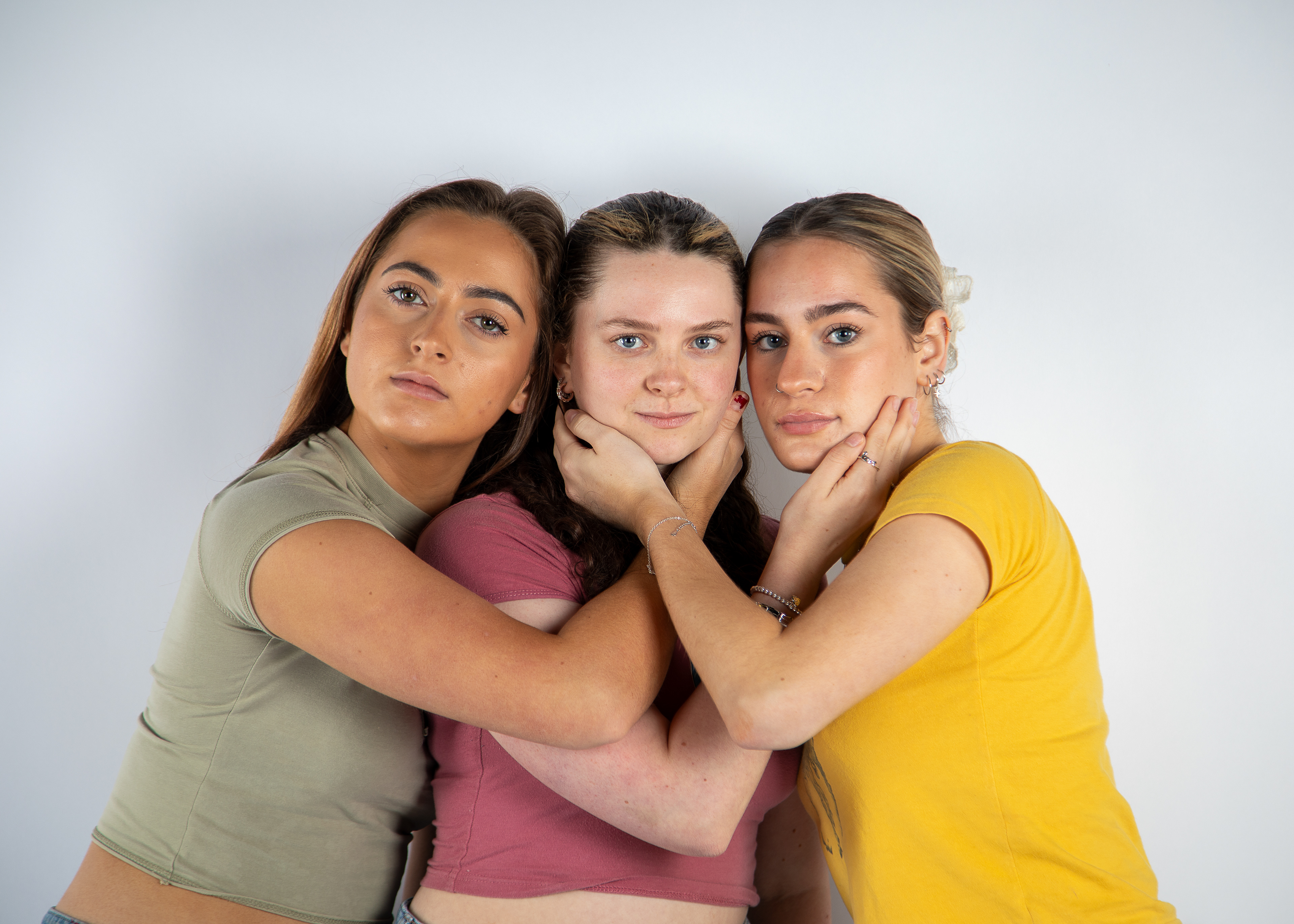
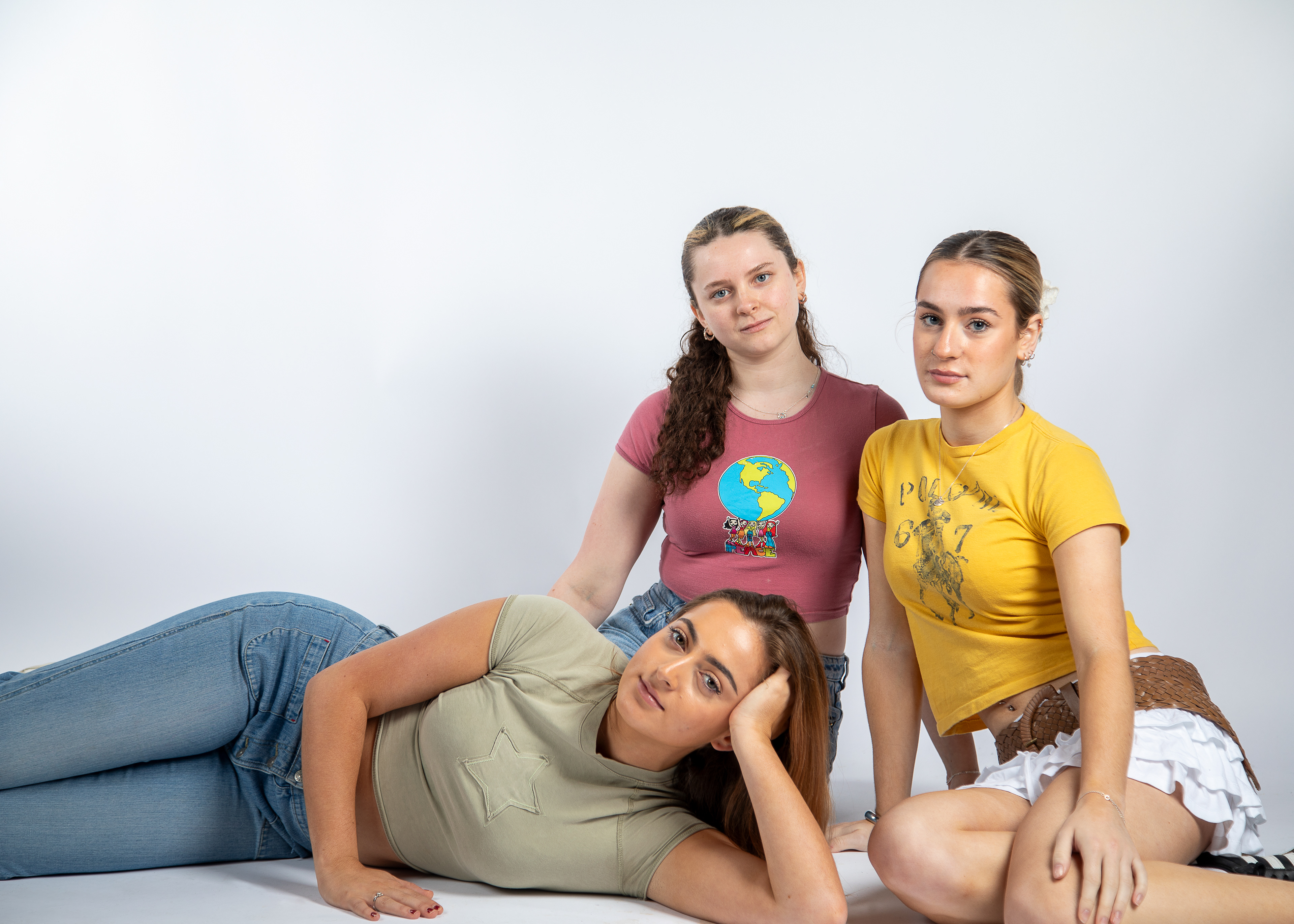
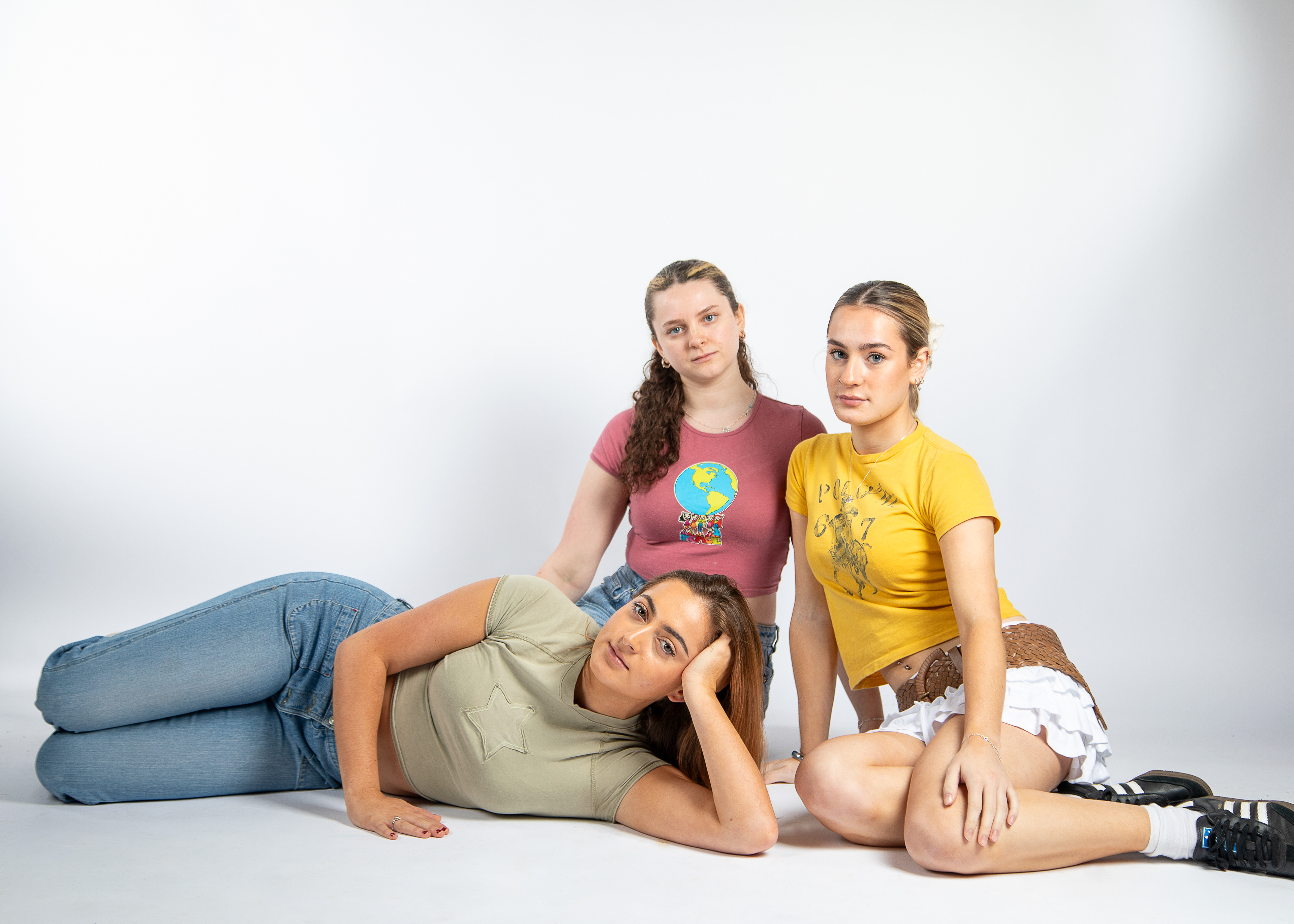
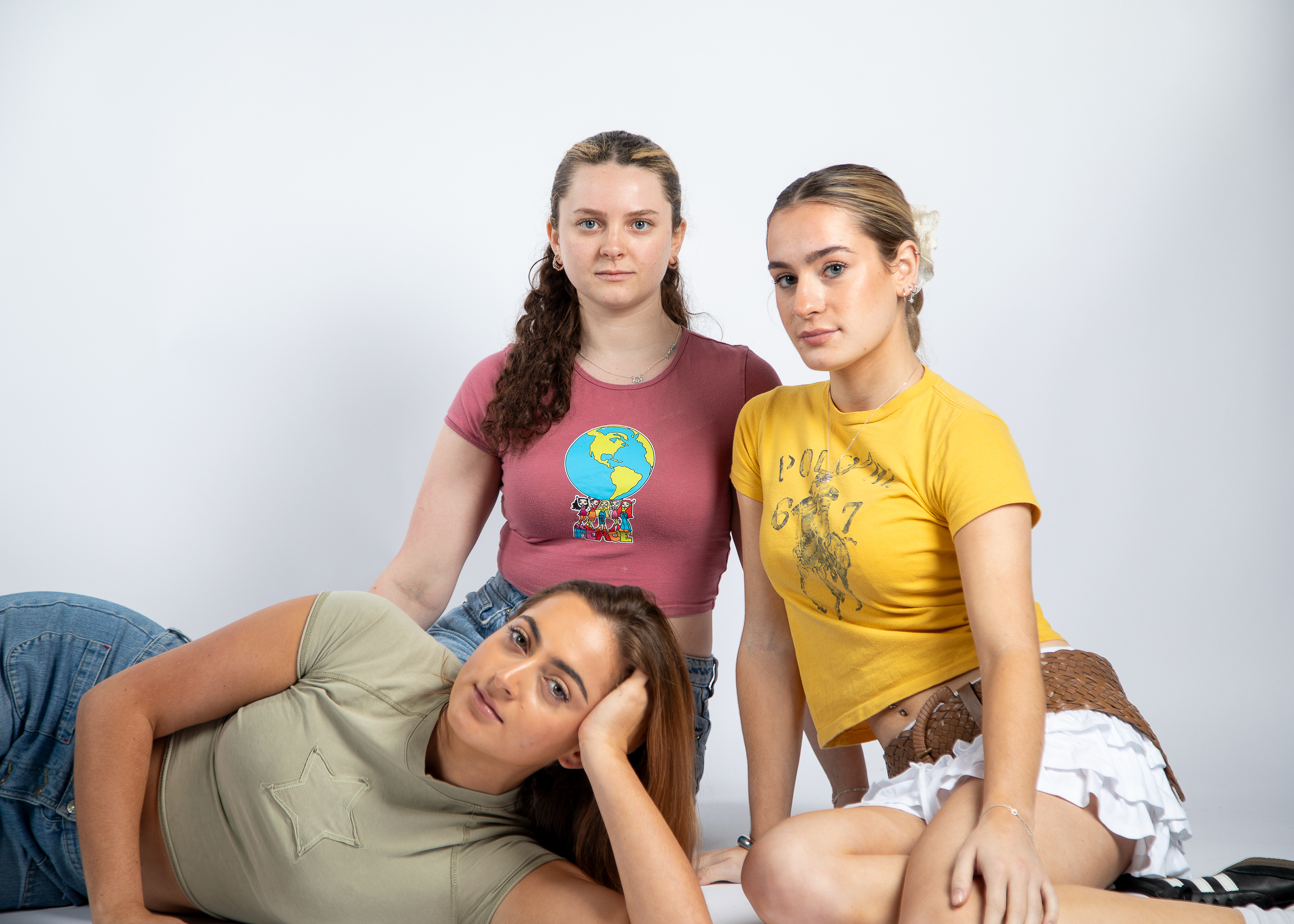
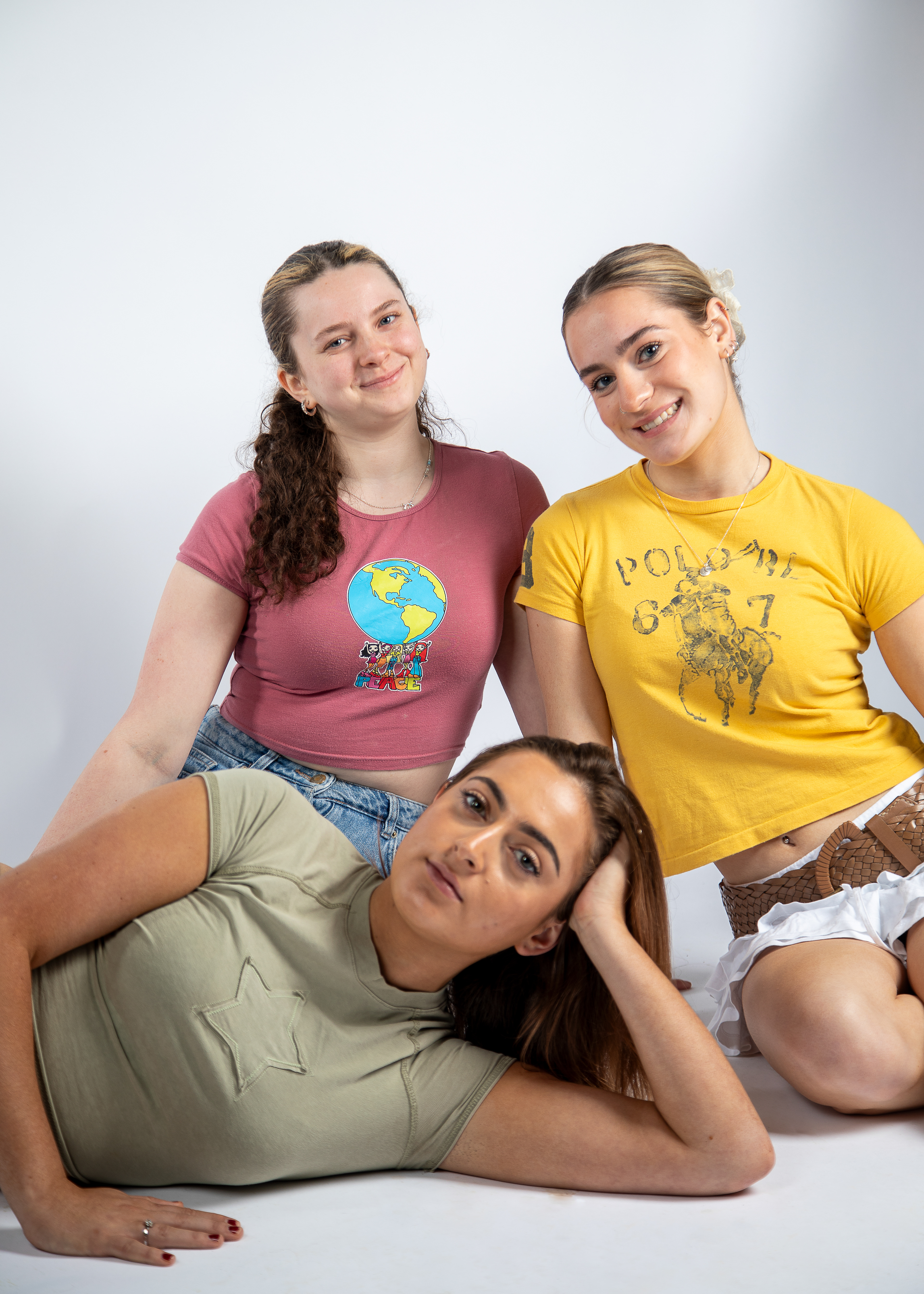
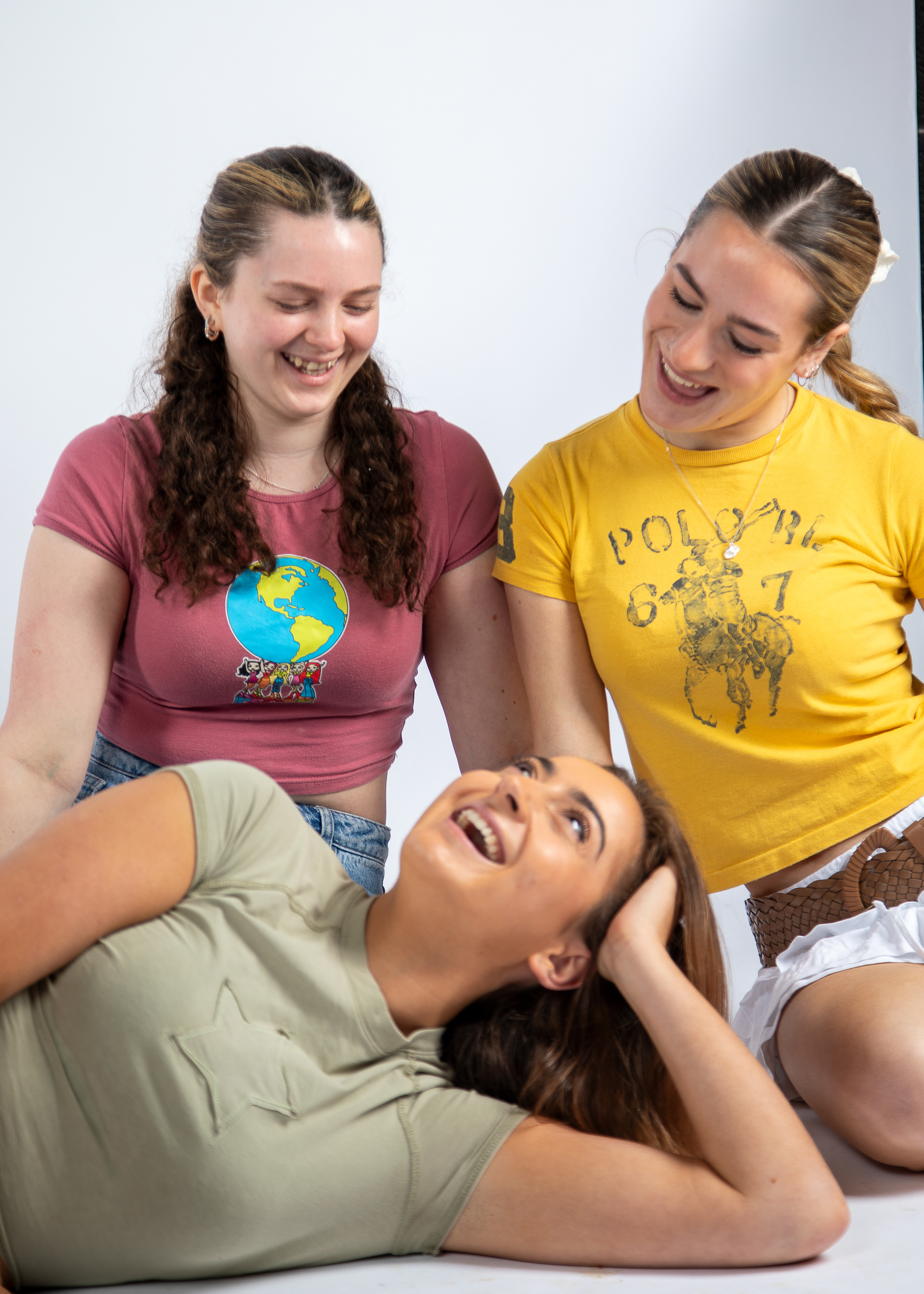
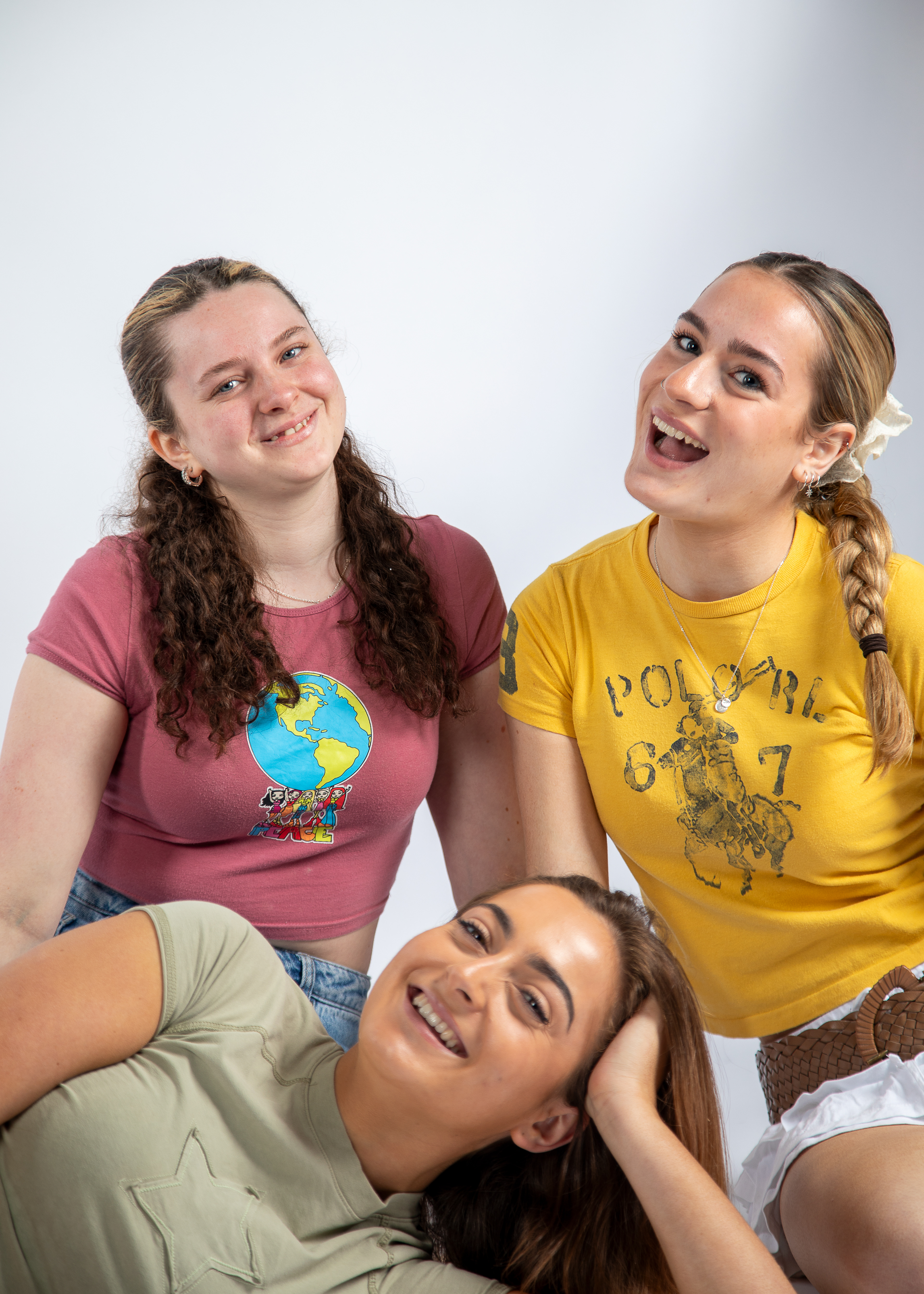
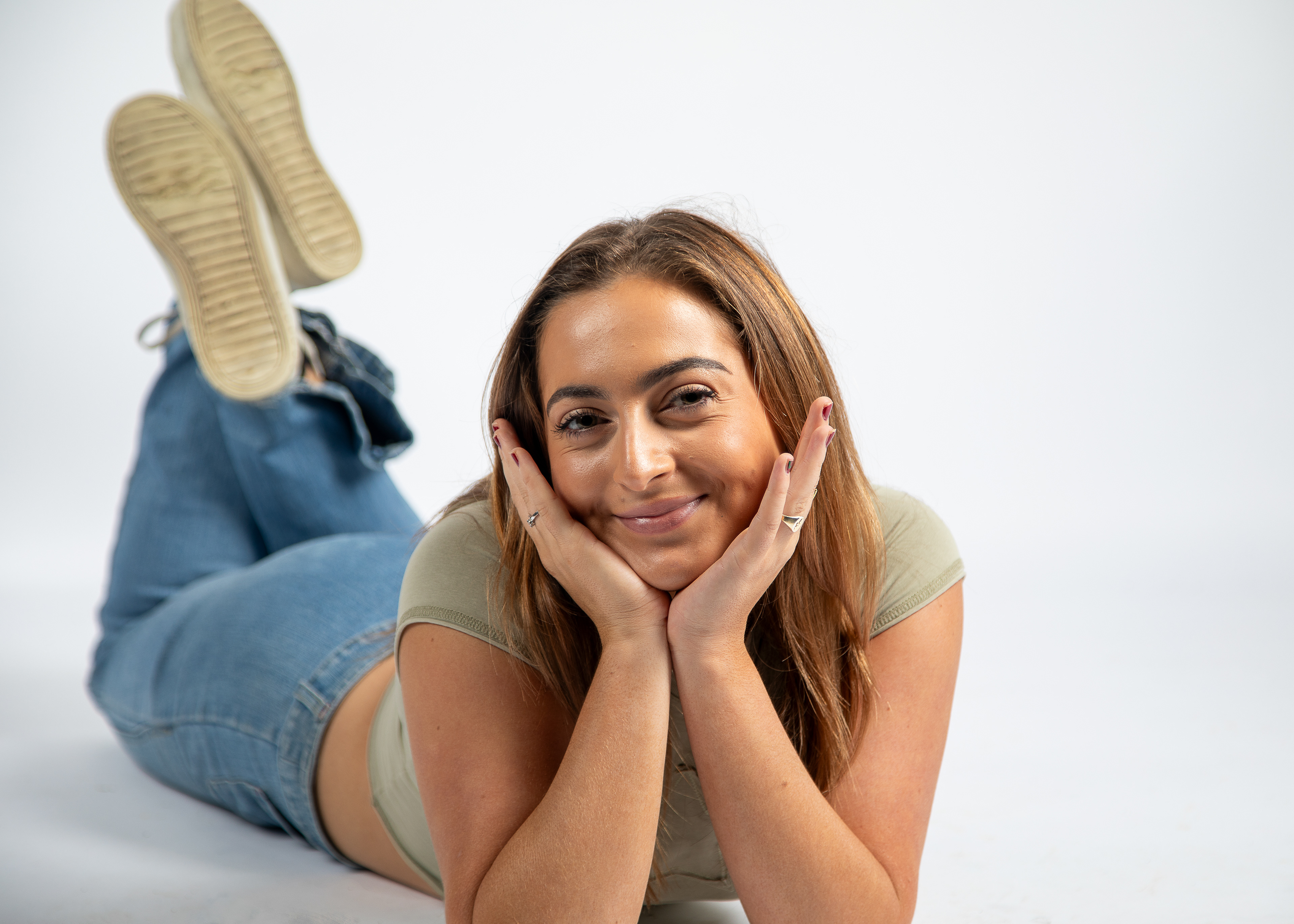
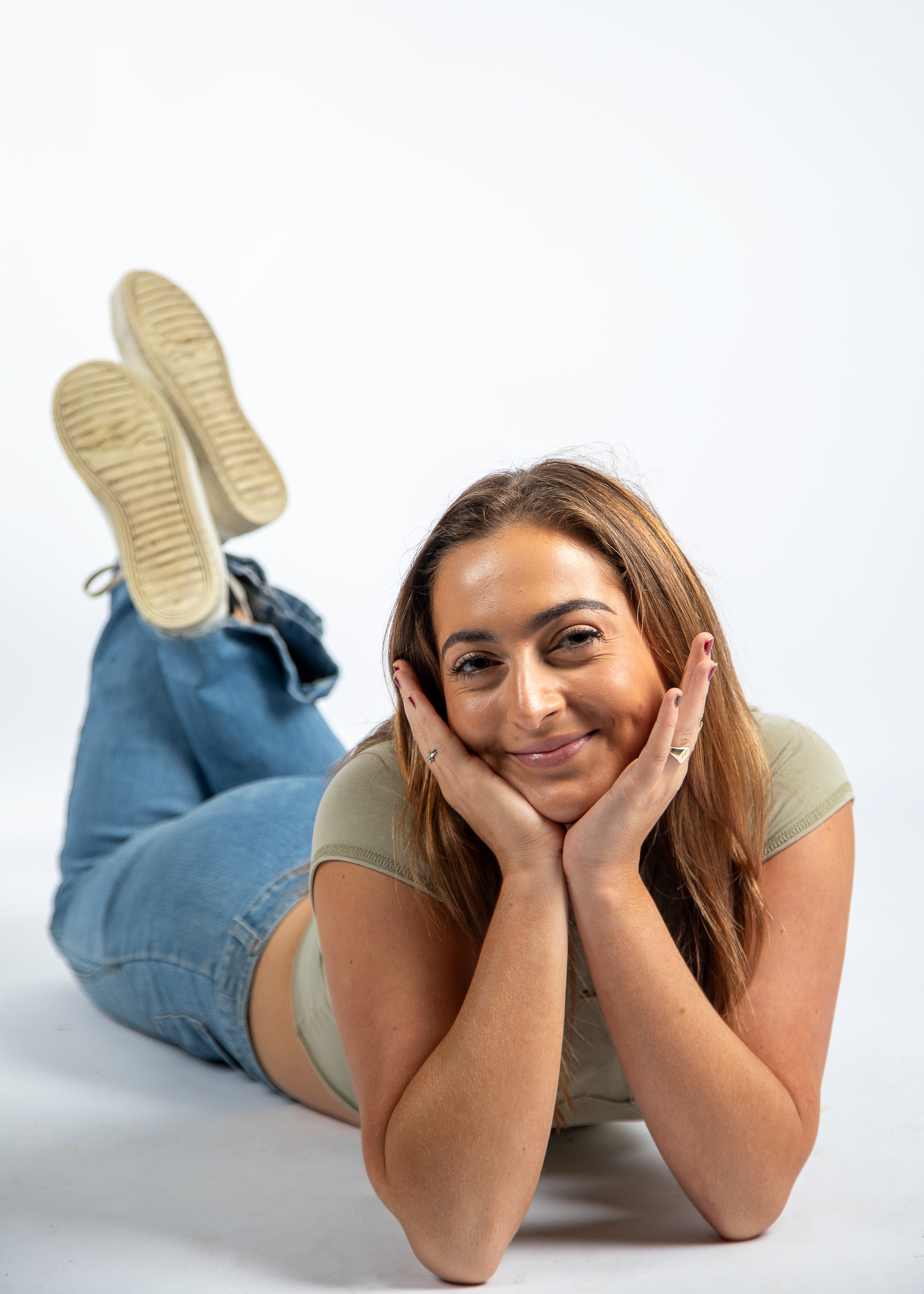
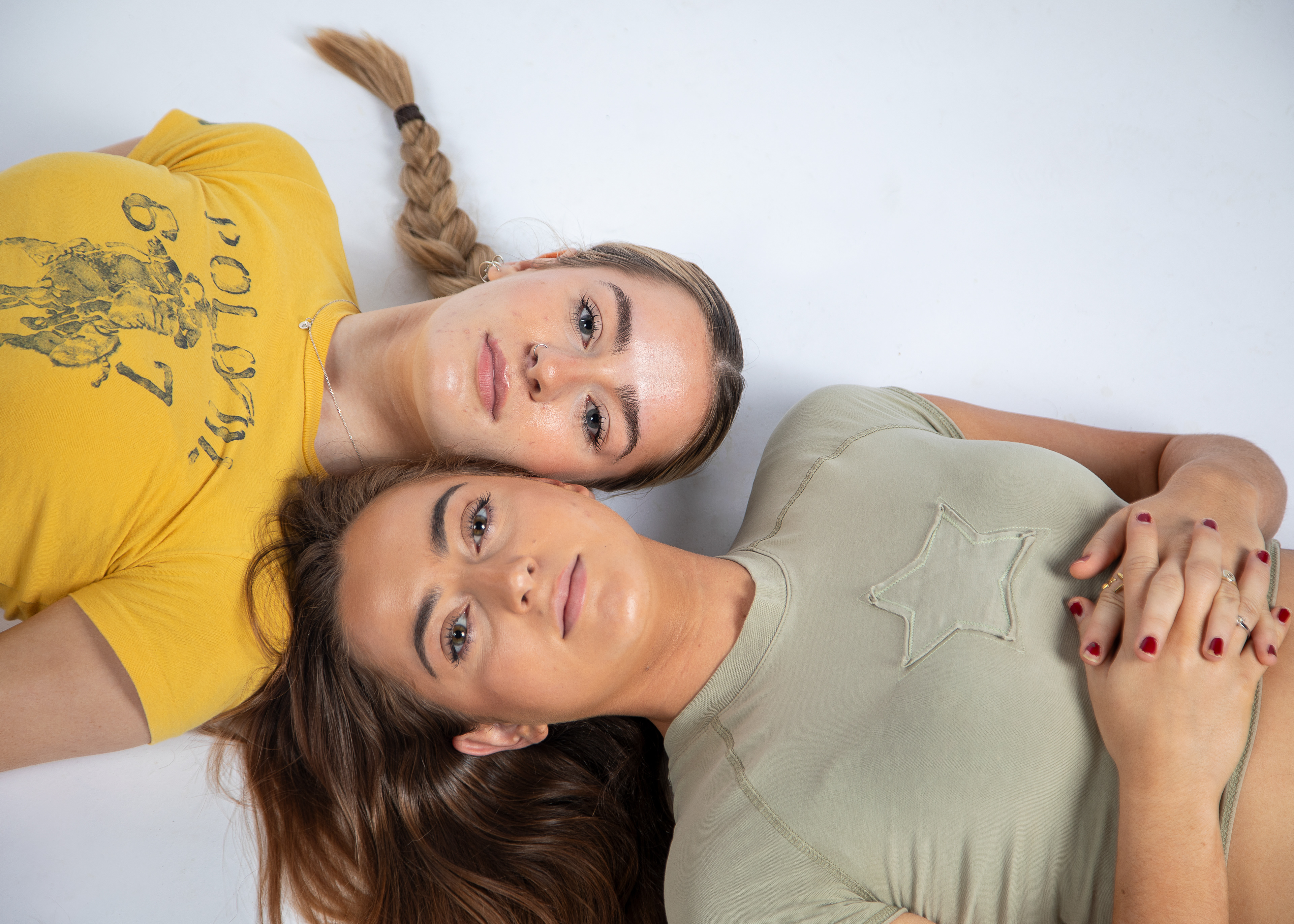
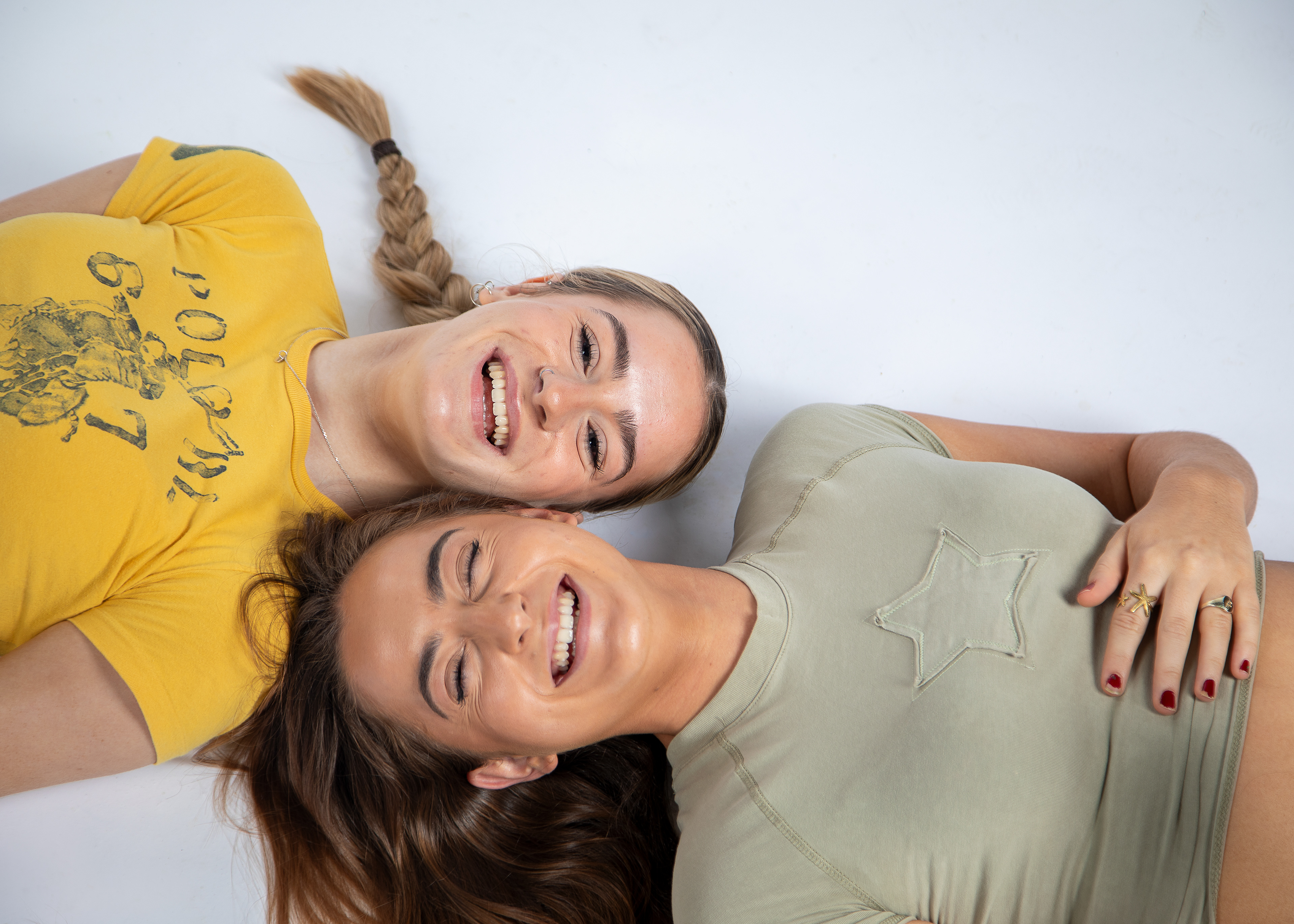
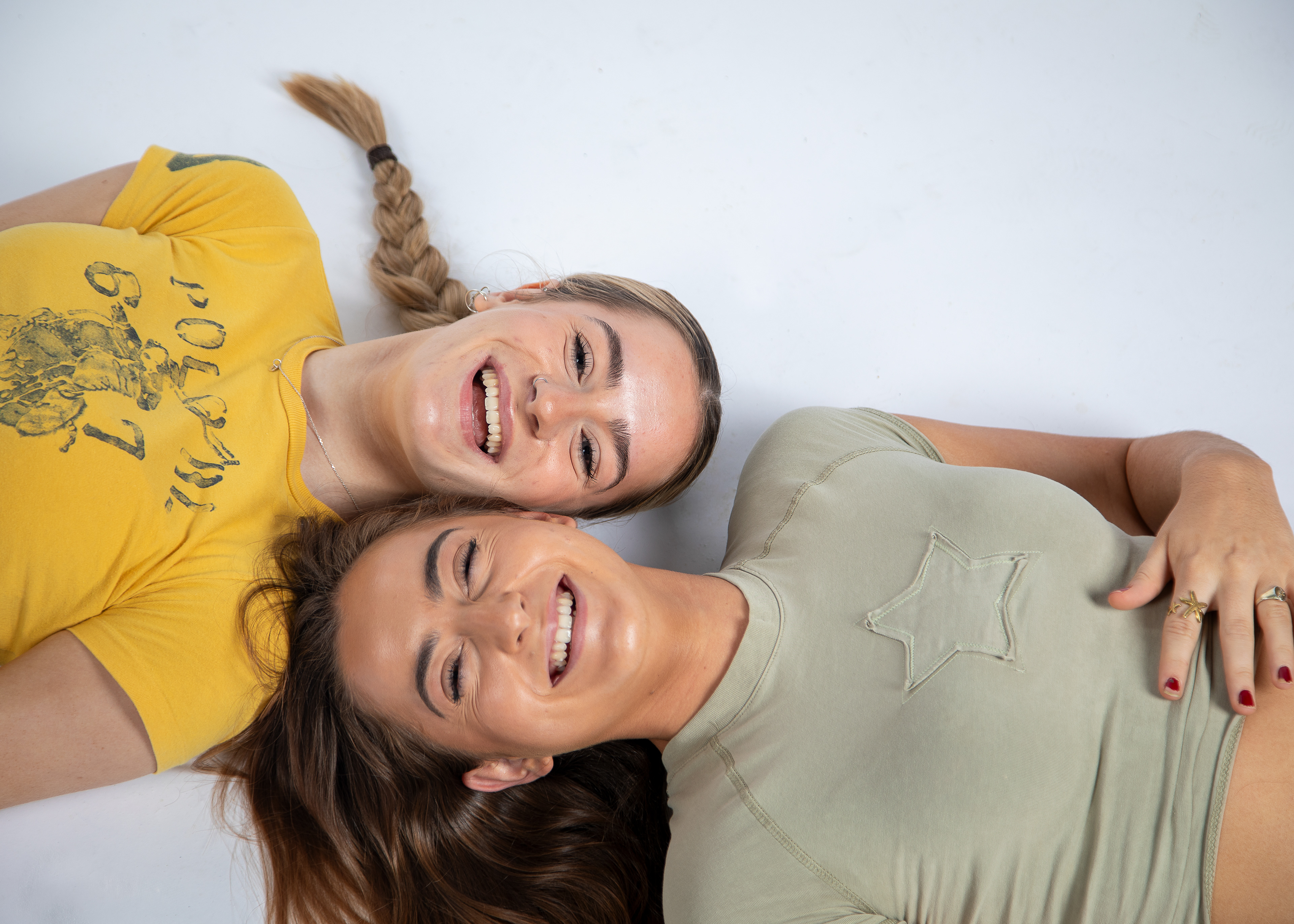
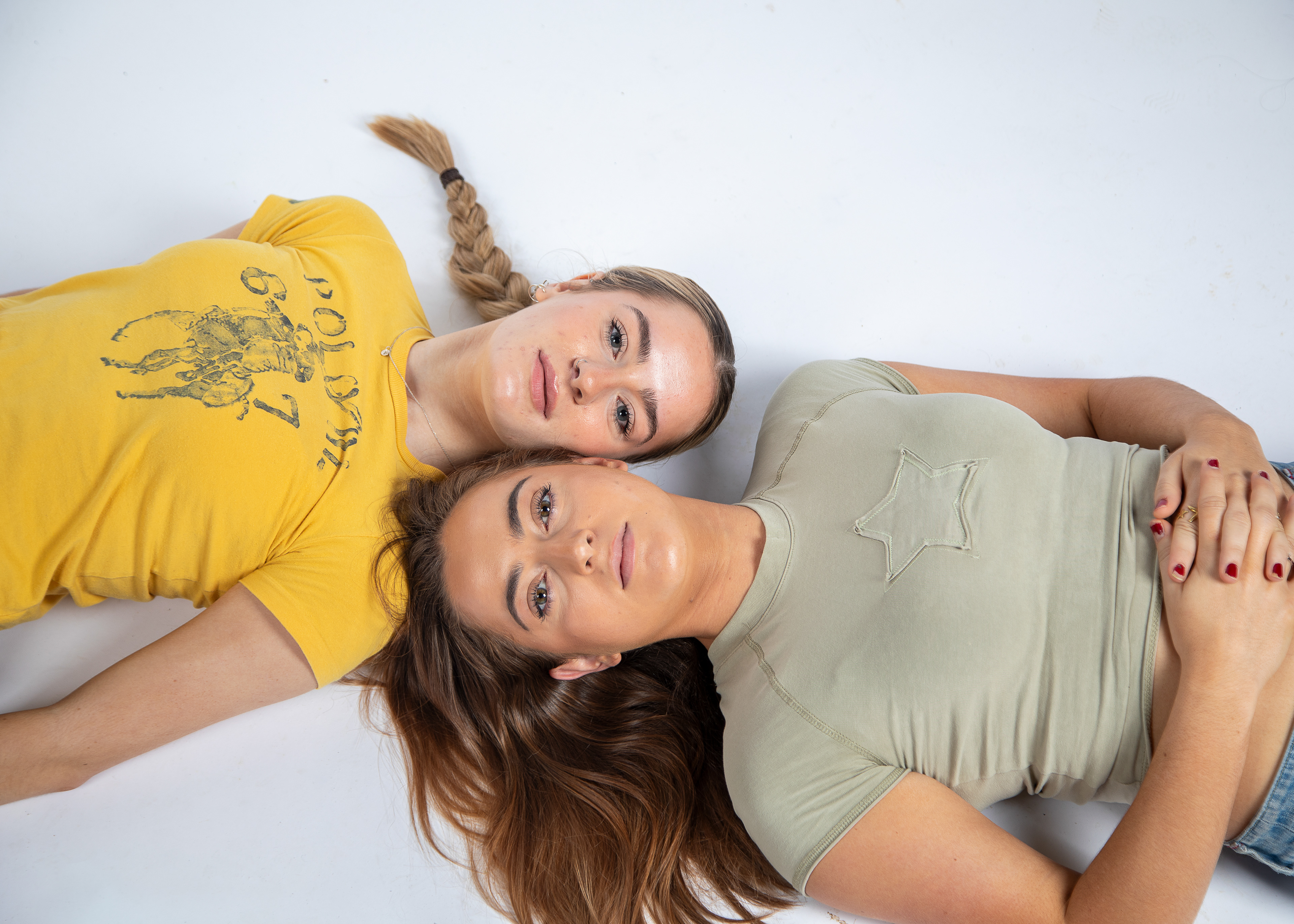
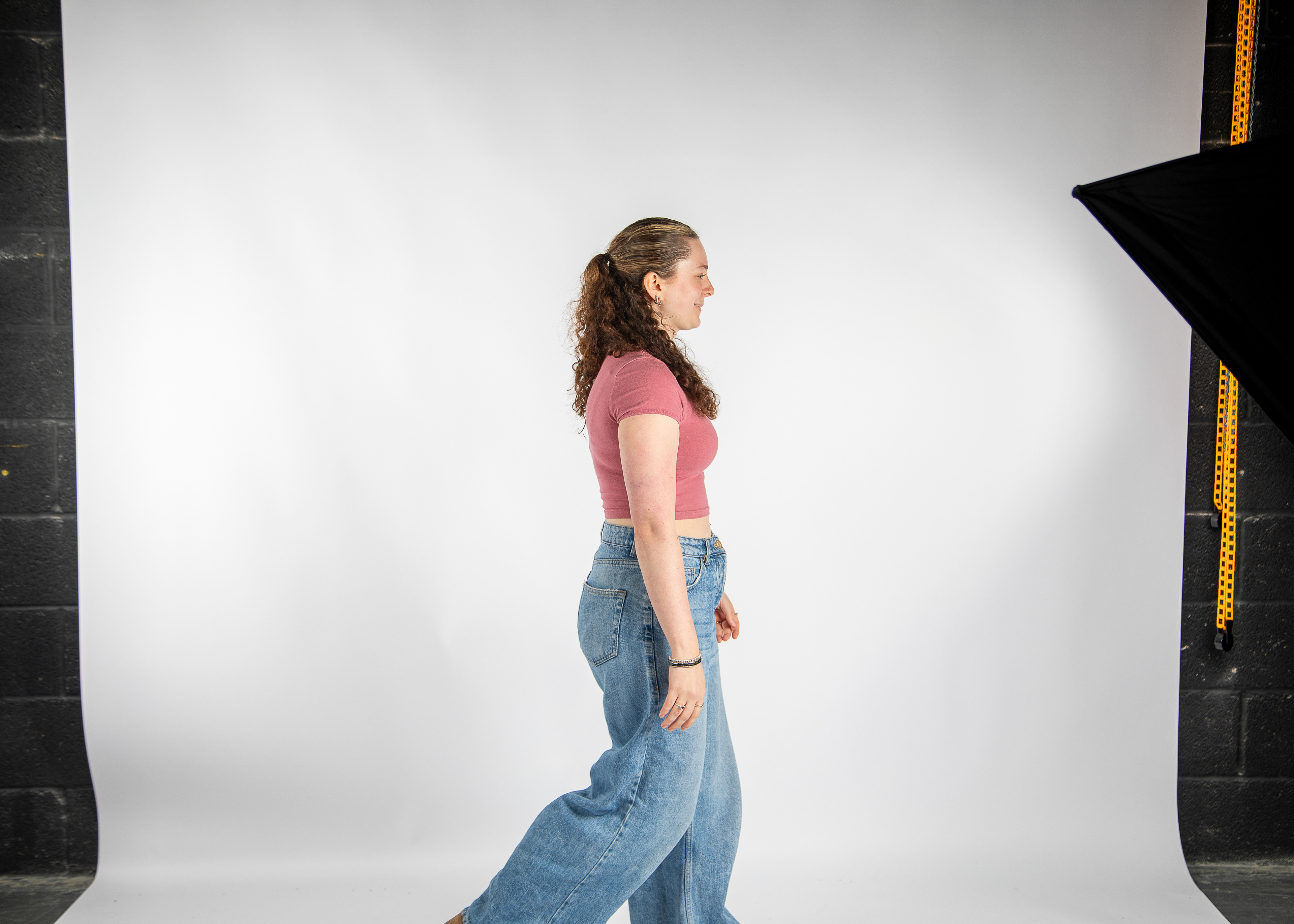
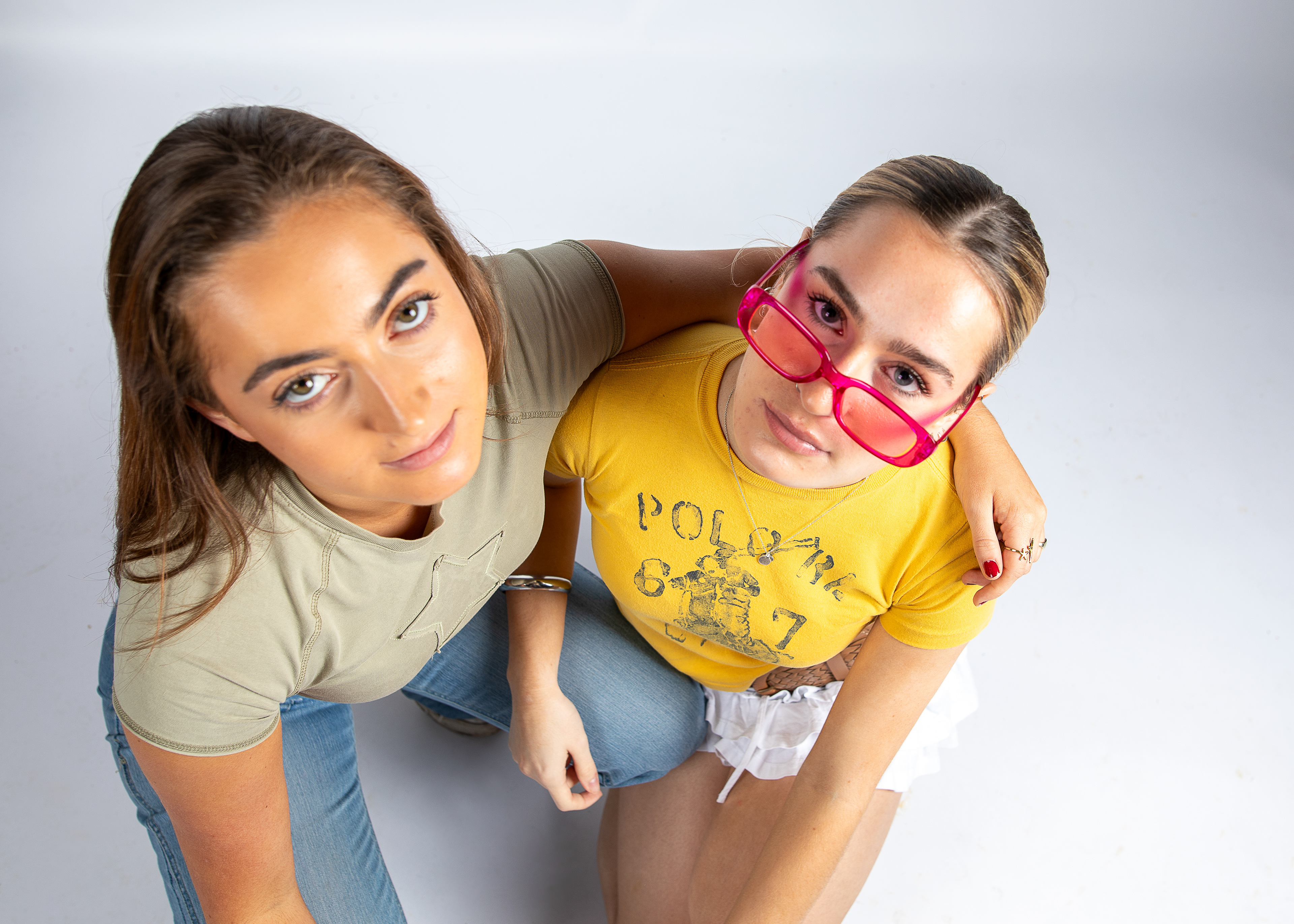
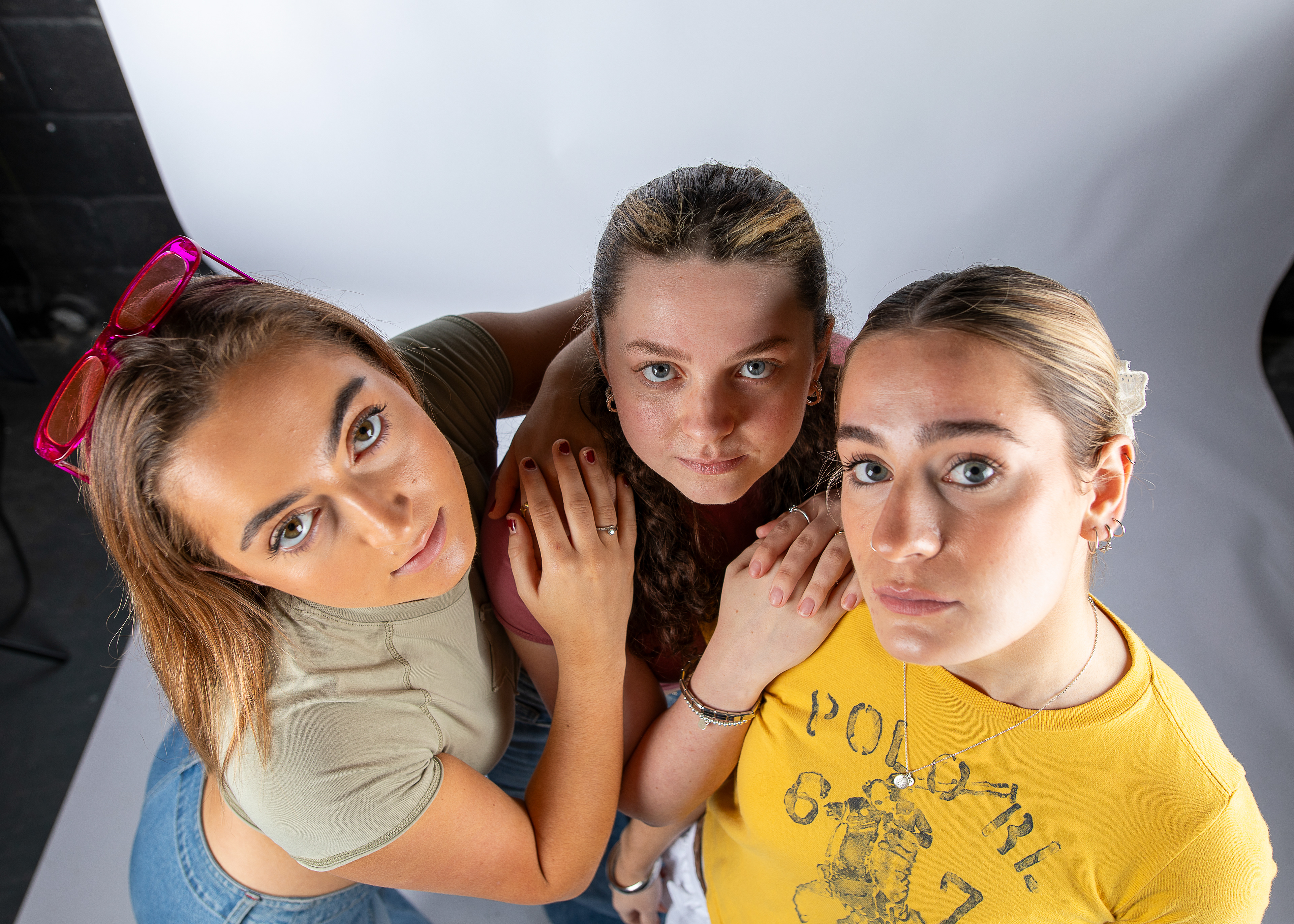
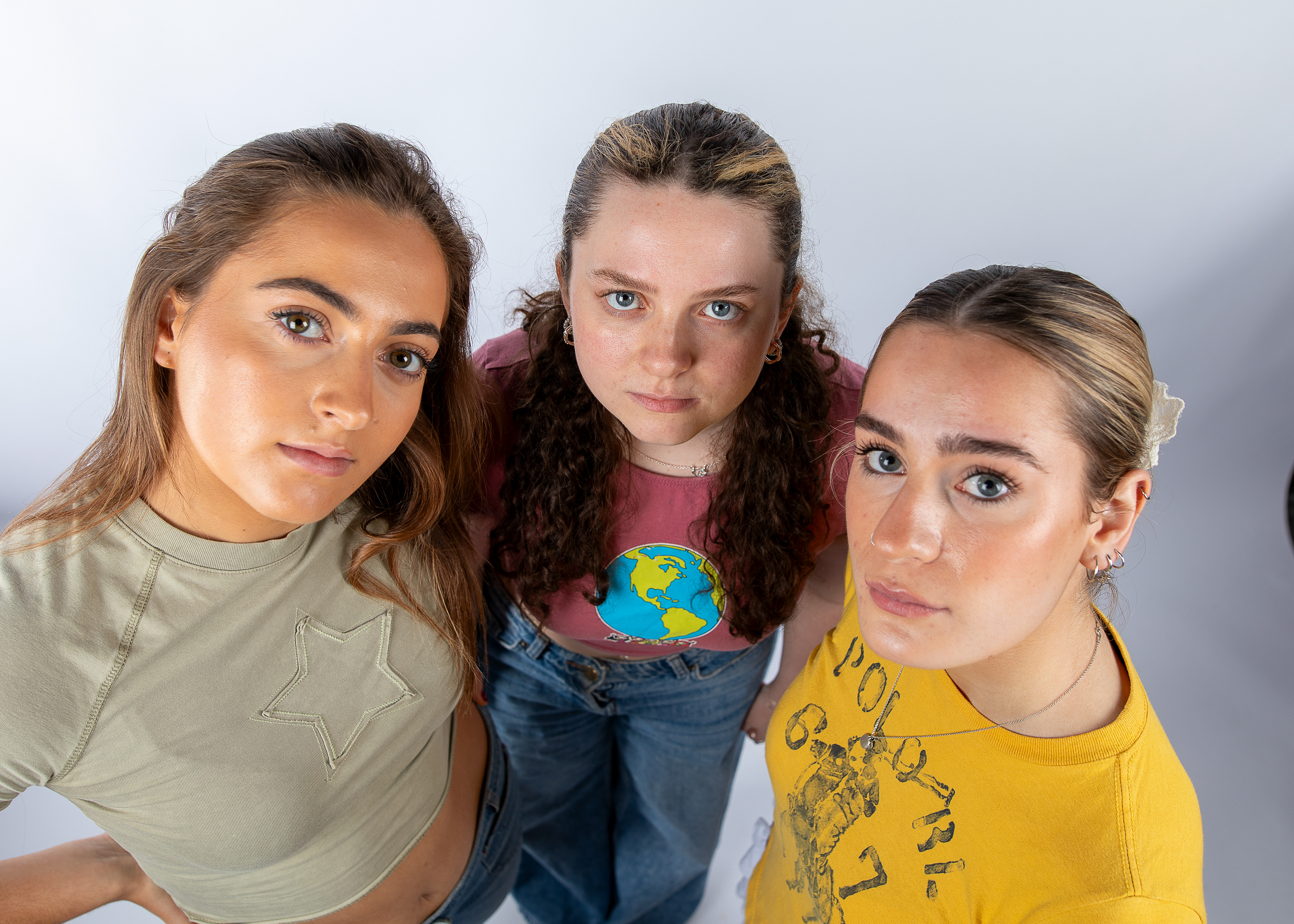
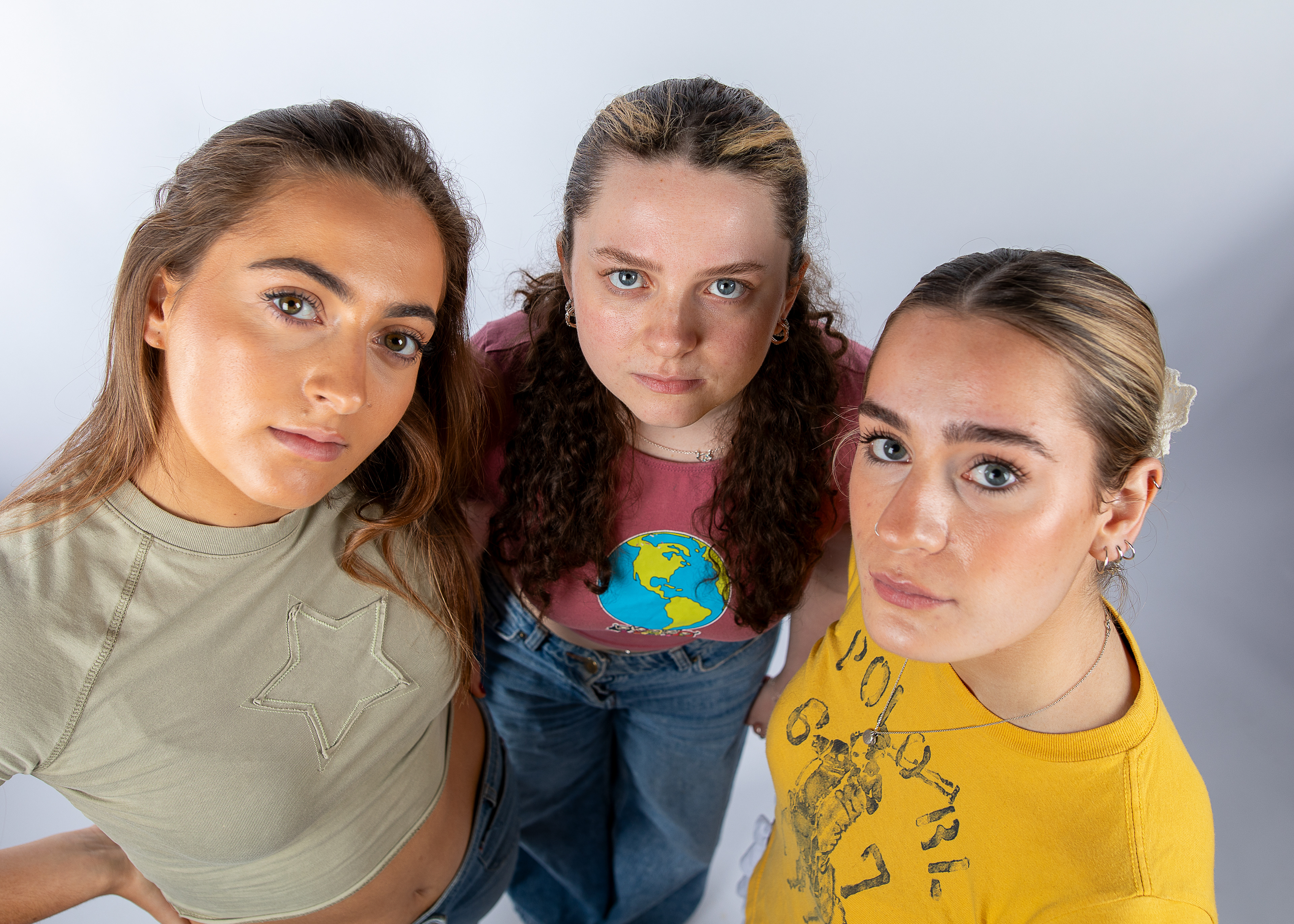
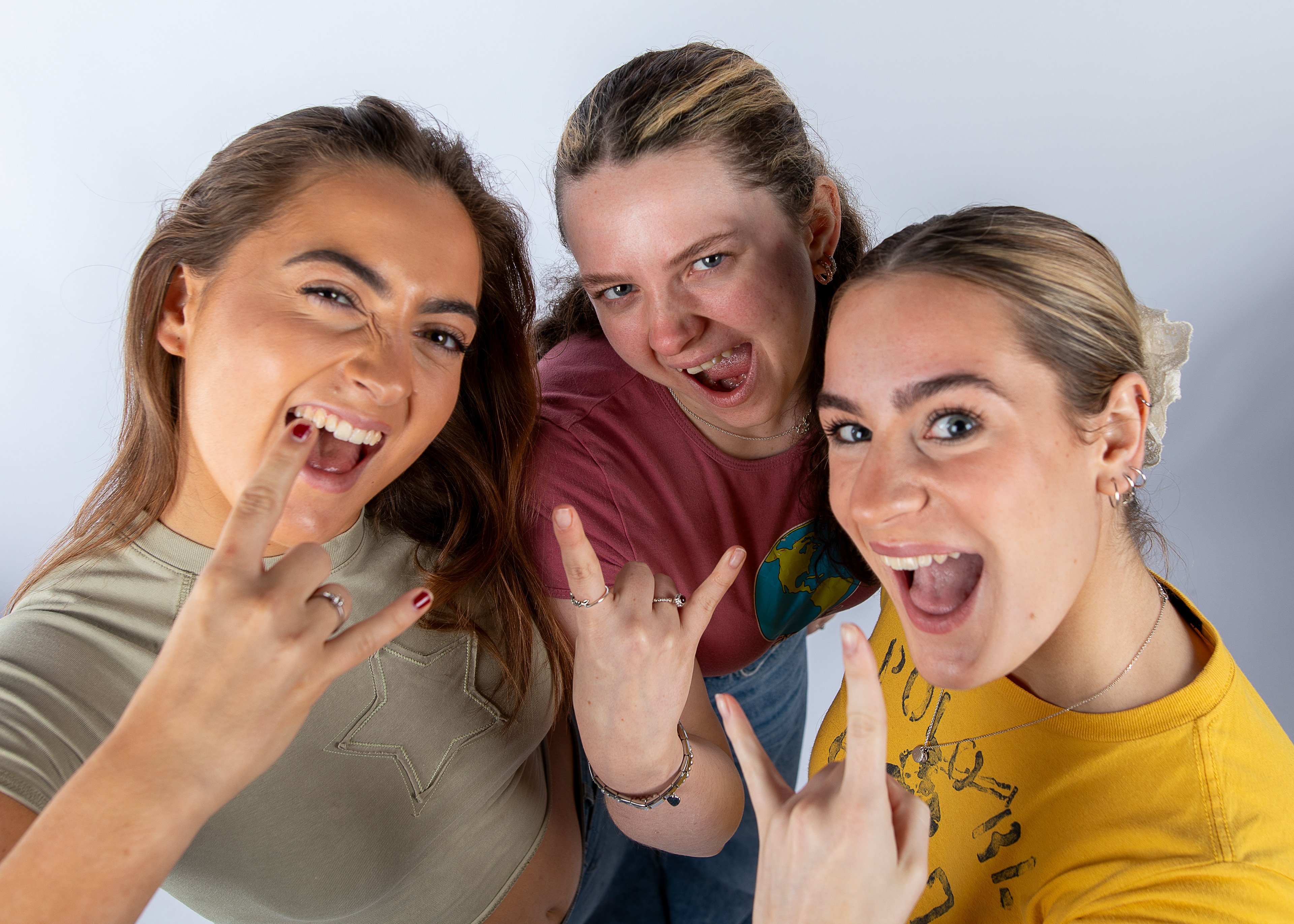
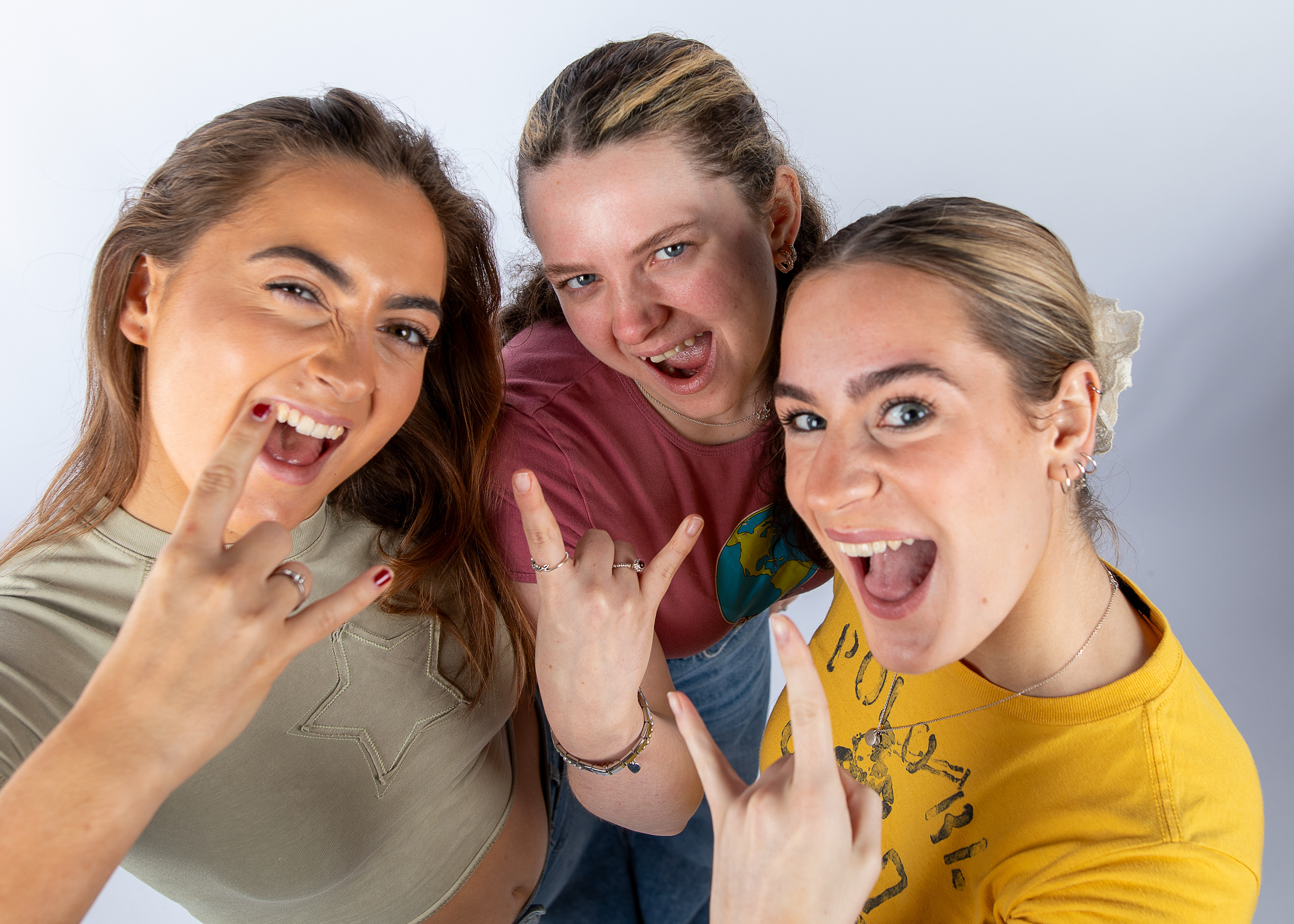
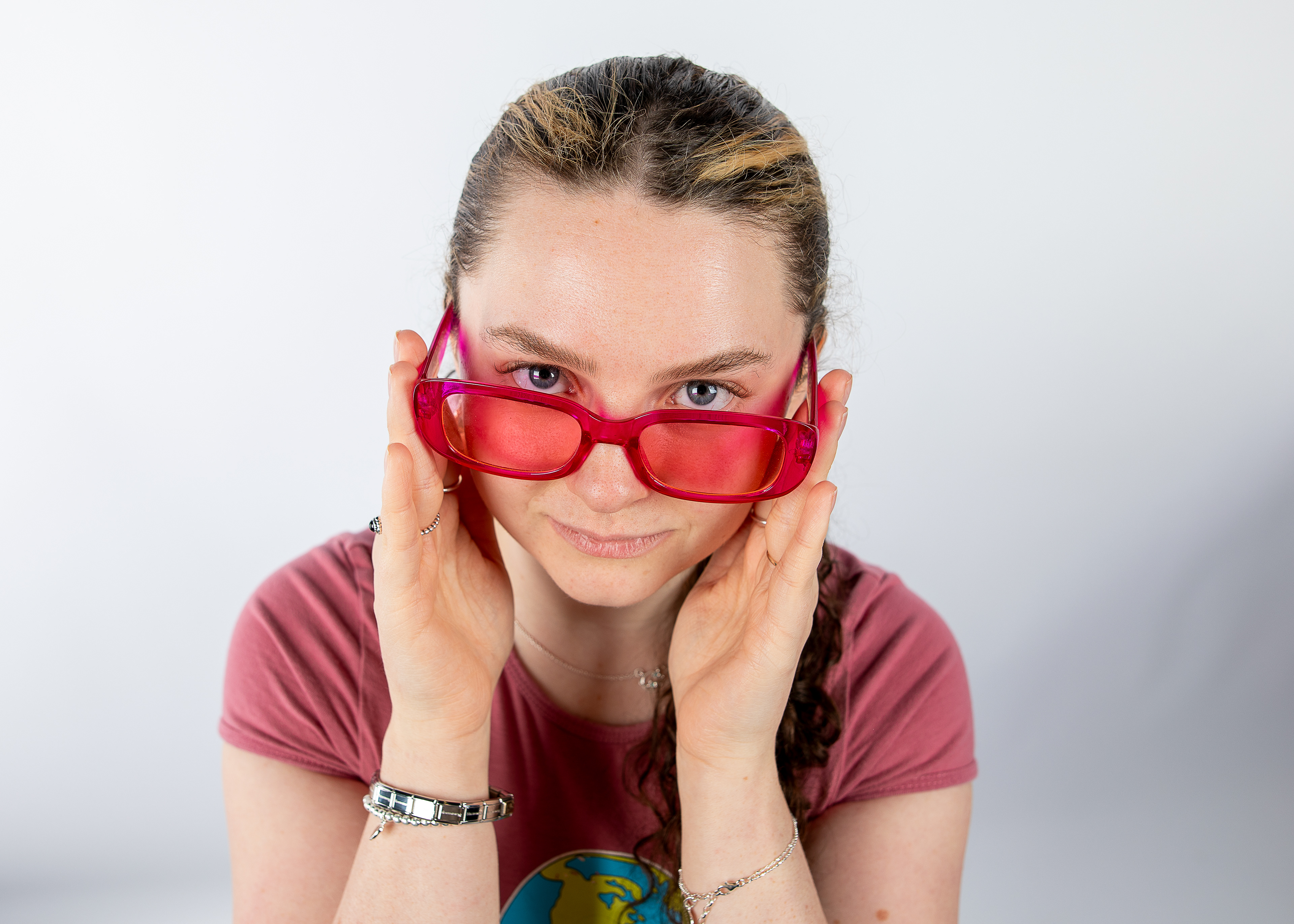
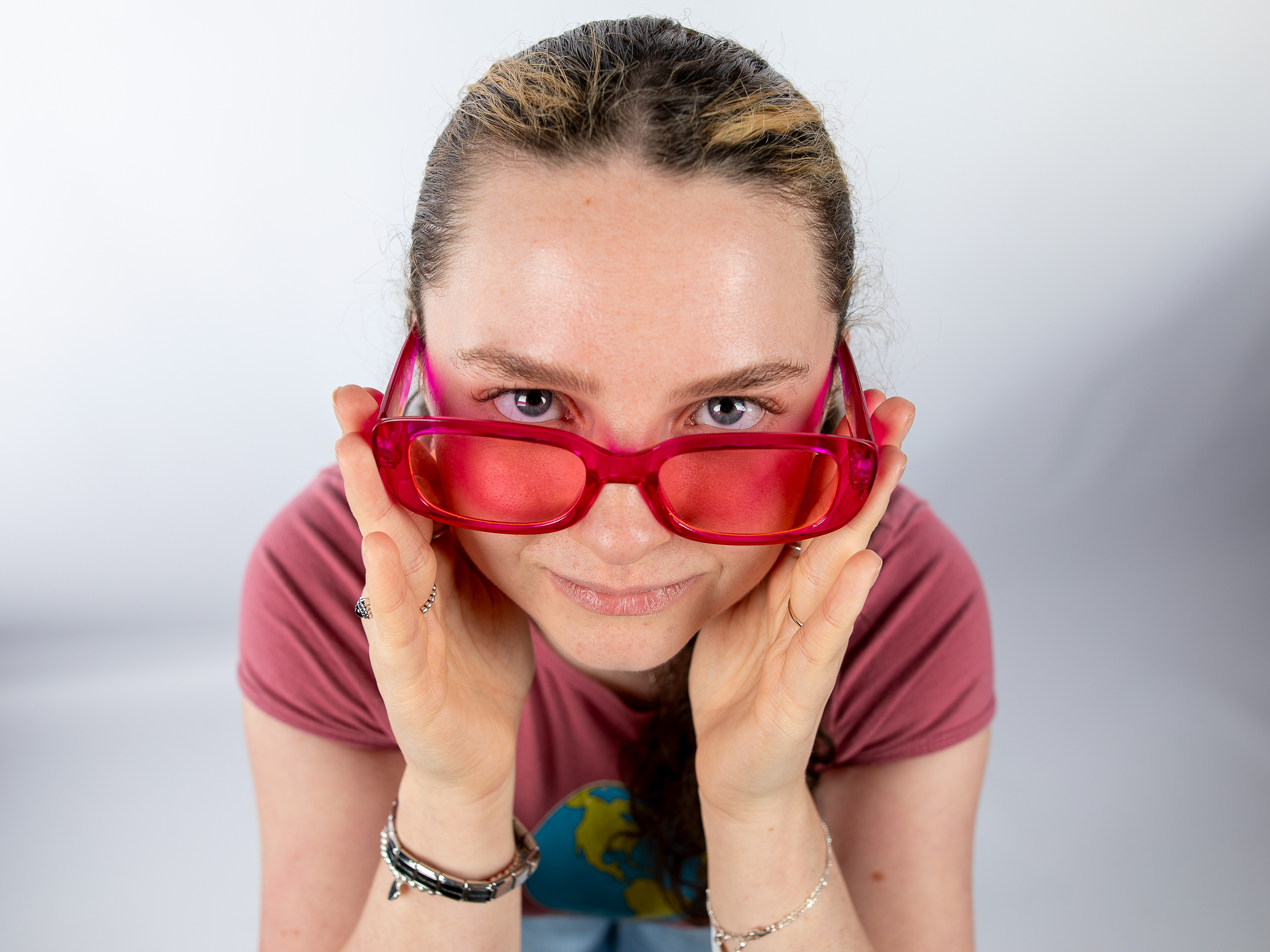
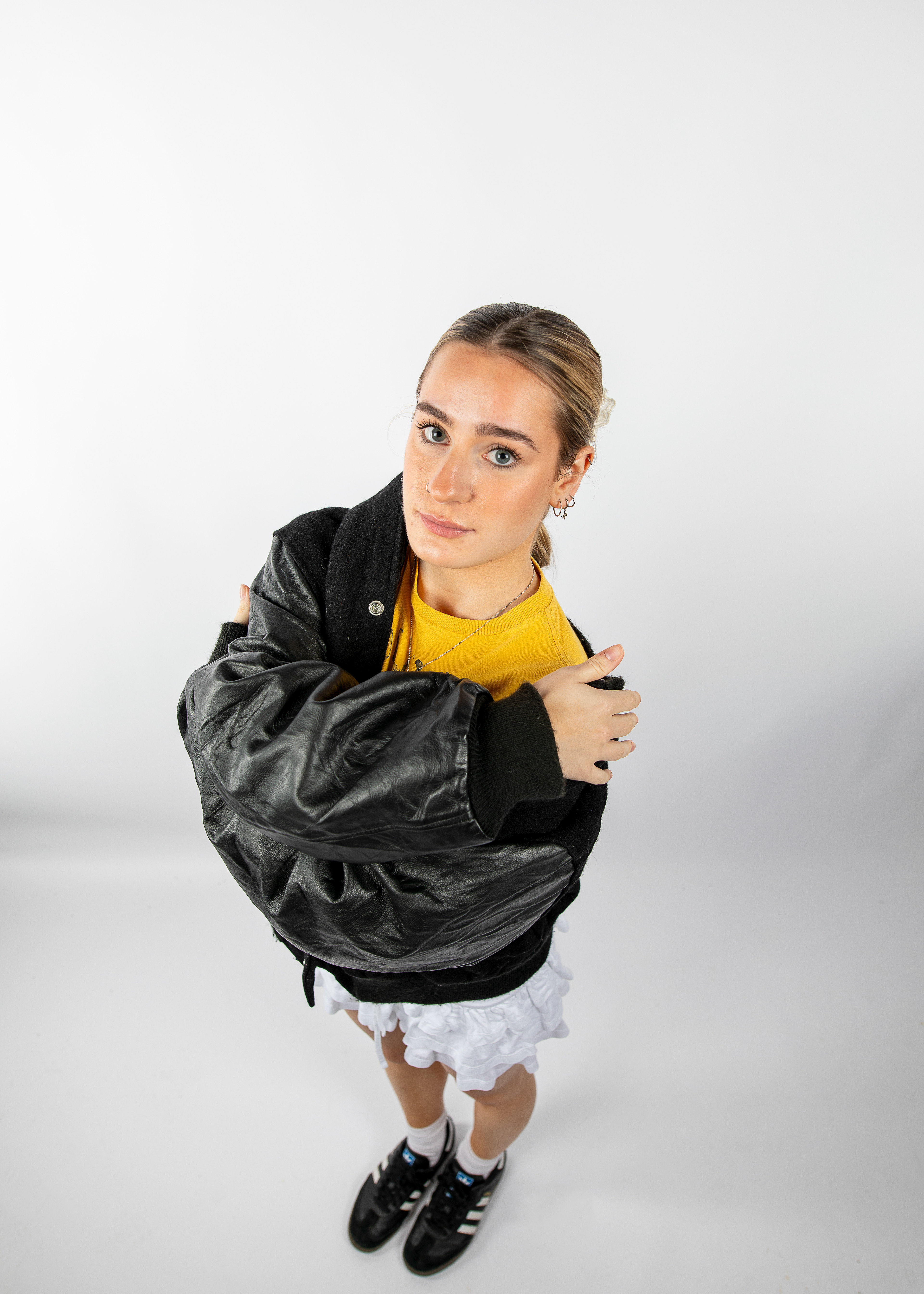
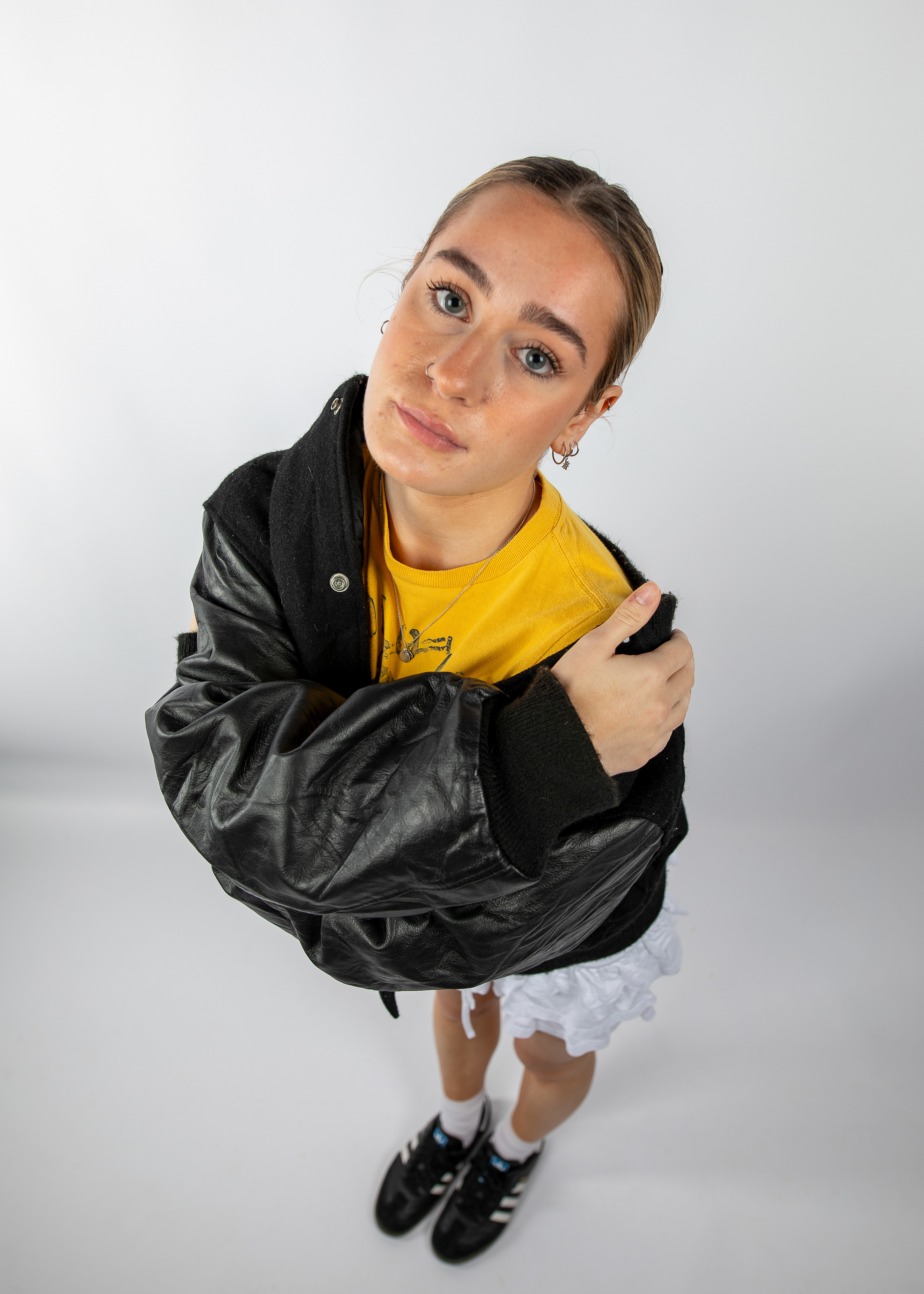
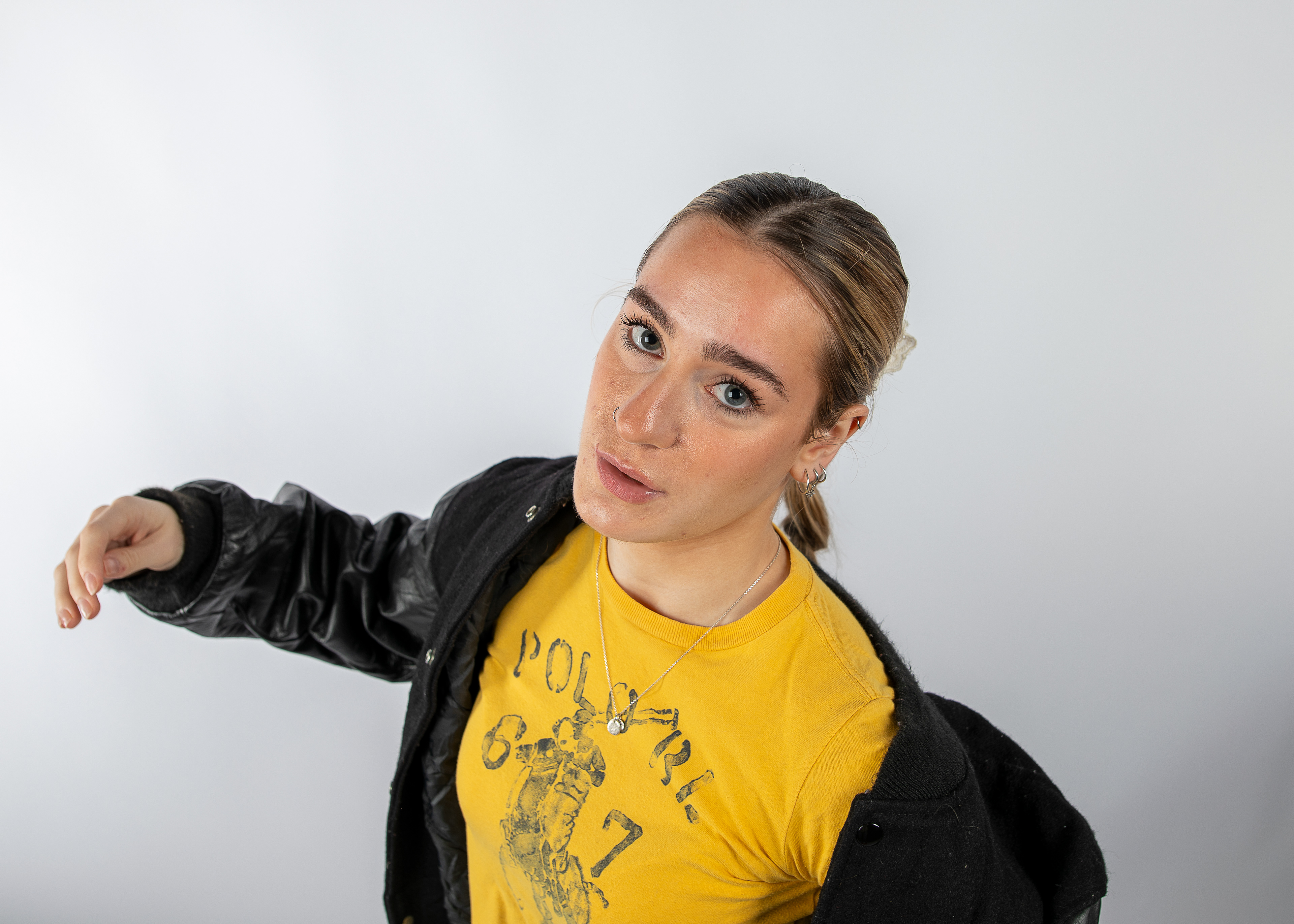
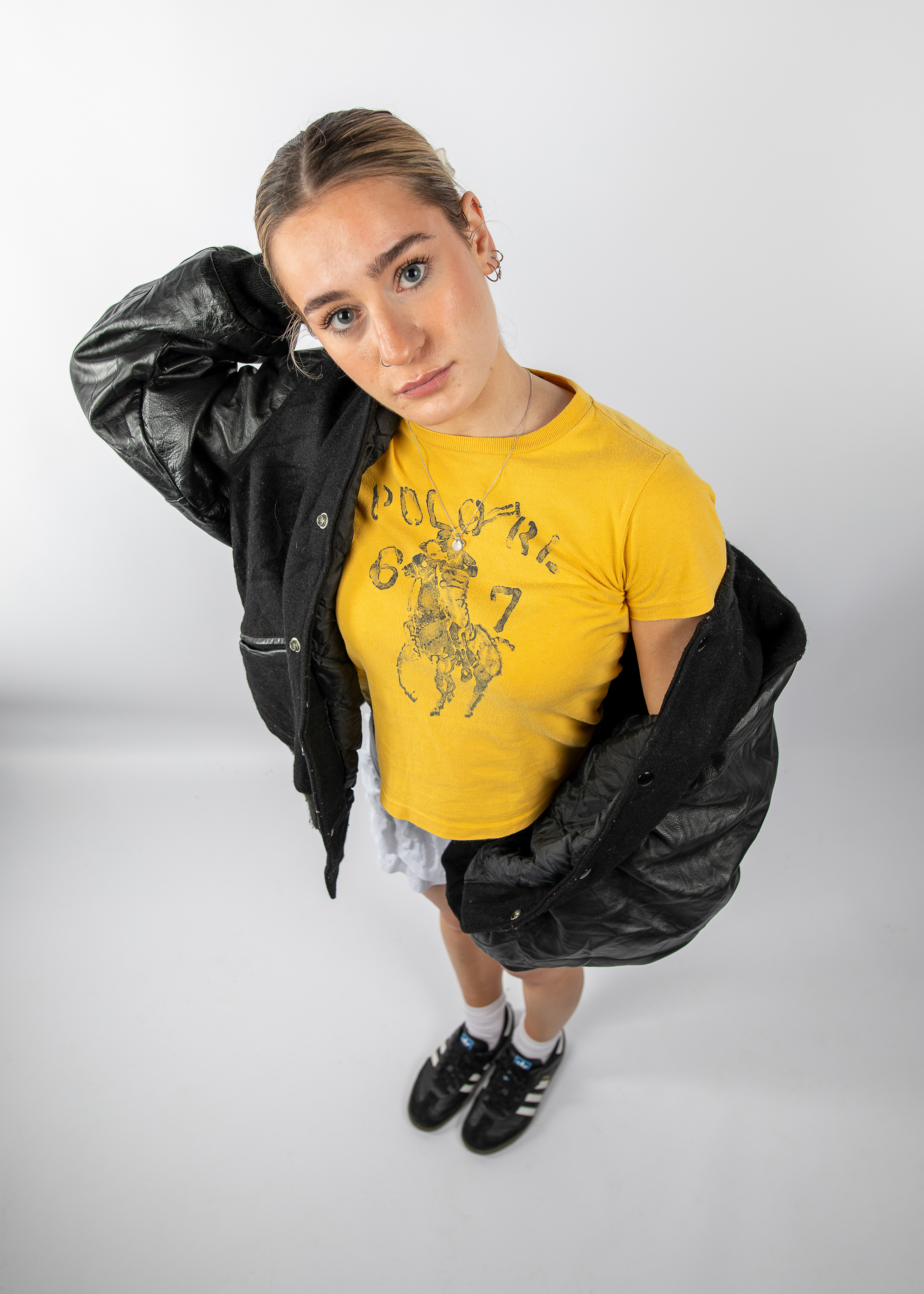
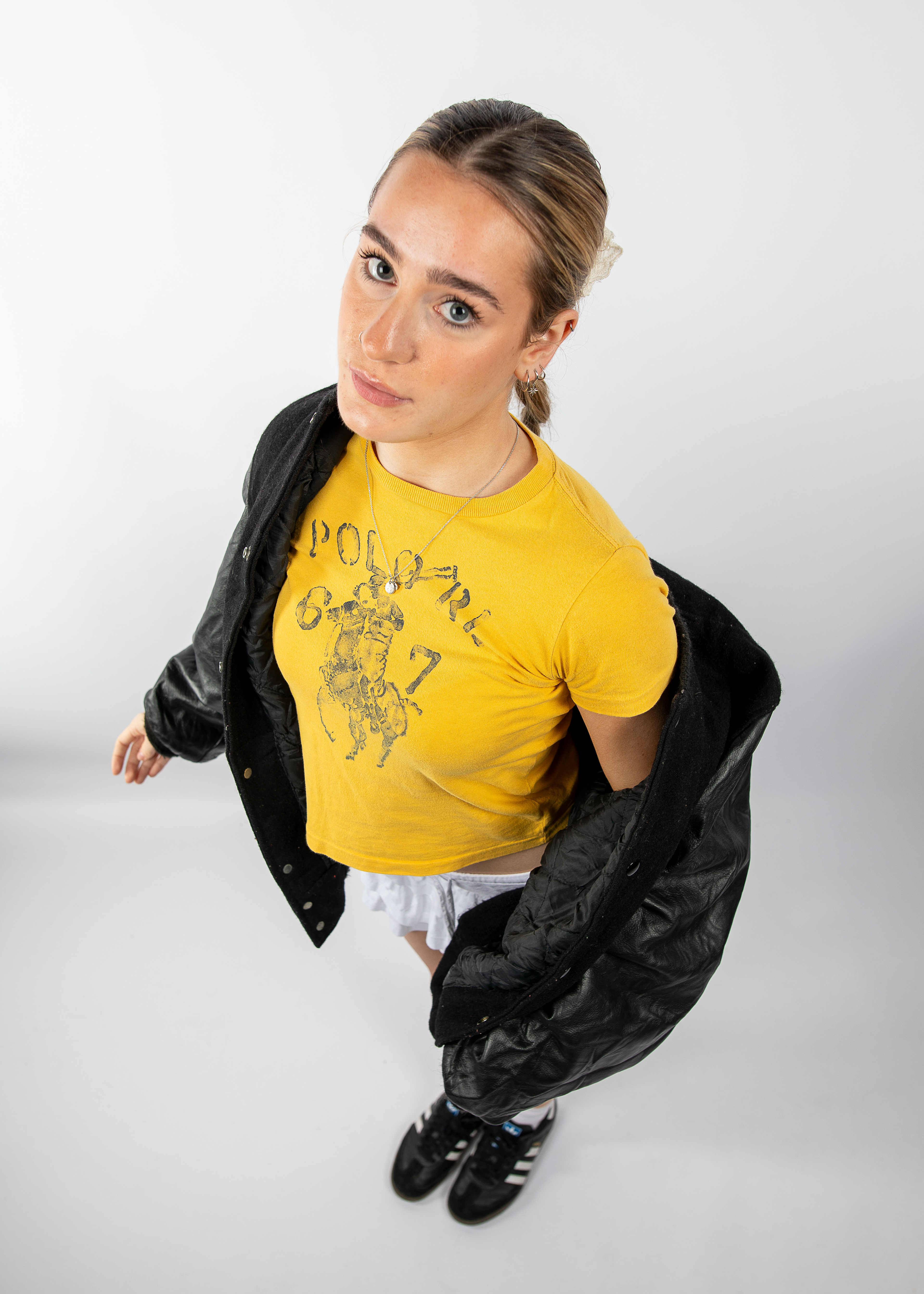
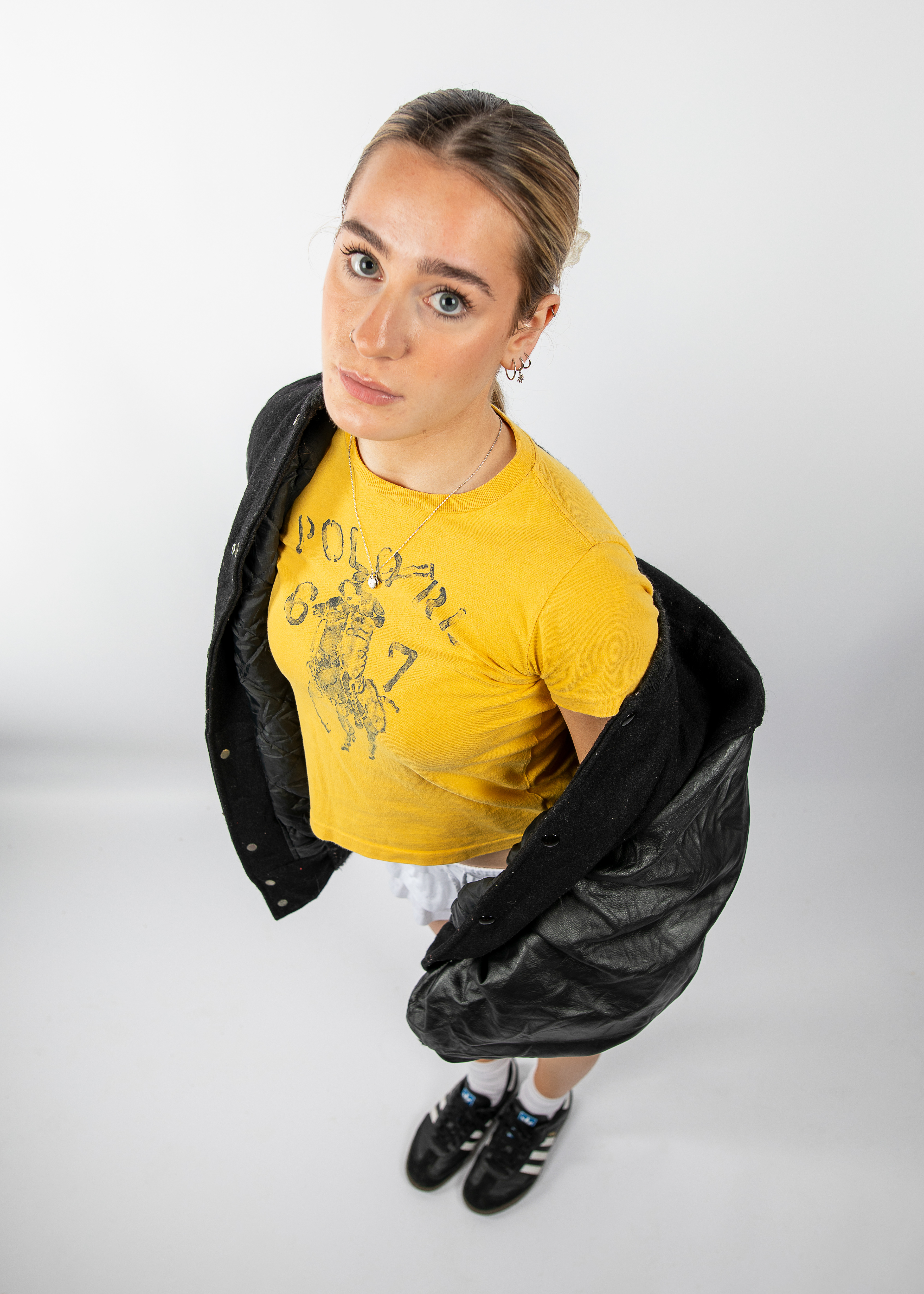
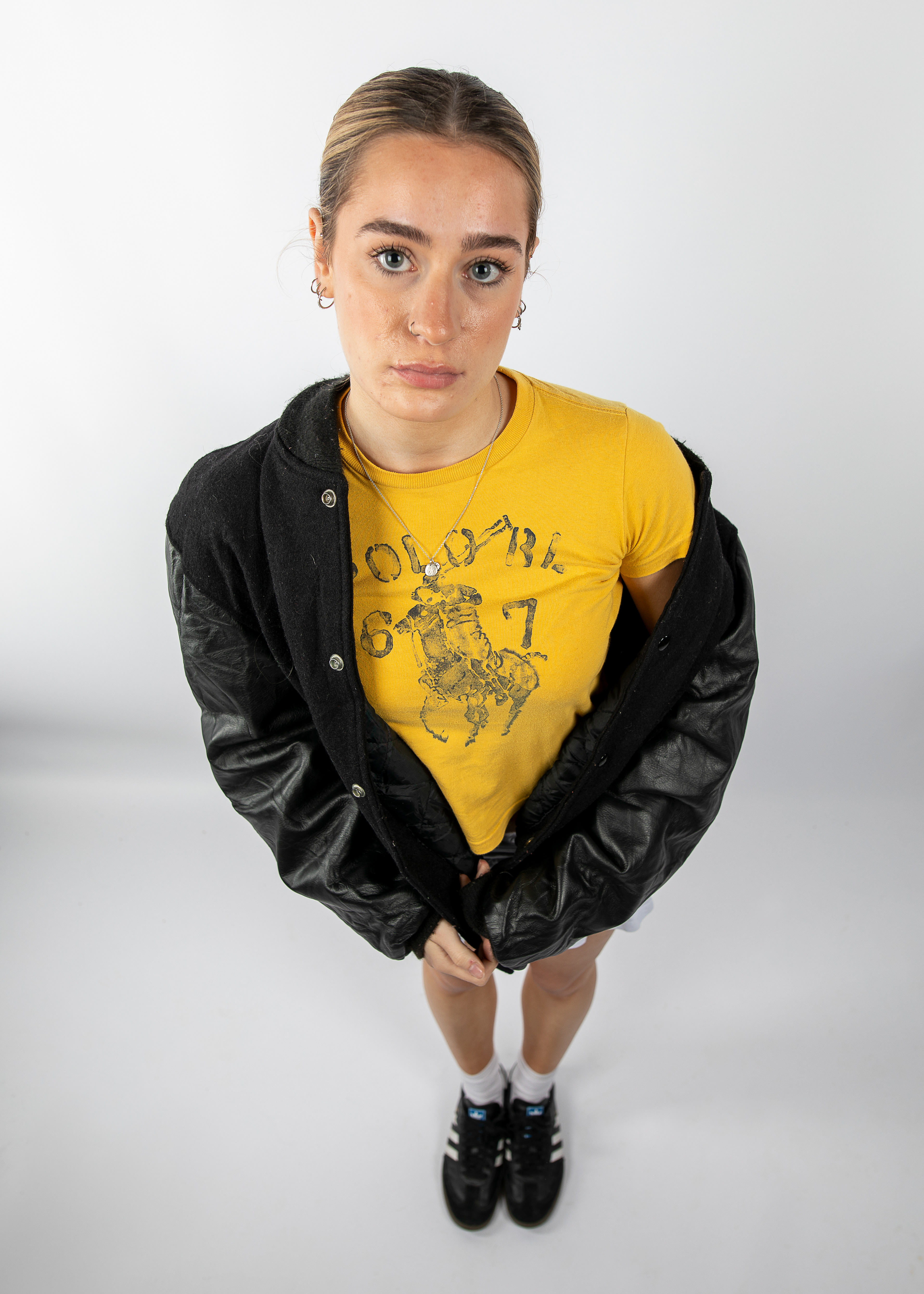
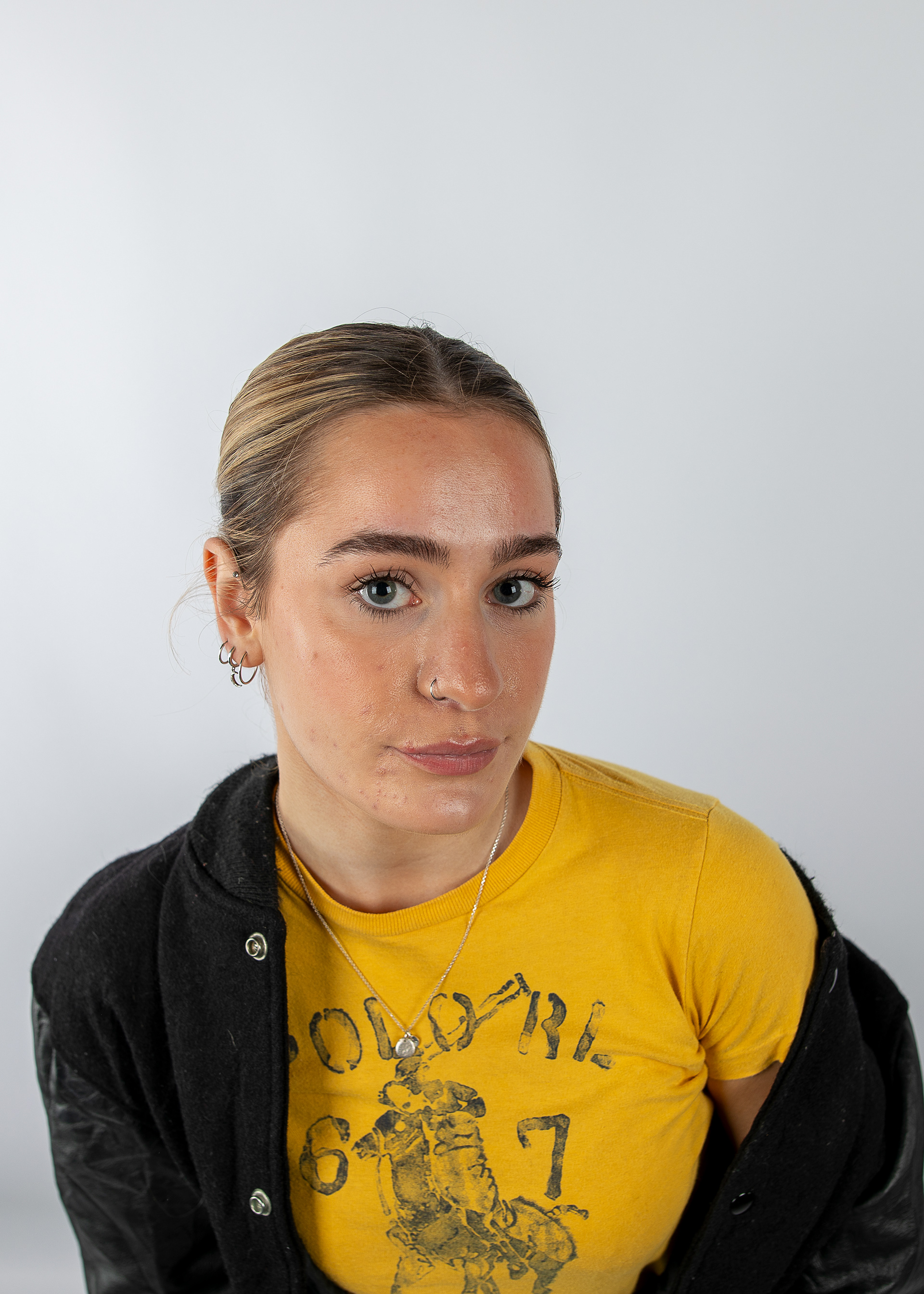
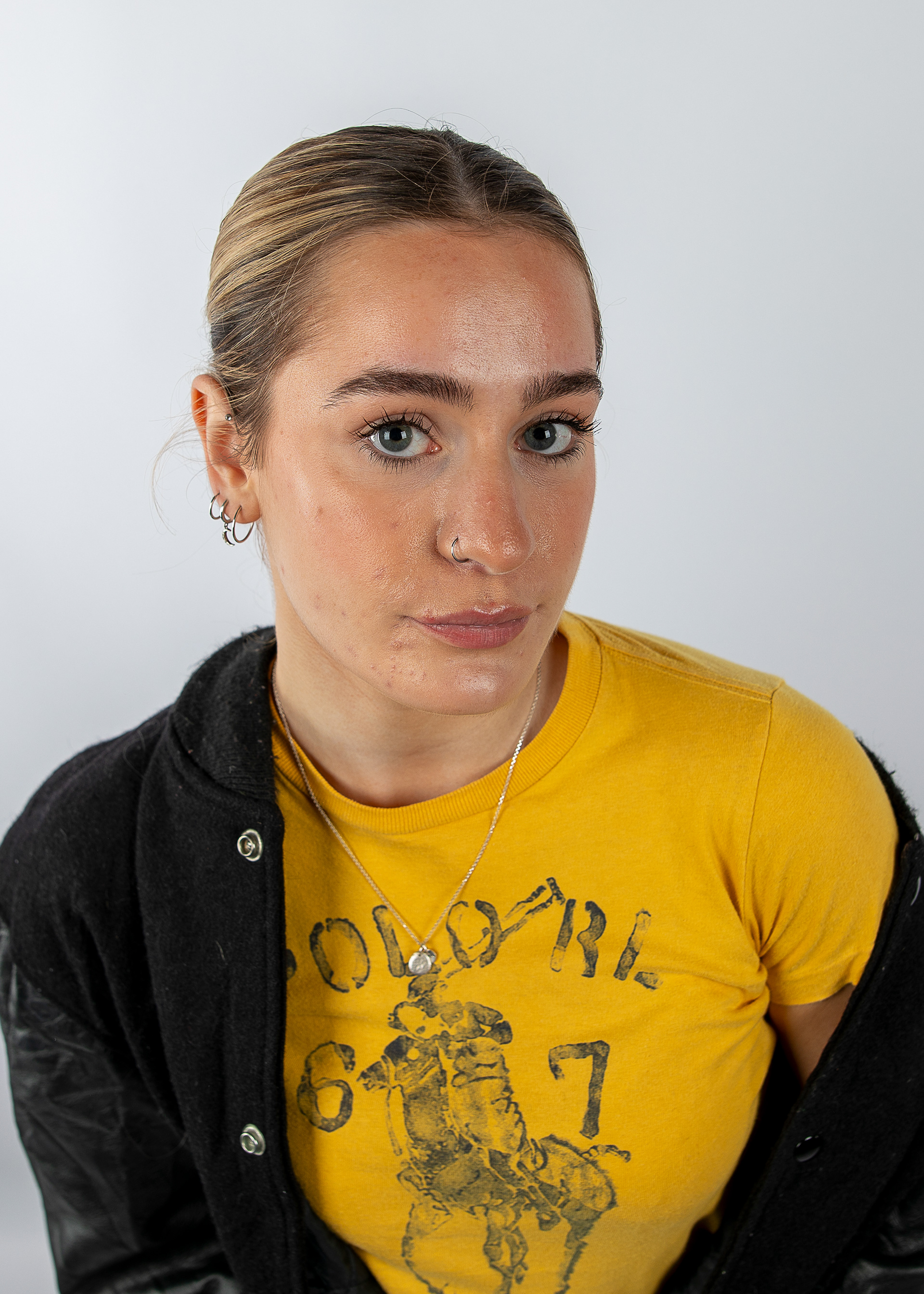
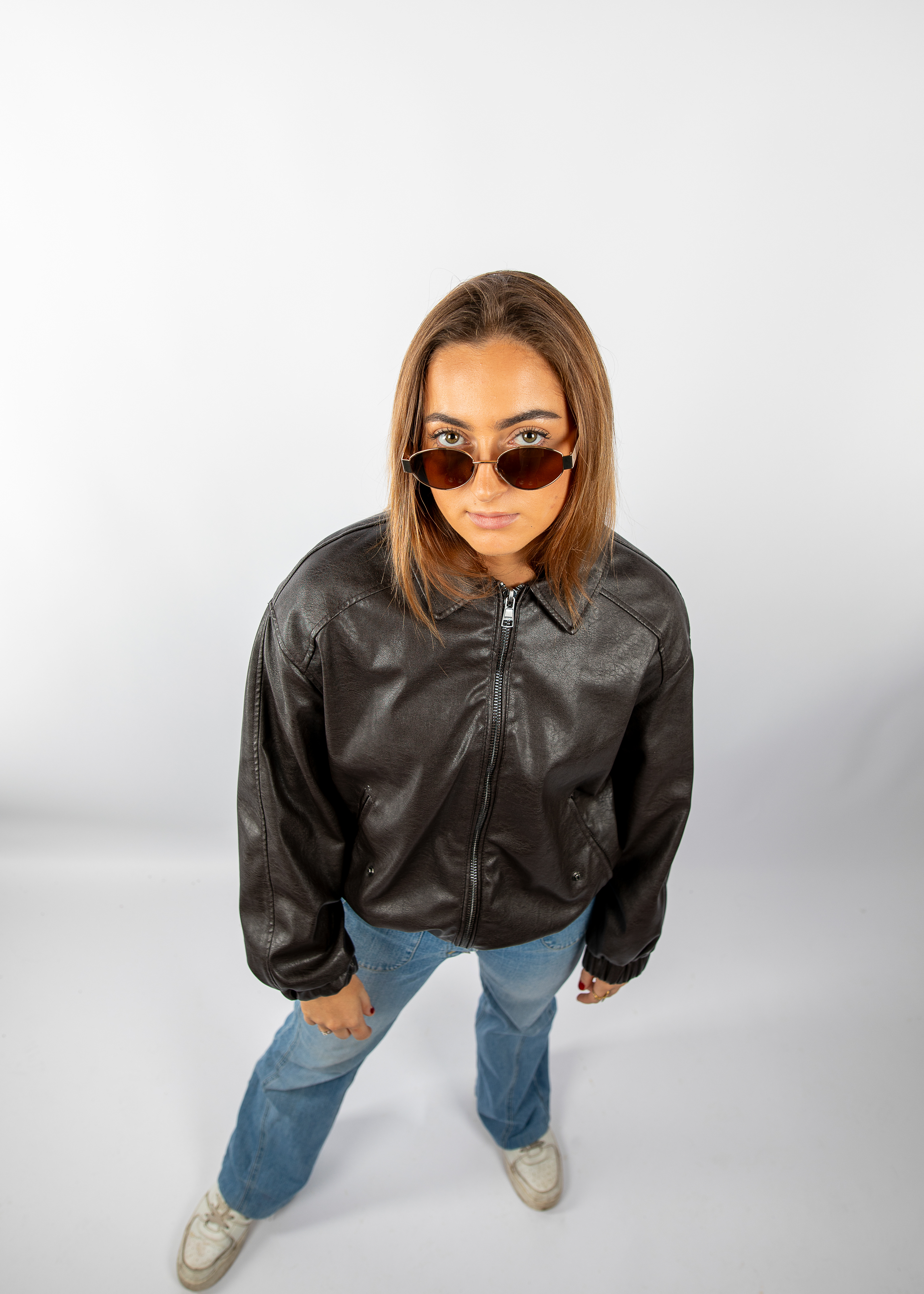
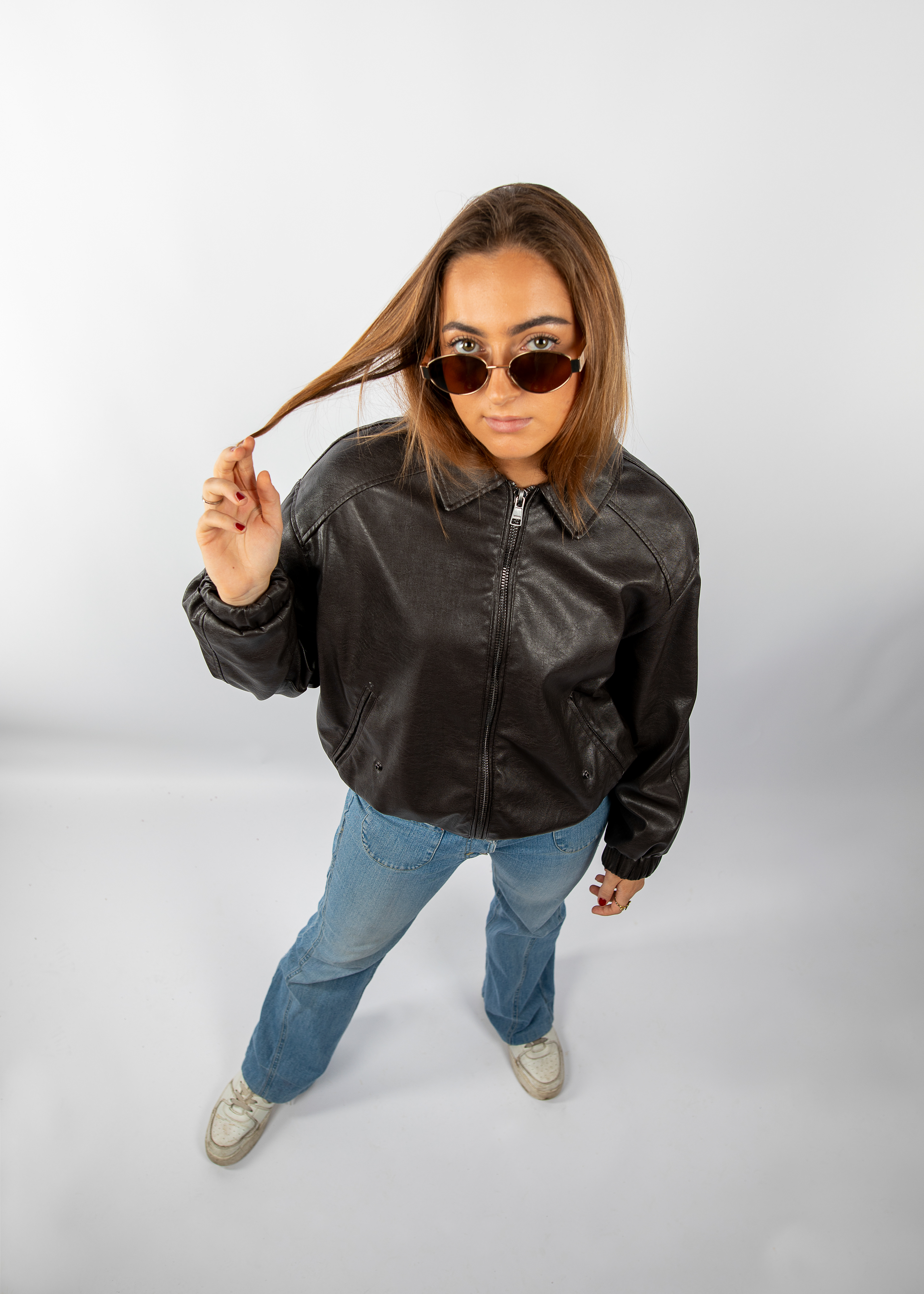
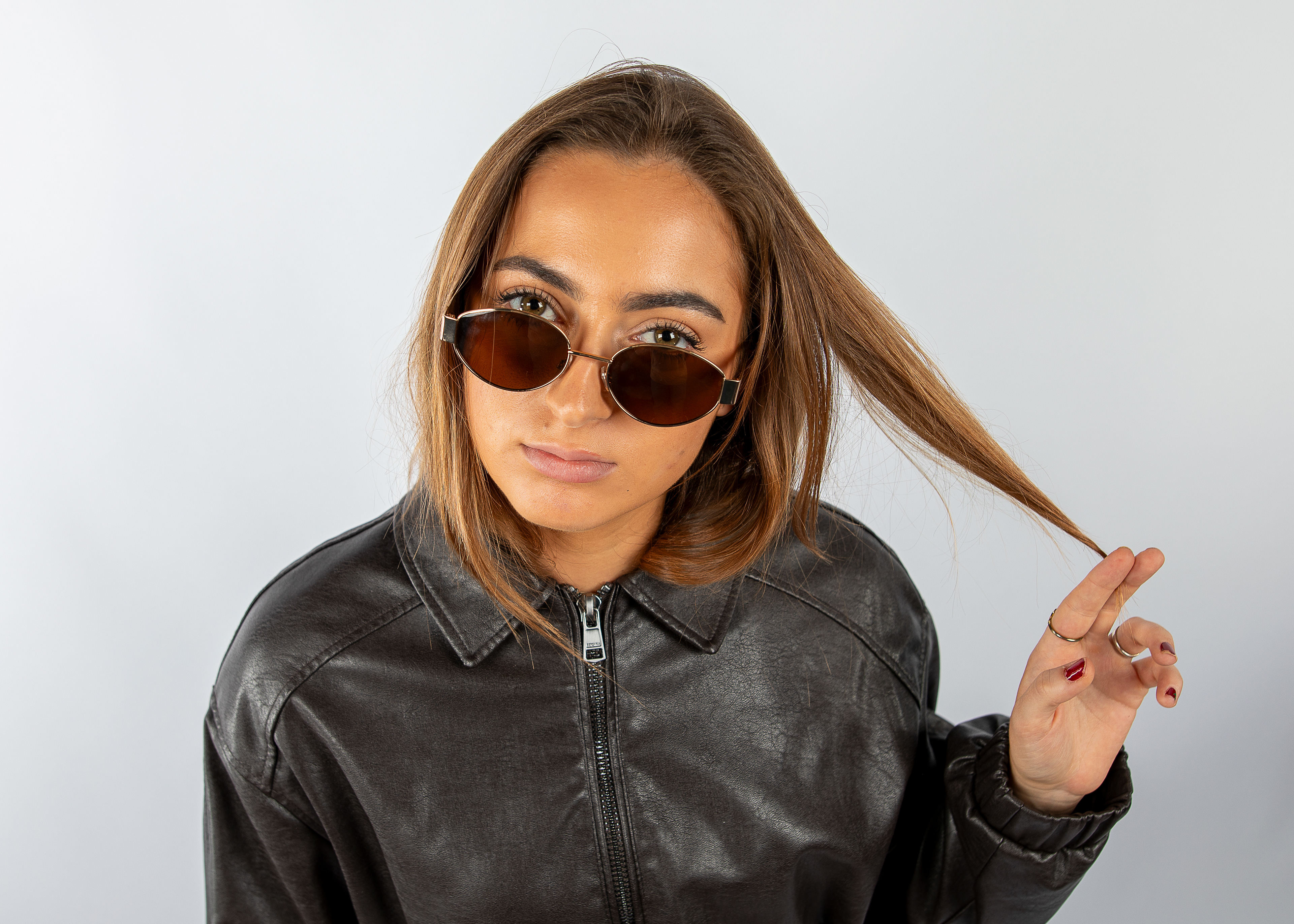
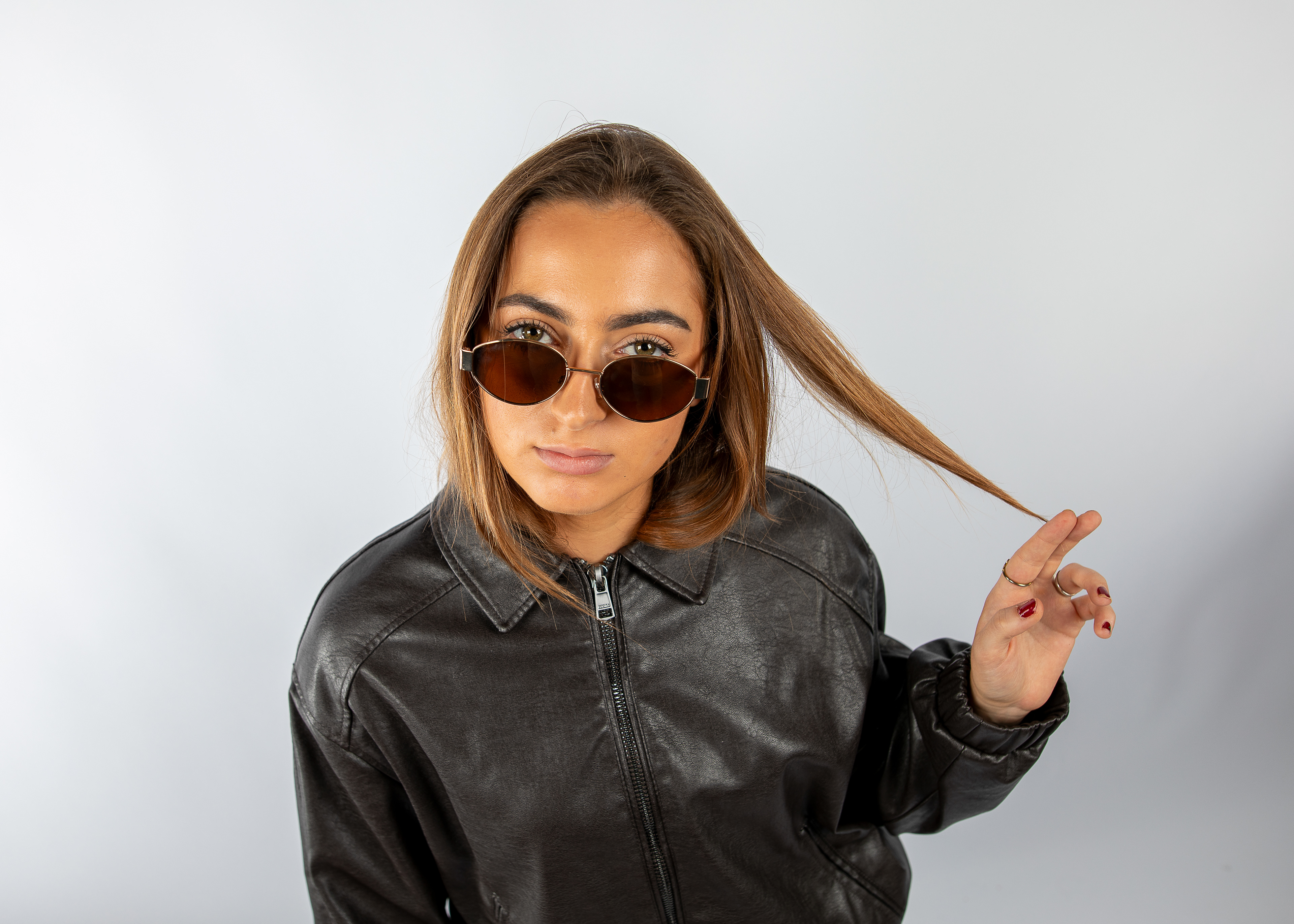
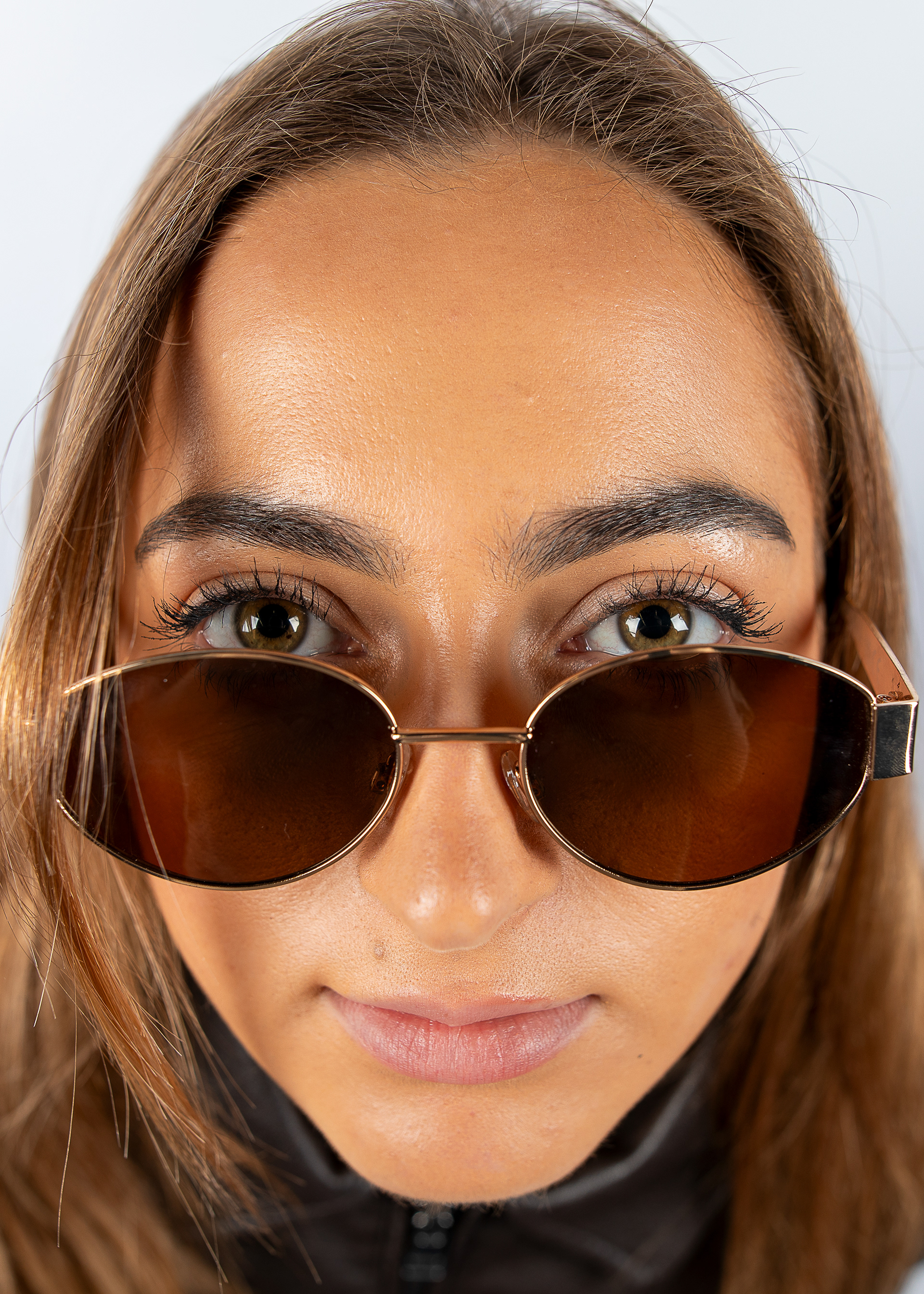
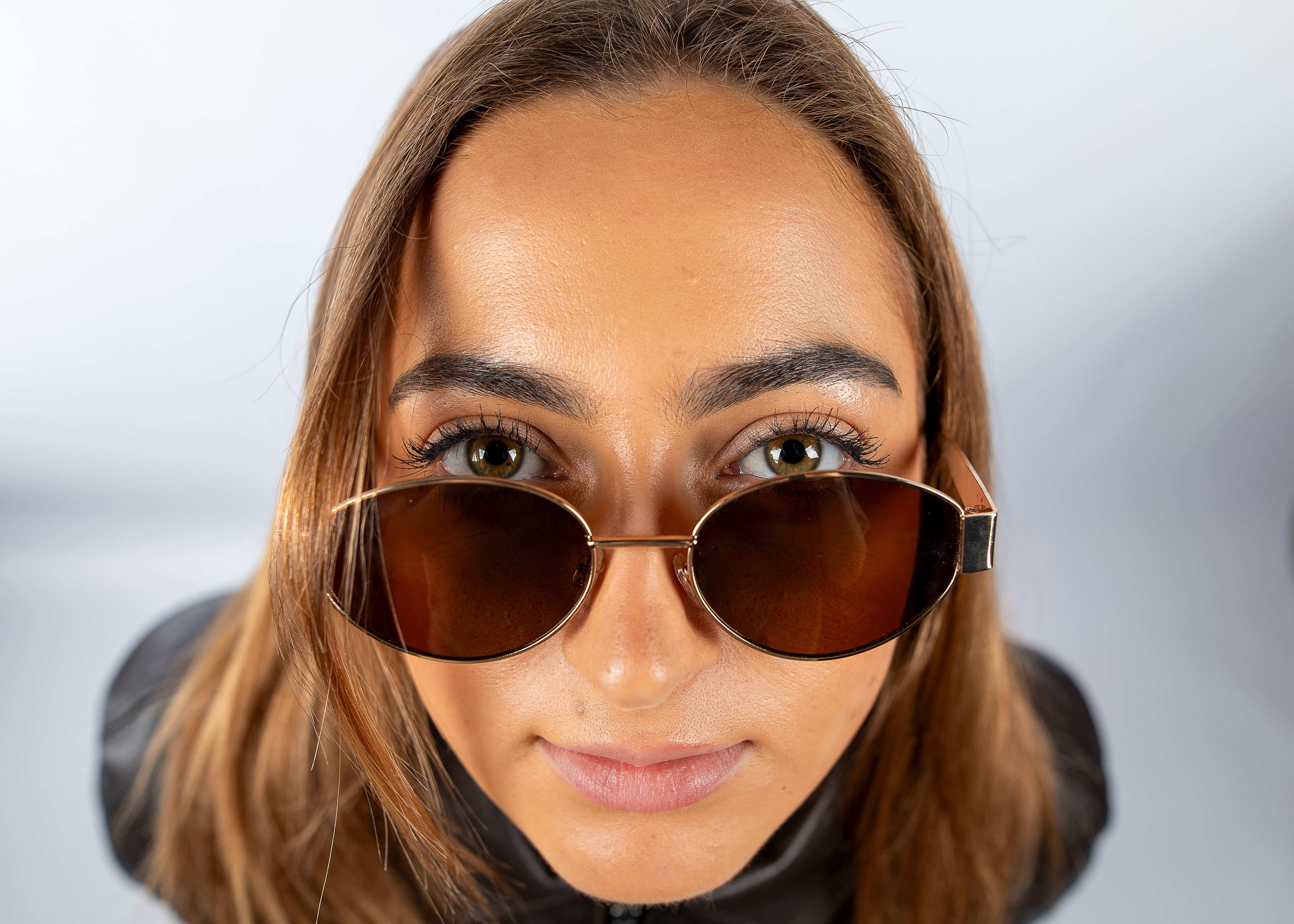
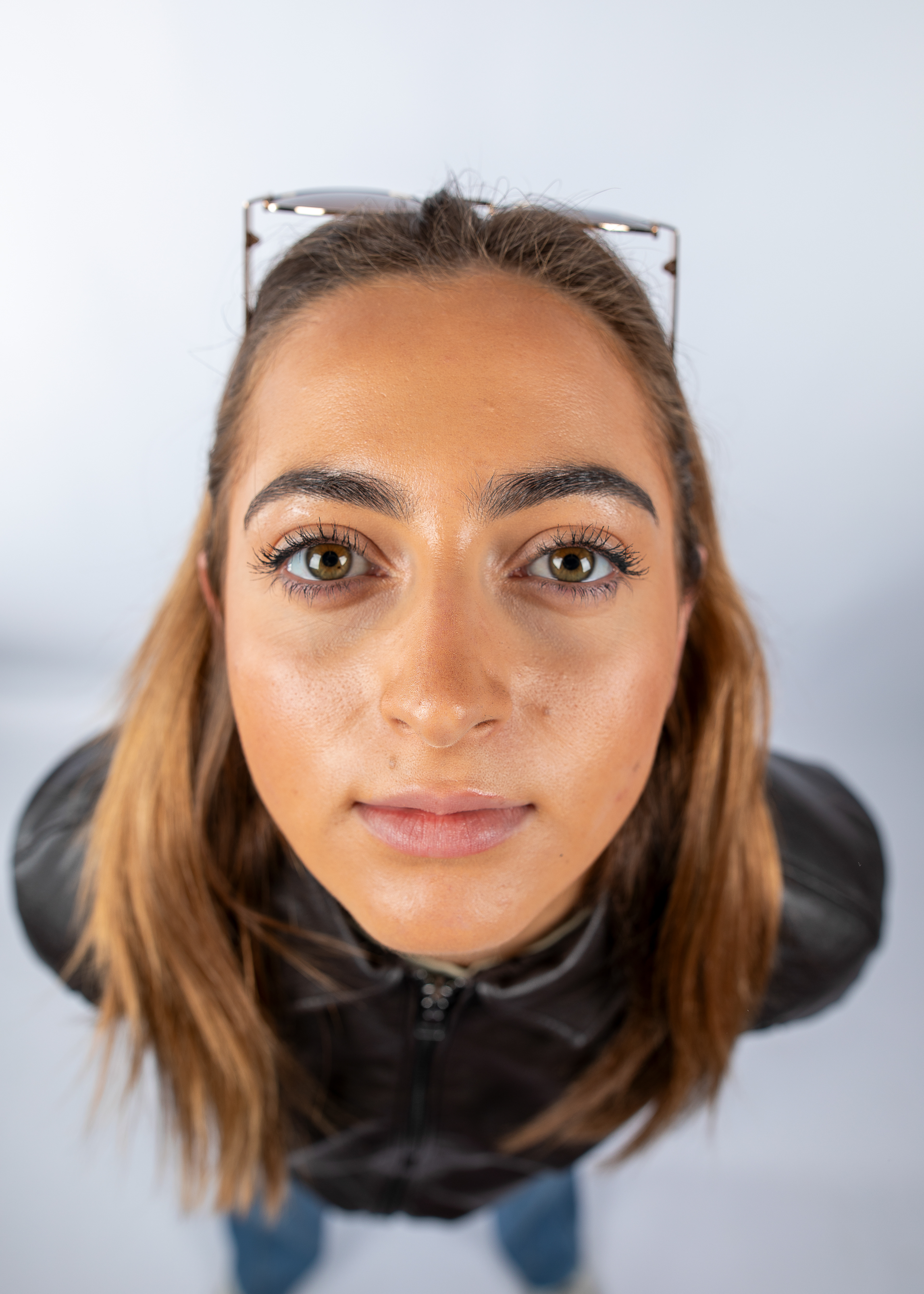
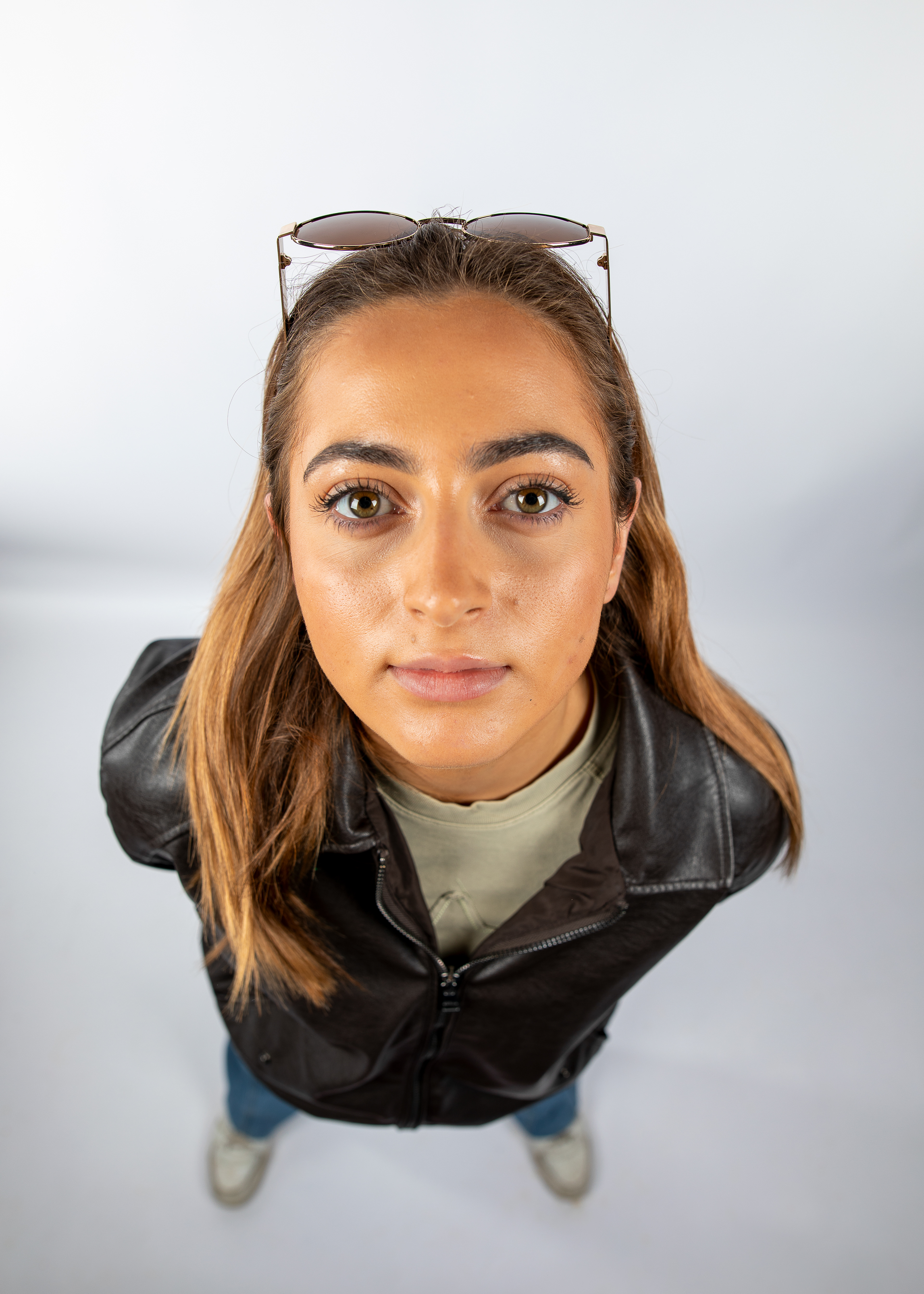
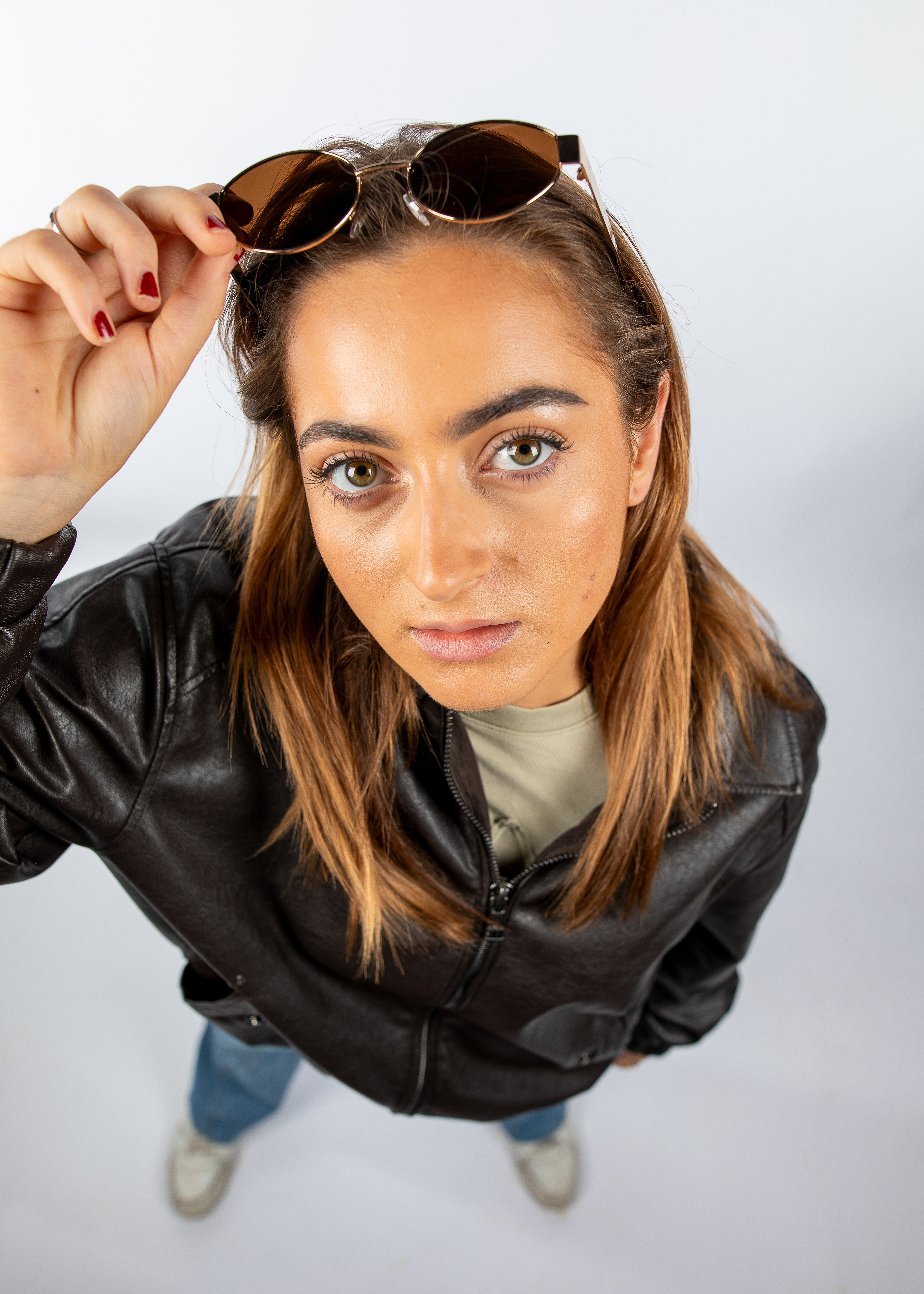
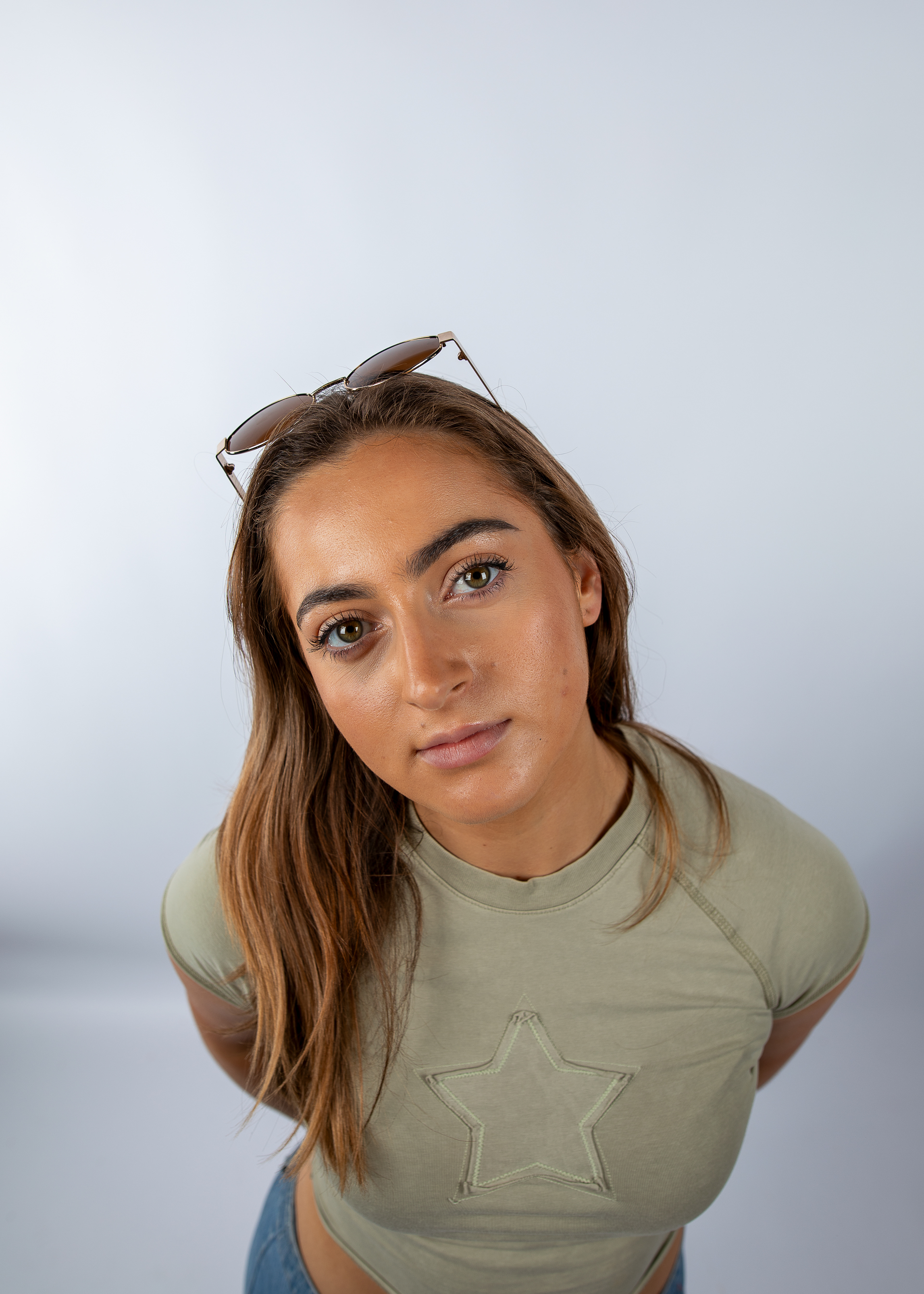
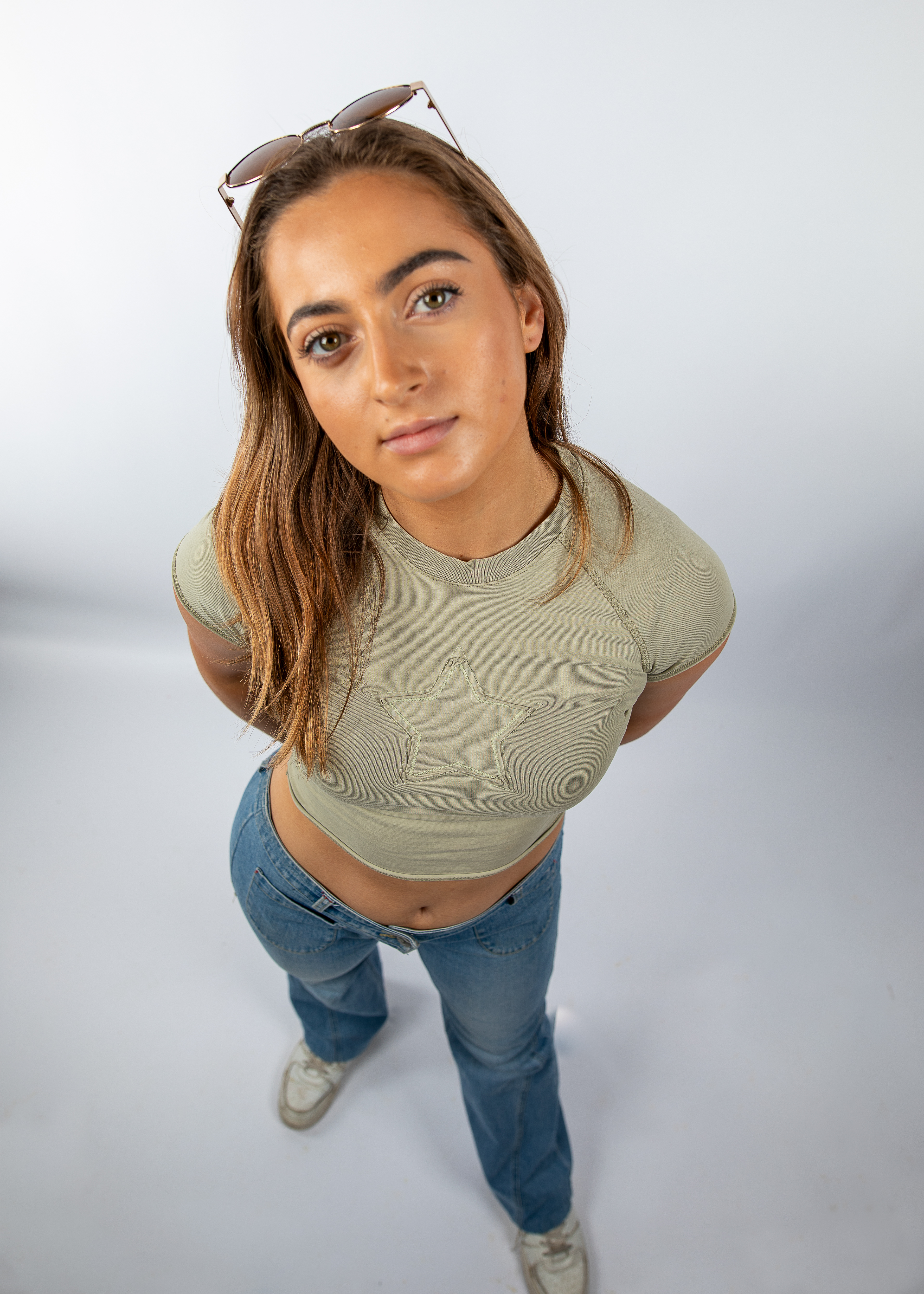
The final photos. We decided to keep the images without presets so they can be altered depending on where the image was going to be used i.e social media, magazine spreads or on the website
As the art director and photographer for the magazine, I leveraged my passion for freelance photography to create original imagery, avoiding copyright issues.
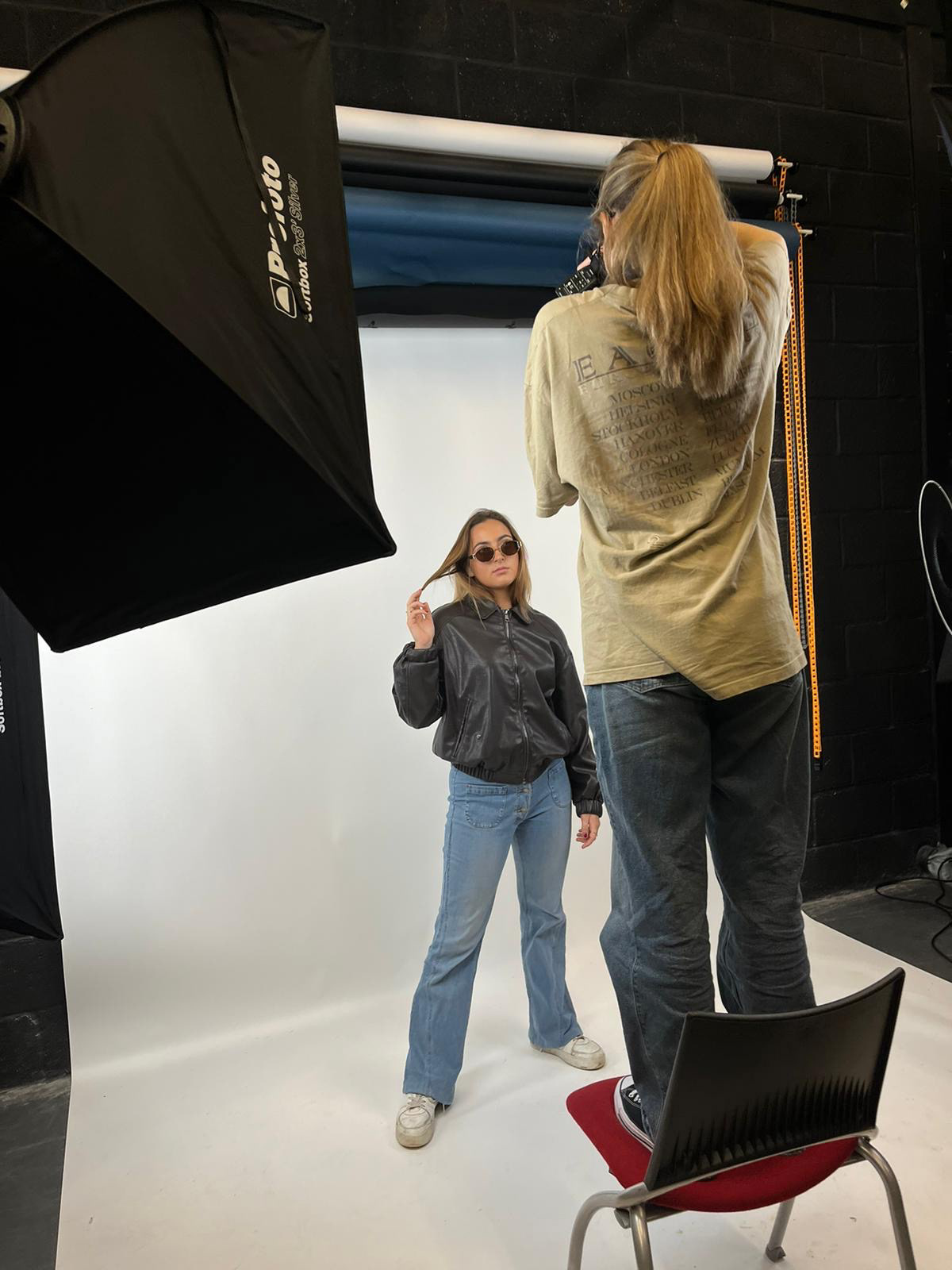
Rebekah and I brainstormed ideas that captured the essence of the 'Y2K' theme, using a fisheye lens for its dynamic, wide-angle aesthetic, popular in the early 2000s (Studio Binder, 2020). We dressed our models in vibrant colours and outfits sourced from charity shops to evoke the bold style of that era (The Fashion Law Journal, 2024).
Rebekah managed the studio booking and logistics while Rebecca Pike, a Digital Imagery Demonstrator, provided invaluable guidance on lighting techniques and lens usage.
The editing process was more time-consuming than expected, particularly cleaning the studio’s dirty white background which took three days. I decided to use Lightroom to edit the photos as this allowed me to get the correct image pixels, 300, for the magazine. I opted not to use filters to maintain the images' versatility across the magazine, website, and social media. Despite the creative limitations, I still enjoyed the editing process.
References
Bedard, M, MB., 2020. What is a Fisheye Lens? Definition and Examples in Film. Studio Binder. 13 September 2020. Available from: https://www.studiobinder.com/blog/what-is-a-fisheye-lens-photography/ [accessed 18/11/2024]
Fashion & Law Journal, F&LJ., 2024. What is Y2K fashion? Fashion & Law Journal. 24 March 2024. Available from: https://fashionlawjournal.com/what-is-y2k-fashion/ [accessed 18/11/2024]